Furniture Sourcing Matchmaker
Select the primary factor driving your sourcing decision to find the ideal production hub.
China
Primary Strength: ScaleChina accounts for roughly 35-40% of global furniture exports. It offers unmatched infrastructure for producing millions of units quickly at competitive prices.
- Key Markets: Global
- Trend: Stable but declining share due to rising costs
You walk into a showroom or scroll through an online store, and you see a sofa that looks exactly like one your neighbor has. Or maybe you spot a desk with a specific flat-pack design that seems to be everywhere. Ever wondered who actually makes all this stuff? It’s not just local carpenters anymore. The global furniture market is a massive, complex web of multinational corporations, specialized manufacturers, and emerging hubs.
If you’re asking "who is the largest producer of furniture in the world," the answer isn’t as simple as pointing to one factory. It depends on whether you mean revenue, volume, or retail presence. But if we look at who dominates the landscape from design to delivery, one name stands out above the rest: IKEA. While it started in Sweden, its manufacturing footprint is truly global, heavily reliant on partners in China, Poland, and increasingly, India. However, when we talk about pure manufacturing output by country, China holds the crown for sheer volume, while India is rapidly climbing the ranks as a critical alternative hub.
The Undisputed Retail Giant: Why IKEA Tops the List
When people ask about the biggest player, they usually mean who sells the most furniture. By that metric, IKEA, owned by the Ingka Group, is the undisputed leader. In recent years, IKEA has reported annual revenues exceeding €40 billion. That’s more than double its nearest competitors like Ashley Furniture or Williams-Sonoma.
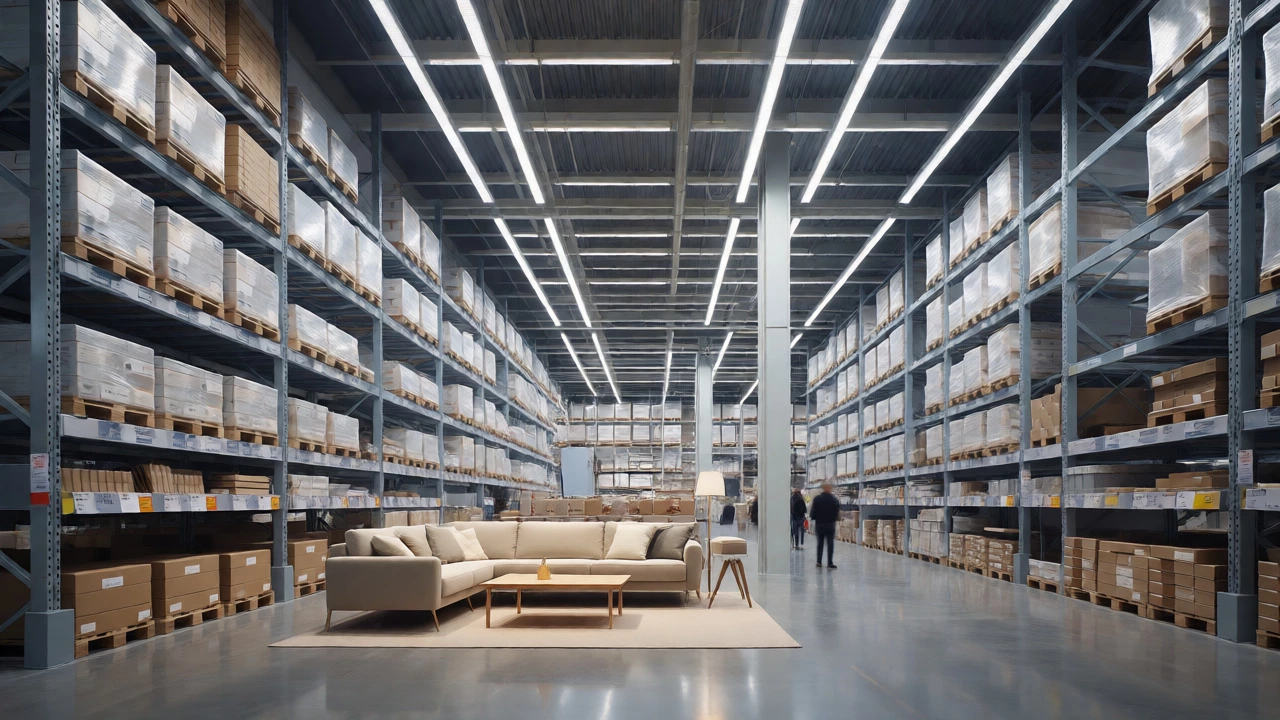
But here’s the catch: IKEA doesn’t own most of the factories that make its products. They are a designer and retailer. Their production model relies on a network of over 1,500 suppliers across 50+ countries. This distinction matters because it shifts the "producer" title from a single company to a supply chain ecosystem. If you count the companies that physically build the goods, the list changes dramatically.
Why does IKEA dominate? It’s their vertical integration strategy. They control the design, the logistics, and the customer experience. They source raw materials directly, often buying entire forests or timber mills, which gives them cost advantages no other brand can match. This scale allows them to push prices down so aggressively that smaller manufacturers struggle to compete on price alone.
Manufacturing Powerhouses: China vs. Vietnam vs. India
If we strip away the branding and look strictly at where furniture is physically made, the map looks different. For decades, China has been the world’s factory floor for furniture. It accounts for roughly 35-40% of global furniture exports. You can find everything from high-end luxury pieces to cheap particleboard shelves coming out of Guangdong and Zhejiang provinces.
However, the tide is turning. Rising labor costs and trade tensions (especially US tariffs) have pushed brands to look elsewhere. This is where Vietnam and India step in. Vietnam has become the top exporter of wooden furniture to the US, surpassing China in certain categories. But India? India is the sleeper hit.
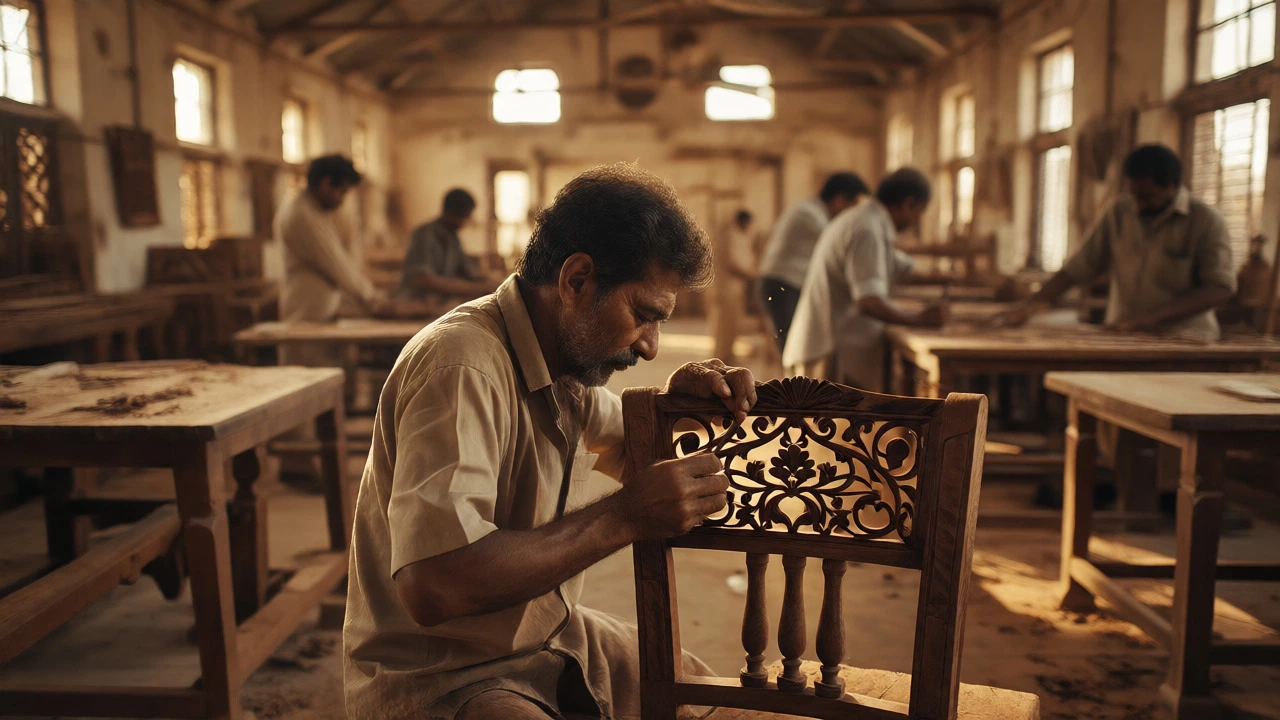
India’s furniture industry is fragmented but growing fast. Unlike China’s centralized mega-factories, India’s strength lies in its skilled craftsmanship and lower labor costs. Cities like Jodhpur, Moradabad, and Saharanpur are traditional hubs, but modern manufacturing clusters are emerging near Delhi-NCR and Mumbai. Major global brands are now sourcing upholstered furniture, home decor, and solid wood pieces from India to diversify their supply chains away from China.
| Country | Primary Strengths | Key Markets | Trend Status |
|---|---|---|---|
| China | Scale, variety, speed | Global | Stable but declining share due to costs |
| Vietnam | Woodworking expertise, free trade agreements | USA, EU | Rapidly growing, especially for outdoor/wood |
| India | Craftsmanship, metal/stone work, low labor cost | USA, UK, Middle East | Emerging strong competitor in upholstery/decor |
| Poland | Proximity to EU, skilled labor | Europe | Dominant supplier for IKEA in Europe |
| Italy | Luxury design, high-end materials | Global Luxury Market | Niche leader, stable premium segment |
India’s Role in the Global Furniture Supply Chain
You mentioned India specifically, and that’s smart. Most Western consumers don’t realize how much of their "Western-style" furniture actually comes from Indian workshops. India is particularly strong in three areas: hand-carved wood, wrought iron, and stone-based furniture. Brands like Pottery Barn, Crate & Barrel, and even parts of the IKEA catalog source significantly from India.
What makes India attractive right now? First, the demographic dividend. A young workforce means abundant labor for labor-intensive tasks like carving and weaving. Second, government initiatives like the "Make in India" campaign have improved infrastructure and export incentives. Third, there’s a shift towards sustainability. Indian artisans often use reclaimed wood and natural finishes, which appeals to eco-conscious buyers in Europe and North America.
However, challenges remain. Logistics within India can be slow compared to China’s hyper-efficient ports. Quality consistency varies between small artisanal units and large-scale factories. But major players like Godrej Interio and Asian Paints’ Home Decor division are scaling up industrial capabilities, bridging that gap.
Beyond IKEA: Other Major Players You Should Know
While IKEA gets the headlines, other companies wield serious power in specific niches. Let’s break down the other giants:
- Ashley Furniture: Based in Wisconsin, USA, Ashley is the largest manufacturer and retailer of casual home furniture in North America. They produce a huge portion of their goods domestically, which insulates them from some shipping delays but exposes them to higher labor costs.
- Herman Miller: When it comes to office furniture, Herman Miller is king. Known for the iconic Aeron chair, they focus on ergonomics and design patents rather than mass-market volume. Their revenue is lower than IKEA’s, but their profit margins per unit are significantly higher.
- Steelcase: Another US giant in workspace solutions. Steelcase competes closely with Herman Miller but has a stronger global manufacturing footprint, including plants in Europe and Asia.
- KUKA Home: A Chinese giant that has expanded globally. KUKA produces massive volumes of upholstered furniture and has invested heavily in automated manufacturing lines to reduce reliance on manual labor.
Notice a pattern? The leaders aren’t just "furniture makers." They are either retail giants (IKEA), domestic champions (Ashley), or niche specialists (Herman Miller). There is no single "world factory" for every type of furniture.

How to Identify Your Supplier: A Quick Guide
If you’re a business owner looking to source furniture, knowing who the "biggest" is doesn’t help you buy. You need to know who fits your needs. Here’s a quick decision tree:
- Do you need volume and low cost? Look at China first, then Vietnam. They have the infrastructure for millions of units.
- Do you need unique craftsmanship or artisanal details? India is your best bet. The skill level for hand-finishing is unmatched at this price point.
- Are you selling in Europe? Consider Poland or Turkey. Lower shipping times and customs duties within the EU zone make these regions highly competitive.
- Is speed to market critical? Domestic manufacturing in your target region (e.g., USA for US sales) reduces lead times from months to weeks.
Also, check the certifications. Reputable producers will have FSC (Forest Stewardship Council) certification for wood, or ISO quality standards. Don’t just look at the price tag; look at the compliance paperwork. It saves headaches later.
The Future of Furniture Production
The industry is changing. Automation is creeping into upholstery cutting and wood milling. AI is being used to optimize inventory and predict trends. And sustainability is no longer optional-it’s a regulatory requirement in the EU and a consumer demand globally.
We’re seeing a rise in "near-shoring," where companies move production closer to their customers to avoid shipping risks. For the US, this means Mexico. For Europe, it means Eastern Europe and North Africa. For Asia, it means intra-regional trade. India might benefit from this if it can improve its logistics infrastructure further.
So, who is the largest producer? If you mean the brand everyone knows, it’s IKEA. If you mean the country making the most boxes, it’s China. If you mean the fastest-growing hub for high-quality, ethical sourcing, it’s India. Understanding these distinctions helps you navigate the market better, whether you’re buying a chair or building a business.
Which country produces the most furniture in the world?
China is currently the largest producer of furniture by volume and export value, accounting for approximately 35-40% of global furniture exports. However, Vietnam and India are rapidly increasing their market shares due to lower labor costs and favorable trade agreements.
Is IKEA the largest furniture manufacturer?
IKEA is the largest furniture retailer by revenue. However, it does not own most of the factories that produce its goods. Instead, it works with a vast network of third-party manufacturers, primarily in China, Poland, and Sweden. Therefore, it is the largest buyer and seller, but not necessarily the largest direct manufacturer in terms of factory ownership.
Why is India becoming a popular furniture manufacturing hub?
India is gaining popularity due to its skilled artisanal workforce, lower labor costs compared to China, and diverse material availability (wood, metal, stone). Government initiatives to improve infrastructure and export policies, along with a reputation for high-quality craftsmanship in decorative and upholstered furniture, are attracting global brands.
Who are the biggest furniture companies in the USA?
Ashley Furniture is widely considered the largest manufacturer and retailer of casual home furniture in North America. Other major players include Williams-Sonoma (which owns West Elm and Pottery Barn), Wayfair (a digital-first retailer), and Herman Miller/Steelcase for office furniture.
Does Vietnam manufacture more furniture than China?
No, China still manufactures and exports more total furniture than Vietnam. However, Vietnam has surpassed China as the leading supplier of wooden furniture to the United States in recent years, driven by trade tariffs and competitive pricing.