Furniture Manufacturing Location Selector
Select what matters most to you to find your ideal manufacturing location based on the latest industry data.
Your Manufacturing Priorities
Rate what's most important for your furniture business:
How this works
This tool uses real industry data to match your priorities with manufacturing locations. Based on your selections, it analyzes:
- Cost: Labor expenses and material costs
- Quality: Craftsmanship, material integrity, and finish
- Sustainability: Certifications like FSC, CARB, and ethical practices
- Lead Time: Production and shipping timelines
When you're looking to make furniture - whether it's modern sofas, solid wood dining tables, or rustic shelves - the place you choose to manufacture it can make or break your business. It’s not just about cheap labor. It’s about skilled workers, reliable supply chains, quality materials, and access to global markets. So where’s the best place to manufacture furniture today?
India Leads in Volume and Value
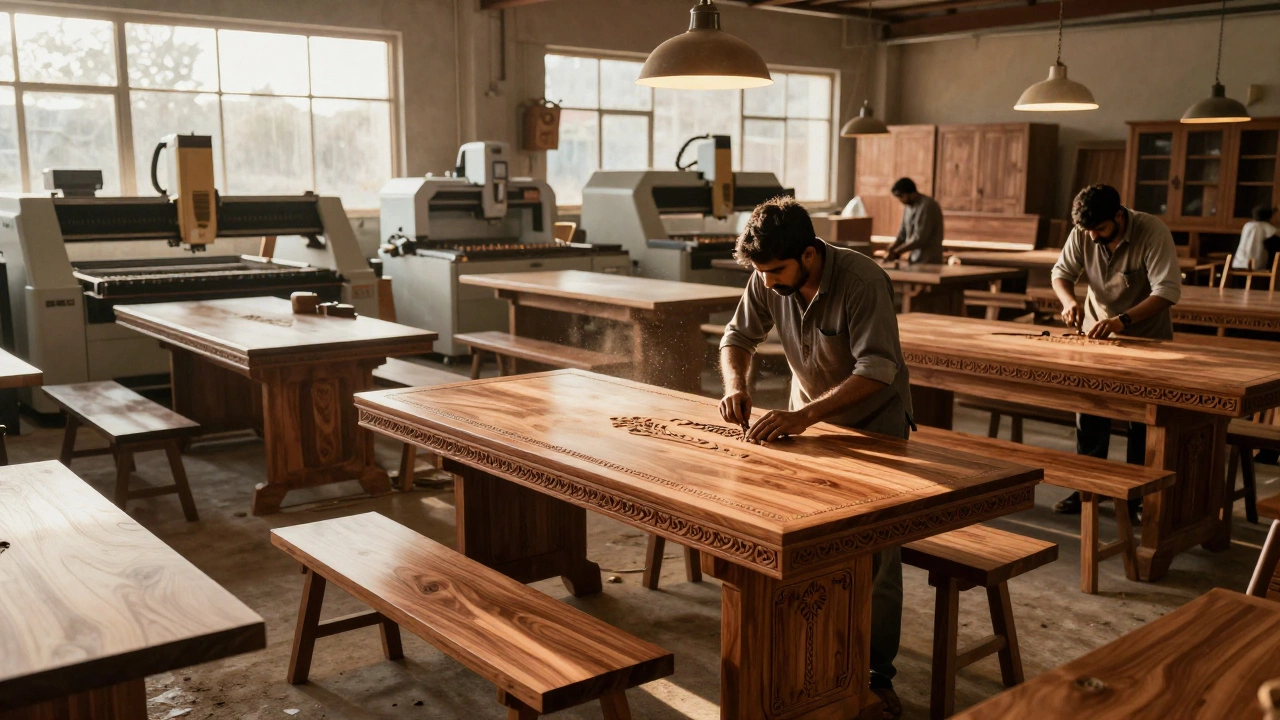
India is the top choice for many furniture buyers and brands right now. It’s not just because labor is affordable. It’s because the country has built a mature, export-ready furniture manufacturing ecosystem over the last 20 years. Cities like Moradabad, Panipat, Chennai, and Delhi-NCR are packed with factories that specialize in everything from hand-carved teakwood dining sets to modular office furniture.
India exports over $6 billion worth of furniture annually, with the U.S., U.K., Germany, and Australia as top buyers. The government’s Production Linked Incentive (PLI) scheme for furniture and wood products, launched in 2021, gave factories a 10-15% cash incentive on incremental exports. That pushed hundreds of small workshops to upgrade machinery, adopt digital design tools, and meet international safety and environmental standards.
What makes India stand out? The workforce. Woodcarvers in Uttar Pradesh learn their craft from their fathers. Cabinetmakers in Punjab train for five years before they’re trusted with fine joinery. And unlike in some countries where skilled labor is shrinking, India has a growing pool of trained artisans - many of whom now work in factories with CNC machines, not just hand tools.
Why Vietnam Is Gaining Ground
If India is the volume king, Vietnam is the quality challenger. In the last five years, Vietnam’s furniture exports jumped from $7 billion to over $17 billion. That’s more than double. Why? Because Vietnamese factories focus on high-margin, design-driven products - think Scandinavian-style beds, minimalist coffee tables, and eco-friendly bamboo stools.
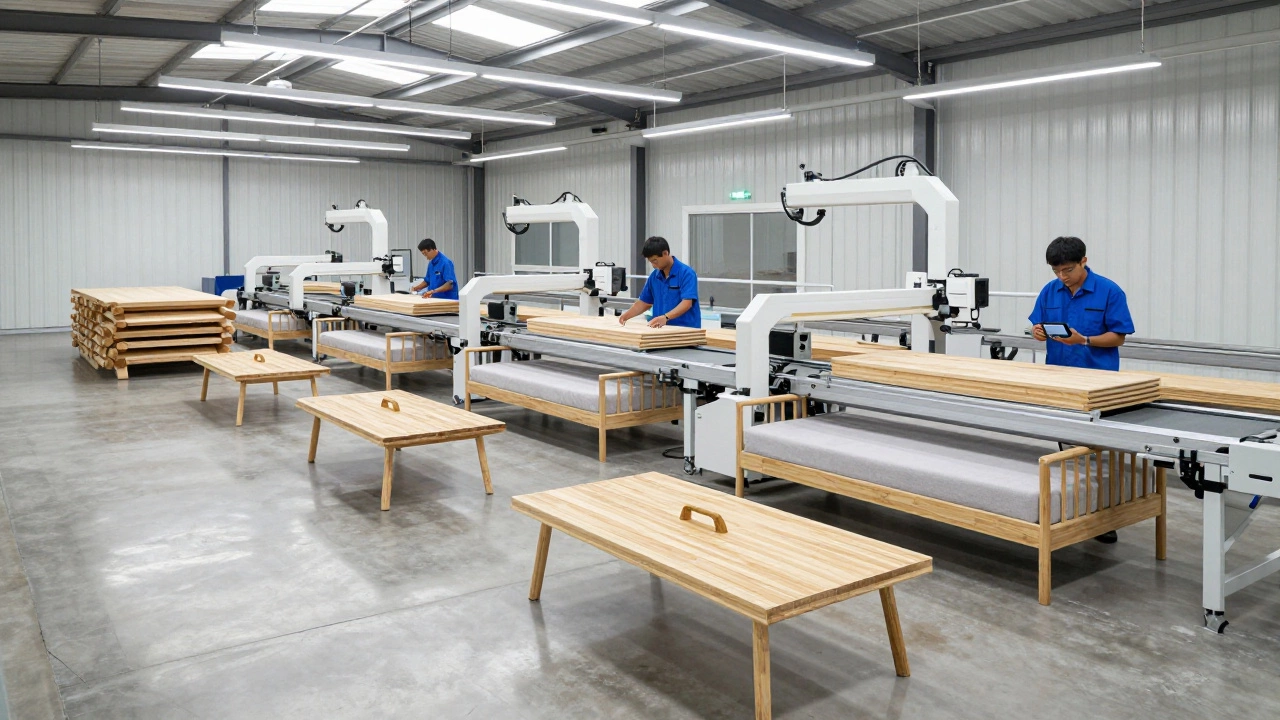
Vietnam’s advantage? Stronger control over supply chains. The country grows its own rubberwood and acacia, so there’s less reliance on imported timber. Factories are newer, cleaner, and often certified by FSC (Forest Stewardship Council) or BSCI (Business Social Compliance Initiative). Many are owned by Taiwanese or South Korean investors who brought over advanced assembly-line techniques.
But here’s the catch: labor costs are rising. Minimum wage in Ho Chi Minh City hit $220/month in 2025. That’s still cheaper than China, but it’s closing the gap with India. Also, Vietnam doesn’t have the same depth of skilled woodcarvers. You won’t find the same level of intricate hand detailing you get in India - unless you pay a premium.
China Still Matters - But Not Like Before
China used to be the default choice for furniture manufacturing. In 2015, it shipped over $50 billion worth of furniture worldwide. Today, that number is closer to $35 billion. Why the drop? Rising wages, stricter environmental rules, and U.S. tariffs on Chinese-made furniture pushed many buyers to look elsewhere.
But don’t write China off. It still dominates in mass-produced, low-cost items: particleboard bookshelves, flat-pack desks, and metal-framed chairs. Factories in Guangdong and Zhejiang can turn around 10,000 units in under 30 days. If you need bulk, fast, and cheap - China still delivers. But if you want quality wood, craftsmanship, or ethical sourcing, most serious buyers now avoid China for furniture.
Poland and Eastern Europe: The European Alternative
If your market is Europe, Poland is the quiet winner. Polish factories make 80% of the furniture sold in Germany and the Netherlands. Why? Proximity. Shipping from Warsaw to Berlin takes 12 hours by truck. That means faster restocking, lower freight costs, and fewer customs delays.
Polish manufacturers use mostly local beech and oak. They follow EU environmental standards strictly. Many factories are family-run businesses with 30+ years of experience. They don’t compete on price with Asia - they compete on reliability, design consistency, and fast turnaround.
But here’s the downside: labor is expensive. A skilled joiner in Poland earns $1,800/month. That’s more than double what they make in India. So Polish furniture is pricier. But if you’re selling in high-end European markets, the premium is worth it. Customers trust "Made in Poland" as a sign of durability and clean production.
What About the U.S. and Canada?
Domestic manufacturing in North America is making a comeback - but only for niche, high-value pieces. You’ll find small workshops in Vermont making heirloom maple tables. In Oregon, there are factories turning reclaimed wood into custom cabinets. In Canada, Ontario has a growing cluster of eco-conscious furniture makers using certified local timber.
These businesses don’t scale. A single workshop might produce 200 pieces a year. But they command prices 3-5x higher than Asian-made equivalents. Why? Buyers pay for authenticity, local sourcing, and zero long-haul shipping emissions. If your brand is about sustainability and storytelling, making furniture in the U.S. or Canada gives you a powerful edge.
Choosing the Right Place: A Simple Decision Guide
So where should you manufacture your furniture? It depends on what you’re making and who you’re selling to.
- High volume, low cost, diverse styles? Go to India. Best for bulk orders, handcrafted details, and flexible customization.
- Modern design, eco-certified, fast shipping to Asia? Choose Vietnam. Strong on quality control and sustainable materials.
- Mass-market, flat-pack, ultra-fast turnaround? Consider China - but only if you’re okay with lower material quality and longer lead times.
- Selling in Europe? Premium, reliable, short supply chain? Pick Poland. You’ll pay more, but your customers will trust the product.
- Brand built on sustainability and local pride? Make it in North America. You’ll get higher margins and loyal customers.

Red Flags to Watch For
Not all factories are equal. Here’s what to avoid:
- Factories that won’t let you visit - even virtually. If they refuse a factory audit, they’re hiding something.
- Claims of "100% solid wood" on cheap products. Real solid wood furniture costs 3x more than veneer. If the price seems too good to be true, it is.
- Suppliers who don’t provide FSC or CARB Phase 2 compliance certificates. These prove the wood is legally sourced and low in formaldehyde.
- Long lead times with no explanation. Reputable factories give you clear timelines: 45 days for production, 15 days for shipping. Anything longer? Ask why.
Real-World Example: A U.S. Brand’s Choice
A Brooklyn-based furniture startup, Root & Grain, wanted to launch a line of solid walnut dining tables. They got quotes from China, Vietnam, and India.
China offered $180 per table - but the wood was laminated, not solid. Vietnam quoted $240 with FSC-certified walnut and clean finishes. India came in at $210 - same wood, same finish, but with hand-carved edge detailing no one else could match. They chose India. Their tables now sell for $1,200 each. The craftsmanship justified the price. Customers leave reviews calling them "heirloom pieces."
Final Thought: It’s Not Just About Cost
The best place to manufacture furniture isn’t the cheapest. It’s the place that matches your product’s story, your customer’s expectations, and your brand’s values. India gives you artistry and scale. Vietnam gives you clean, modern production. Poland gives you European trust. North America gives you authenticity.
Don’t pick a country because it’s trendy. Pick it because it delivers what your customers truly care about: quality, ethics, and durability. The right manufacturer doesn’t just build furniture - they build your brand’s reputation.
Is India really the best place to manufacture furniture?
Yes, for most businesses, India is the best balance of cost, quality, and scale. It has the largest number of skilled woodworkers, access to premium hardwoods like teak and sheesham, and a well-established export infrastructure. Indian factories can handle everything from simple flat-pack designs to intricate hand-carved pieces - and they’ve been exporting to the U.S. and Europe for over two decades. The government’s PLI scheme has also pushed factories to meet international standards, making them more reliable than ever.
Why is Vietnam becoming popular for furniture manufacturing?
Vietnam is gaining popularity because its factories focus on modern, design-led furniture with strong environmental credentials. They use locally grown rubberwood and acacia, follow strict FSC and BSCI certifications, and have invested heavily in automated production lines. While labor costs are rising, their ability to deliver consistent, high-quality pieces quickly makes them ideal for brands targeting premium markets in the U.S., Canada, and Australia.
Should I avoid manufacturing furniture in China?
Not necessarily - but only if you’re making low-cost, mass-market items like particleboard shelves or metal chairs. For solid wood or handcrafted furniture, China is riskier. Many factories use low-grade materials, lack transparency, and have poor environmental practices. U.S. tariffs on Chinese furniture also add 25% to your costs. Unless you’re buying in huge volumes and don’t care about material quality, other countries like India or Vietnam are better options.
What certifications should I look for in a furniture manufacturer?
Always ask for FSC (Forest Stewardship Council) certification to ensure wood is legally and sustainably sourced. For safety, check for CARB Phase 2 compliance - this limits harmful formaldehyde emissions in particleboard and MDF. If you’re selling in Europe, look for CE marking. For ethical labor practices, BSCI or SMETA audits are strong indicators. Reputable factories will provide these documents without hesitation.
How long does it take to manufacture furniture overseas?
Production time varies by complexity and volume. Simple flat-pack items can be made in 25-35 days. Custom wood furniture with hand-finishing takes 45-60 days. Shipping adds another 15-30 days depending on the port. Always build in a 10-15% buffer for delays. The best manufacturers give you a clear timeline upfront and update you at every stage - from cutting to packing.
Can I visit the factory before placing an order?
Yes, and you should. Reputable manufacturers welcome visits - in person or via live video tour. If a supplier refuses, that’s a red flag. During the visit, check the wood storage (should be dry and clean), the glue and finish areas (no strong chemical smells), and the packing process (should be sturdy and labeled). Ask to see samples of past orders. A good factory will be proud to show you their work.