Manufacturing Business Path Finder
Not sure which manufacturing niche fits you? Answer three quick questions about your resources and preferences to get a personalized recommendation.
Recommended Path:
Result Title
90% MatchDescription of why this fits.
Alternative Option
40% MatchWhy it's less ideal right now.
Select your options and click Analyze My Fit to see which manufacturing business model suits you best.
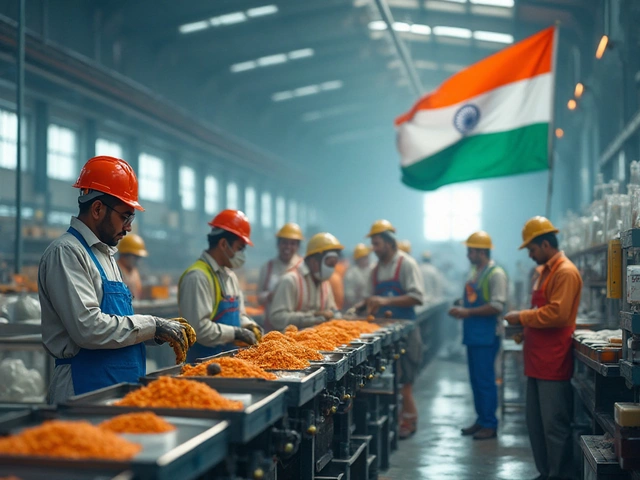
Most people think you need a massive factory and millions in capital to start a manufacturing business. That’s outdated thinking. In 2026, the real money is in agility, niche specialization, and low-overhead production models. If you are looking for the absolute best opportunities right now, two sectors stand out above the rest: specialized eco-friendly packaging and 3D printed spare parts (on-demand additive manufacturing for industrial and consumer goods). These aren't just trends; they are structural shifts in how the global supply chain works.
The Case for Eco-Friendly Packaging Manufacturing
Plastic bans are no longer coming-they are here. Across the UK and Europe, regulations like the Extended Producer Responsibility (EPR) schemes have forced companies to rethink their packaging. But here is the catch: generic biodegradable bags are saturated. The opportunity lies in specialized, high-performance sustainable materials.
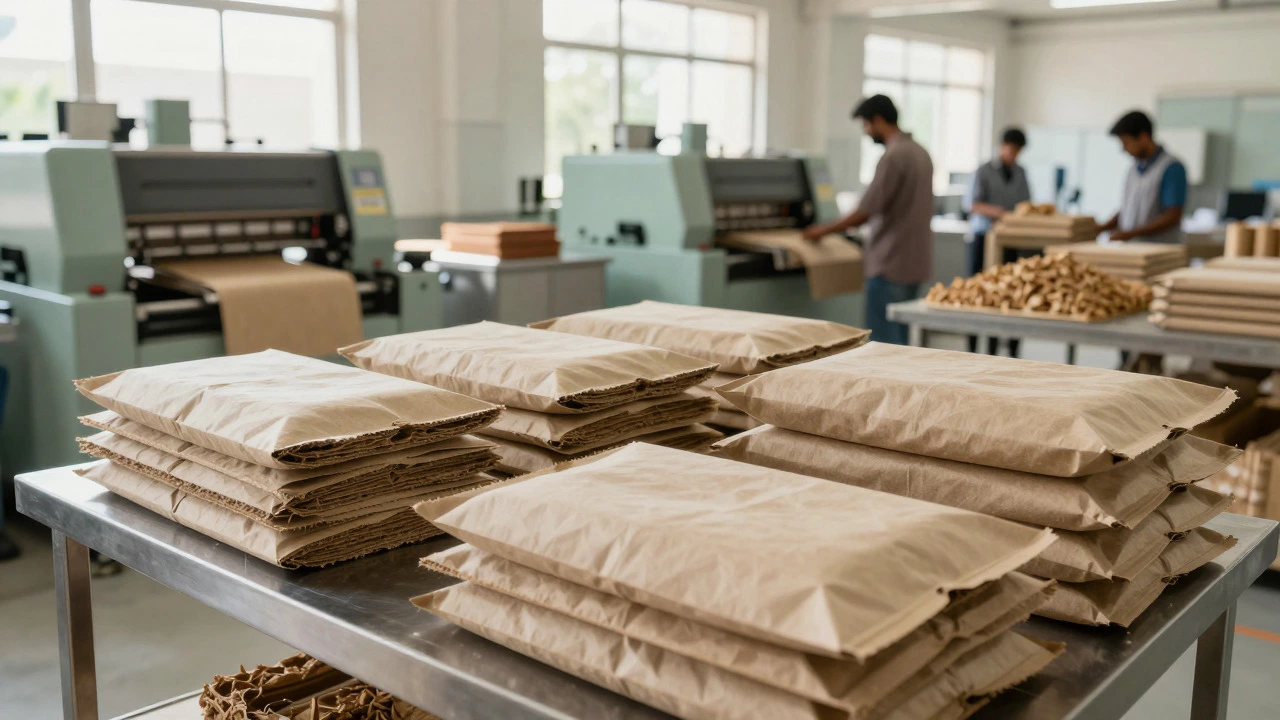
You don’t need to build a chemical plant. You can start with a mid-scale operation focusing on molded fiber packaging or compostable mailers made from agricultural waste. Think about the e-commerce boom that never really stopped. Every online seller needs shipping materials that look professional but don’t end up in a landfill for 500 years.
Molded pulp packaging is a material made from recycled paper fibers formed into protective shapes using molds. It replaces Styrofoam peanuts and plastic void fill. The raw material cost is incredibly low because you are essentially buying waste paper or straw. The value add comes from the molding process and the design customization. Companies will pay a premium for packaging that fits their brand aesthetic while meeting environmental compliance.
To succeed here, you need to solve two problems: moisture resistance and durability. Standard paper dissolves if it gets wet. By investing in a simple coating technology (like starch-based or PLA coatings), you create a product that competes directly with plastic in performance but wins on sustainability. This is a classic "good enough" manufacturing play where quality meets regulatory necessity.
The Rise of On-Demand 3D Printing Services
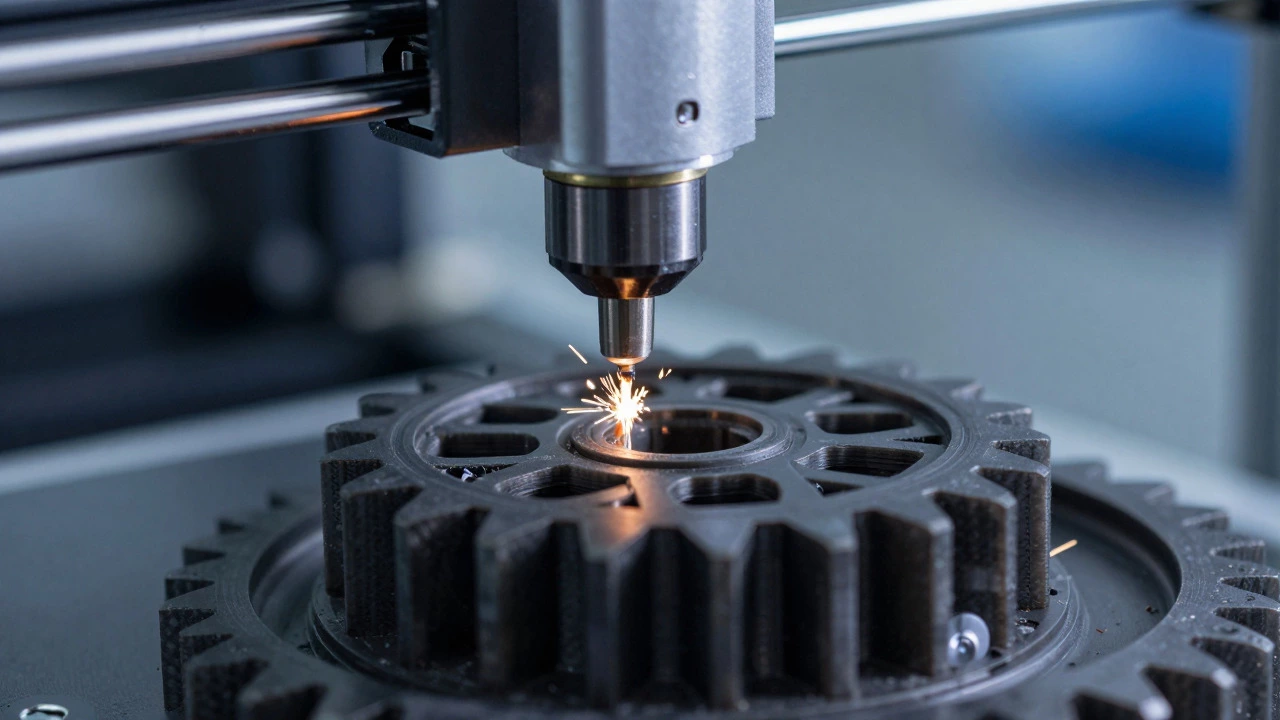
The second top contender is additive manufacturing, specifically focused on spare parts and prototyping. Traditional manufacturing relies on economies of scale-you make 10,000 units to keep costs down. Additive manufacturing flips this. It allows you to make one unit as cheaply as making ten, provided you have the right digital file.
Why is this exploding in 2026? Because legacy machinery is breaking down. Factories worldwide are running equipment from the 1980s and 90s. Original Equipment Manufacturers (OEMs) often no longer produce these specific gears, levers, or housings. Waiting six weeks for a custom-machined part shuts down a production line. A local 3D printing service that can deliver a functional prototype or final part in 24 hours becomes invaluable.
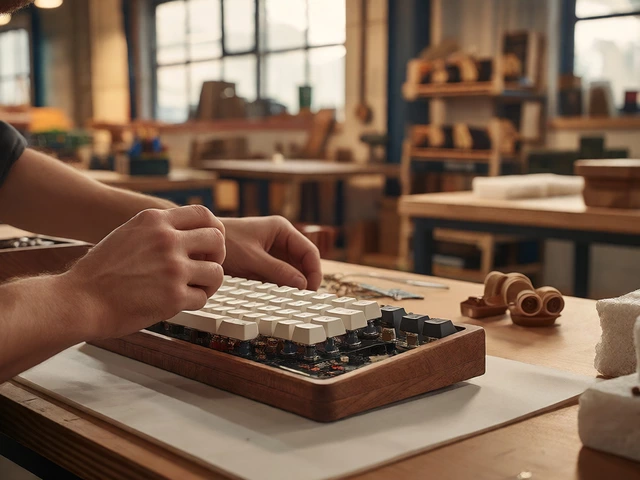
This isn’t just about toys or figurines. We are talking about functional engineering plastics like Nylon (PA12) or Carbon Fiber-reinforced filaments. These materials offer strength-to-weight ratios that rival aluminum in many applications. Your job is not just to print; it is to engineer. You need to understand tolerances, stress points, and post-processing techniques like annealing to ensure the parts actually work under pressure.
The barrier to entry here is knowledge, not capital. A high-end industrial FDM printer or SLS (Selective Laser Sintering) machine costs significantly less than an injection molding setup. Plus, you hold no inventory. You store digital files, not physical stock. This reduces your risk to near zero compared to traditional manufacturing.
Comparing the Two Giants: Which Fits You?
Both businesses are lucrative, but they require different skill sets and operational styles. Let’s break down the reality of each option so you can decide which path aligns with your resources and interests.
| Feature | Eco-Packaging | 3D Printed Parts |
|---|---|---|
| Initial Investment | Medium ($50k-$150k) | Low-Medium ($20k-$80k) |
| Primary Skill Required | Supply Chain & Sales | CAD Design & Engineering |
| Inventory Model | Bulk Raw Materials | Digital Files (Zero Physical Stock) |
| Customer Type | B2B (E-commerce, Retail) | B2B (Industrial, Automotive) |
| Scalability | High Volume, Low Margin | Low Volume, High Margin |
If you are a salesperson who enjoys building relationships with retailers and logistics managers, eco-packaging is your lane. You are selling volume and reliability. If you are a tinkerer, an engineer, or someone who loves solving complex mechanical puzzles, 3D printing offers higher margins per unit and more intellectual satisfaction.
Key Success Factors for New Manufacturers
Regardless of which path you choose, three factors determine survival in modern manufacturing:
- Speed to Market: Customers want things yesterday. Whether it’s a batch of custom boxes or a replacement gear, your turnaround time is your biggest competitive advantage over large overseas factories.
- Quality Control: One bad batch can destroy your reputation. Implement strict QC checks early. For packaging, test water resistance and drop tests. For 3D prints, verify dimensional accuracy with calipers before every new job.
- Niche Focus: Don’t try to be everything to everyone. Specialize in packaging for cosmetics, or 3D parts for vintage cars. Depth beats breadth when you are starting out.
Common Pitfalls to Avoid
New entrepreneurs often fall into the trap of over-engineering. They spend months perfecting a product that no one has asked for. Start with a Minimum Viable Product (MVP). Get a sample in front of a potential customer. Ask for feedback. Iterate. Also, beware of hidden costs in logistics. Shipping heavy packaging materials eats into margins. Locate your facility near your primary market or raw material source to minimize transport fees.
Another mistake is ignoring certifications. If you go into food-safe packaging or medical-adjacent parts, you need ISO standards or FDA compliance. Factor these costs and timelines into your initial budget. It’s better to know upfront than to get shut down later.
Next Steps for Aspiring Manufacturers
Start by validating demand. Talk to five potential customers before you buy any machinery. For packaging, approach local boutique brands. For 3D printing, visit local repair shops or small engineering firms. Ask them what their biggest pain point is with current suppliers. Then, build a solution that addresses that specific pain.
Secure funding wisely. Look into government grants for green manufacturing or innovation hubs in your region. Many cities offer tax breaks for setting up industrial operations in designated zones. Finally, protect your IP. If you develop unique designs or proprietary processes, consider patents or trade secrets to safeguard your edge.
How much money do I need to start a small manufacturing business?
You can start a lean manufacturing business with as little as $20,000 to $50,000 if you focus on low-volume, high-value items like 3D printed parts. Larger operations involving bulk material processing, such as eco-friendly packaging, typically require $50,000 to $150,000 for machinery, space, and initial raw material stock. Always include a 20% buffer for unexpected costs.
Is manufacturing still profitable in 2026?
Yes, but only for specialized niches. General commodity manufacturing faces stiff competition from low-cost countries. However, localized, agile manufacturing that offers speed, customization, and sustainability commands premium prices. Margins are healthier in B2B sectors where reliability and compliance matter more than rock-bottom pricing.
What are the legal requirements for starting a manufacturing business in the UK?
You need to register your business with Companies House, obtain appropriate insurance (public liability and product liability), and comply with health and safety regulations enforced by the HSE. Depending on your product, you may also need specific certifications like CE marking for electronics or food-grade approvals for packaging. Local planning permission is required if you change the use of a property to industrial.
Can I run a manufacturing business from home?
For very small-scale operations like 3D printing or assembly, yes. However, check your lease agreement and local zoning laws. Noise, fumes, and increased traffic can lead to complaints. Most successful manufacturers eventually move to a dedicated workshop or industrial unit to scale efficiently and separate living from working spaces.
Which is better: B2B or B2C manufacturing?
B2B (Business-to-Business) is generally more stable for new manufacturers. Contracts are larger, recurring, and less price-sensitive if quality is consistent. B2C requires significant marketing spend and dealing with individual customer service issues. Starting with B2B allows you to focus on production excellence rather than brand building initially.