Manufacturing Method Selector
Answer three questions to find the most suitable production method for your project.
Please answer all questions above.
Ready to Calculate
Enter your parameters to get a recommendation.
Every object you touch-from the smartphone in your pocket to the steel beams holding up your house-started as raw material. But how did it get from a lump of metal or a pile of plastic into a finished product? The answer lies in manufacturing. While there are dozens of specific techniques, they all fall under six primary types of manufacturing. Understanding these categories is crucial for anyone looking to start a factory, optimize a supply chain, or simply grasp how the modern economy works.
Manufacturing isn't just about assembly lines. It’s a complex mix of chemistry, physics, and logistics. Whether you are dealing with government schemes for industrial support or trying to choose the right production method for a new startup, knowing the difference between subtractive and additive processes can save you millions. Let’s break down the six main ways we make things today.
1. Continuous Manufacturing
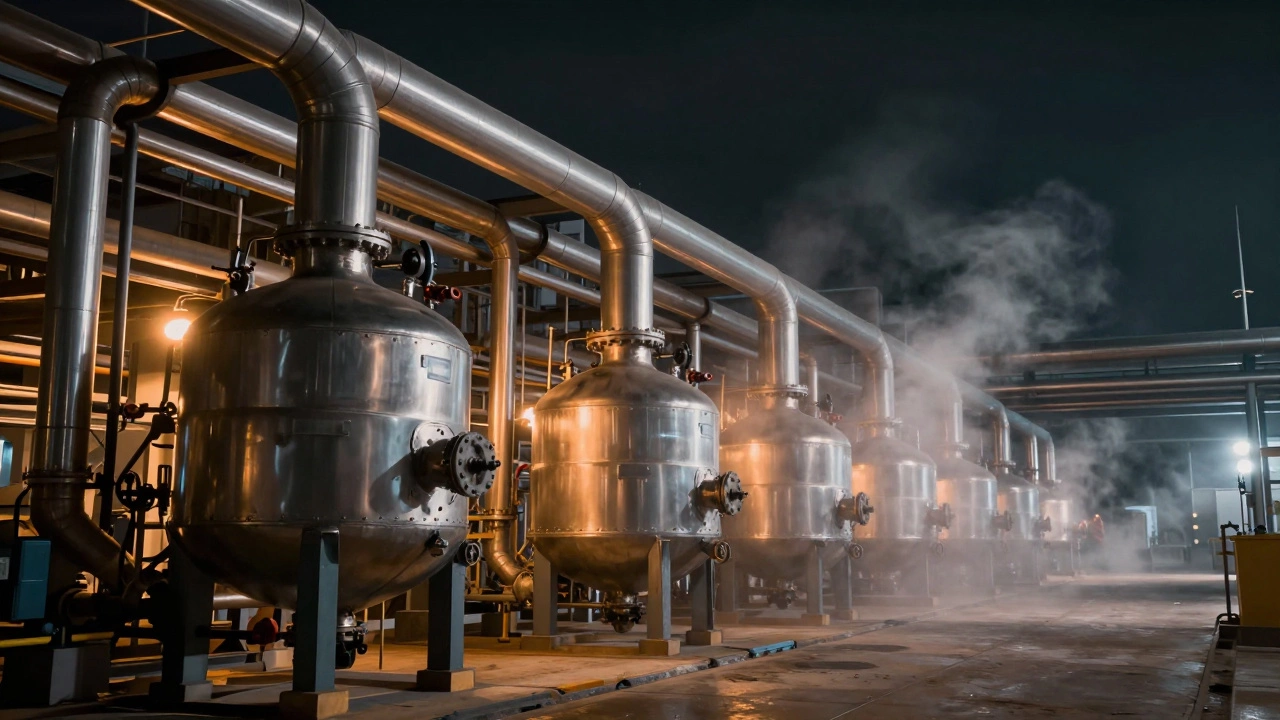
The key here is volume and consistency. You aren’t making "Unit A" and then "Unit B." You are creating a steady stream of identical product. Because the equipment runs 24/7, the cost per unit drops significantly due to economies of scale. However, changing the product line is difficult and expensive. If you want to switch from producing gasoline to diesel, you have to shut down, clean, and reconfigure massive pipelines and reactors.
- Best for: Liquids, gases, powders, and bulk chemicals.
- Key Benefit: Extremely low cost per unit at high volumes.
- Main Drawback: High initial capital investment and lack of flexibility.
2. Discrete Manufacturing
If continuous manufacturing is a river, discrete manufacturing is a conveyor belt of individual items. This is the most common type of manufacturing people think of when they hear "factory." Here, products are made as separate, countable units. Cars, smartphones, furniture, and shoes are all examples of discrete manufacturing.
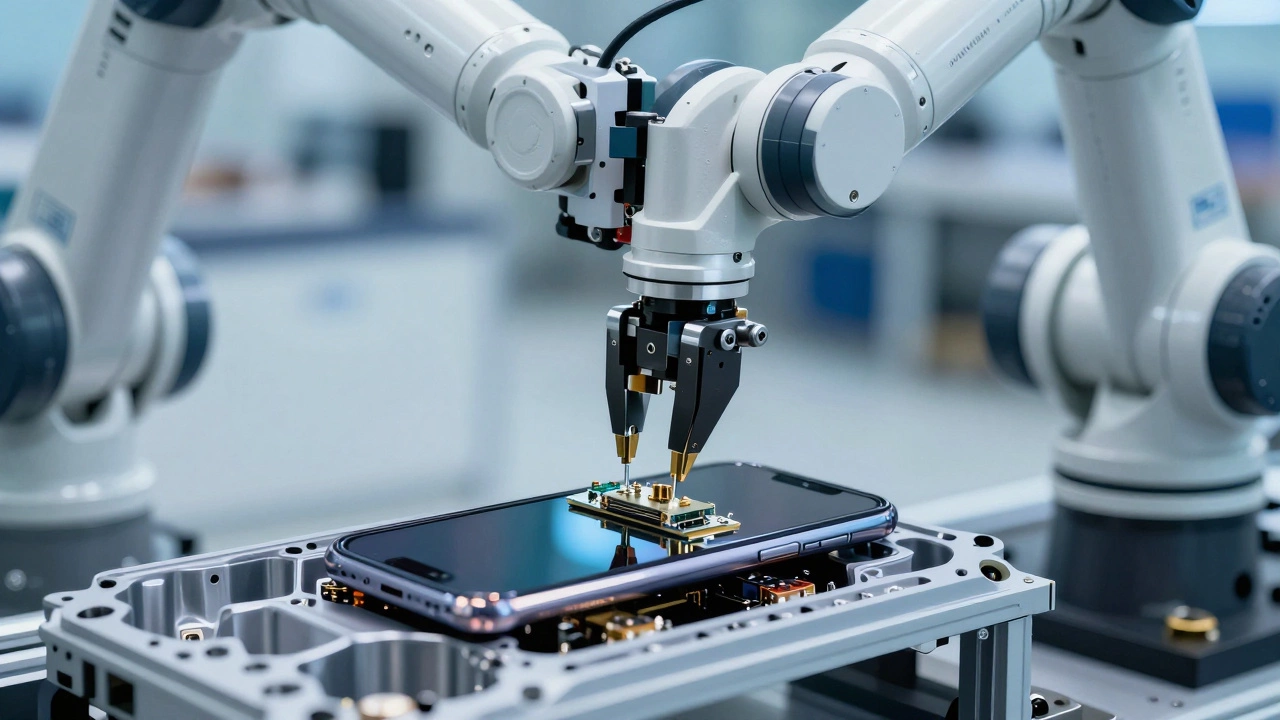
In this model, components are assembled together. A car isn’t poured out of a mold; it’s built by joining thousands of parts-engines, tires, seats, electronics-into a single functioning entity. Each unit can be tracked individually through the production process. This allows for more customization than continuous manufacturing. You can build a red sedan on one spot on the line and a blue SUV on the next, provided the underlying platform is similar.
Discrete manufacturing relies heavily on assembly lines and robotics. The complexity comes from inventory management. You need to ensure that every screw, wire, and panel arrives at the right station at the exact right time. Just-in-time (JIT) inventory systems are often used here to reduce waste, but they also increase the risk of supply chain disruptions.
3. Additive Manufacturing (3D Printing)
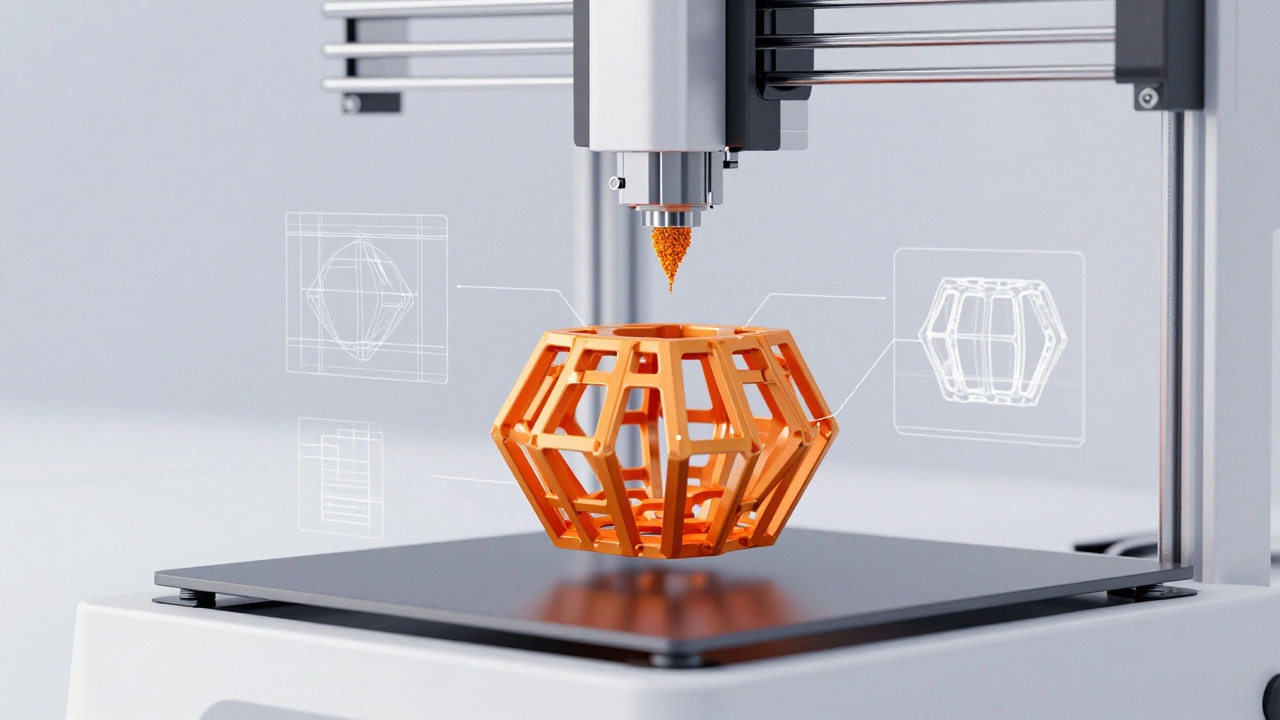
Unlike traditional methods that cut away material or press it into shape, additive manufacturing adds material only where needed. This reduces waste significantly. Imagine printing a titanium hip implant with internal lattice structures that mimic human bone, allowing for better integration with the patient’s body. That’s impossible with casting or machining.
This type of manufacturing excels in rapid prototyping and small-batch production. It eliminates the need for expensive molds or tooling. If you change the design in the software, the next print reflects that change immediately. For startups and innovators, this lowers the barrier to entry. You don’t need a million-dollar injection molding machine to test your idea. You just need a printer and some filament or resin.
- Best for: Prototypes, custom medical devices, complex aerospace parts.
- Key Benefit: Design freedom and minimal material waste.
- Main Drawback: Slower production speed for large quantities compared to mass manufacturing.
4. Subtractive Manufacturing
Subtractive manufacturing is the opposite of additive. Instead of adding layers, you start with a solid block of material (wood, metal, plastic) and remove excess until you reach the desired shape. This includes processes like milling, turning, drilling, grinding, and laser cutting.
CNC (Computer Numerical Control) machines are the stars here. These automated tools follow precise digital instructions to carve out parts with incredible accuracy. Subtractive manufacturing is ideal for high-precision components. Think of engine blocks, aircraft turbine blades, or intricate jewelry. The tolerances can be incredibly tight, often within microns.
The downside? Waste. When you mill a metal part, most of the original block ends up as chips or dust. This makes it less efficient for materials that are expensive or hard to recycle. However, the strength and surface finish of subtractively manufactured parts are often superior to those produced by additive methods, which can have layer lines or porosity issues.
5. Repetitive Manufacturing
Repetitive manufacturing sits somewhere between continuous and discrete. It involves producing the same product over and over again, often using an assembly line, but the product itself is still a discrete unit. This is common in consumer electronics, appliances, and automotive parts.
The focus here is on efficiency and minimizing downtime. The production line is optimized for one specific product or a very narrow range of products. Workers or robots perform the same tasks repeatedly. Because the process is standardized, quality control is easier to maintain, and worker training is simpler.
This method is highly sensitive to demand fluctuations. If sales drop, you’re stuck with a line designed for high output. Conversely, if demand spikes, scaling up can be challenging because the bottleneck is usually the physical layout of the line. Companies using repetitive manufacturing often invest heavily in automation to keep costs down and consistency high.
6. Batch Manufacturing
Batch manufacturing offers flexibility. You can run different products on the same equipment throughout the day or week. This is perfect for businesses that offer variety without needing the massive scale of continuous production. It also allows for quality checks between batches. If something goes wrong, you only lose one batch, not the entire day’s output.
However, the transition between batches-known as changeover-is costly in terms of time and resources. Cleaning machinery, adjusting settings, and recalibrating tools take time during which no product is being made. Efficient batch manufacturers focus on reducing changeover times using techniques like SMED (Single-Minute Exchange of Die).
| Type | Flexibility | Volume | Cost Efficiency | Example Industries |
|---|---|---|---|---|
| Continuous | Low | Very High | High (at scale) | Oil, Chemicals, Food |
| Discrete | Medium | High | Medium | Automotive, Electronics |
| Additive | Very High | Low to Medium | Low (per unit) | Aerospace, Medical, Prototyping |
| Subtractive | Medium | Medium | Medium | Precision Engineering, Tooling |
| Repetitive | Low | High | High | Appliances, Consumer Goods |
| Batch | High | Variable | Medium | Pharma, Bakery, Textiles |
Choosing the Right Manufacturing Type
Selecting the right manufacturing method depends on several factors. First, consider your product volume. If you’re making millions of identical units, continuous or repetitive manufacturing will likely give you the best margins. If you’re making custom, one-off items, additive manufacturing is your friend.
Second, look at material constraints. Some materials can only be processed in certain ways. Metals often require subtractive or discrete assembly, while plastics can be molded, extruded, or printed. Third, think about lead times. Batch and additive manufacturing allow for faster iterations and smaller initial runs, which is great for testing the market.
Government schemes for manufacturing support often target specific sectors. For example, subsidies for green energy might favor continuous manufacturing for solar panels, while grants for innovation might support additive manufacturing startups. Understanding these alignments can help you access funding and resources.
What is the difference between discrete and repetitive manufacturing?
Discrete manufacturing focuses on making distinct, countable items that may vary in configuration (like custom cars). Repetitive manufacturing produces the same product continuously on an assembly line with little variation (like standard laptops). Discrete is more flexible; repetitive is more efficient for high-volume, uniform goods.
Is 3D printing considered a primary type of manufacturing?
Yes, 3D printing falls under additive manufacturing. While it was once seen as just a prototyping tool, it is now a primary manufacturing method for producing final-use parts in industries like aerospace and healthcare due to its ability to create complex geometries and reduce waste.
Which manufacturing type is best for small businesses?
Small businesses often benefit from batch or additive manufacturing. These methods require lower initial capital investment and allow for greater flexibility in product variety and volume. They enable startups to test markets without committing to large-scale production runs.
How does continuous manufacturing differ from batch manufacturing?
Continuous manufacturing runs non-stop, producing a constant stream of product. Batch manufacturing produces a set quantity of one product, then stops to clean and reconfigure for the next product. Continuous is better for commodities; batch is better for varied products.
Can a single factory use multiple types of manufacturing?
Absolutely. Many large factories use hybrid approaches. For example, an automotive plant might use continuous manufacturing to produce paint, discrete manufacturing to assemble the chassis, and additive manufacturing to create custom jigs and fixtures for the assembly line.