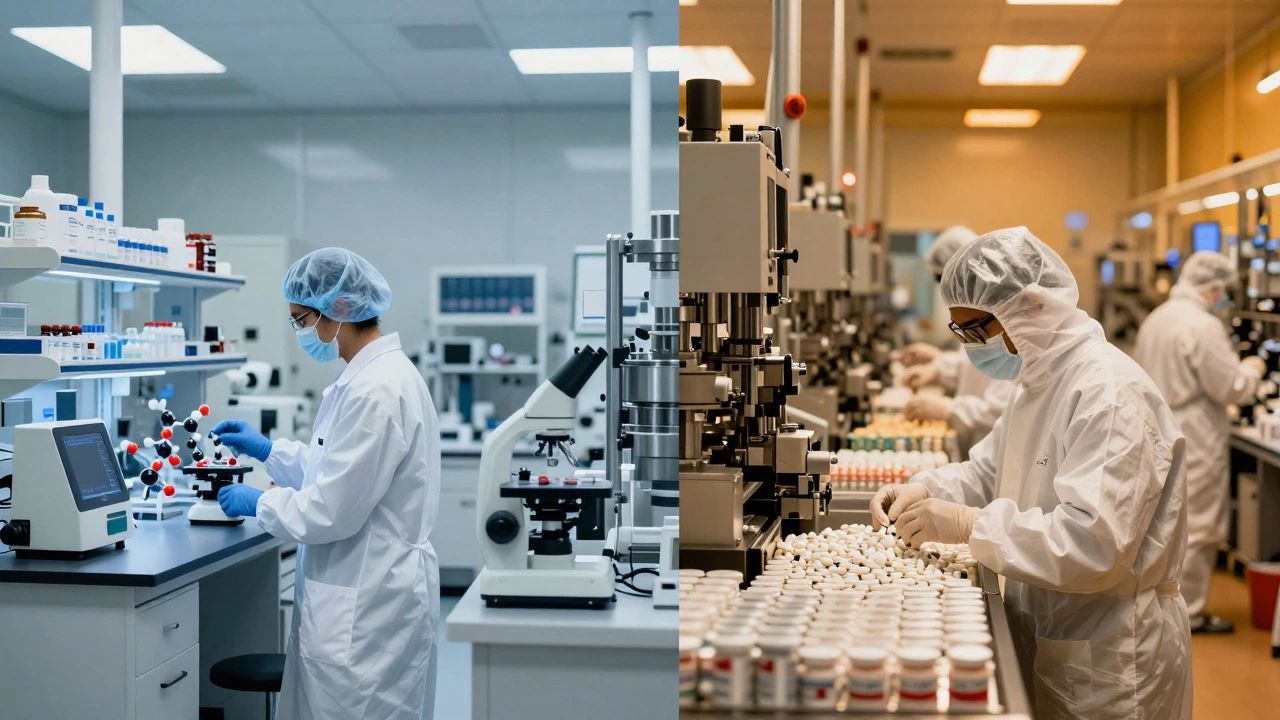
Pharma Industry Leaderboard: Revenue vs. Volume
The "number one" country changes depending on how you measure success. Toggle between metrics to see the shift in leadership.
🇺🇸 United States
Leader🇮🇳 India
Challenger🇨🇳 China
EmergingKey Takeaway
When measuring by dollar value, the US is the clear leader due to high-priced innovative drugs. However, when looking at physical output and global accessibility, India takes the top spot as the world's pharmacy for generic medicines and vaccines.
When people ask which country leads the pharma industry, the answer usually jumps to the United States or Switzerland. But if you look at who actually makes the pills you swallow every day, the picture gets a lot more interesting. The US dominates by revenue because it has the highest drug prices in the world. However, when we talk about volume, accessibility, and the sheer scale of production for the rest of the planet, India has quietly become the powerhouse.
So, who is really number one? It depends on how you measure success. If you mean "who earns the most money," it’s the US. If you mean "who supplies the most patients with affordable medication," it’s India. Let’s break down the actual numbers, the key players, and why this distinction matters for anyone interested in healthcare economics or manufacturing trends.
Revenue vs. Volume: Two Different Leaders
To understand the landscape, we have to separate two distinct metrics: market size (revenue) and production volume (units produced). These are not the same thing, and confusing them leads to the wrong conclusion about who holds the top spot.
The United States accounts for roughly 40-45% of the global pharmaceutical market value. Why? Because a single dose of a brand-name drug in the US can cost ten times more than the same generic version in India or Europe. Companies like Pfizer, Merck, and Johnson & Johnson earn billions not just from selling lots of drugs, but from selling high-priced innovations. This makes the US the undisputed leader in terms of dollar value.
However, look at the other side of the ledger. India produces about 20-25% of the world’s vaccines and supplies generic medicines to over 100 countries. In terms of the number of doses manufactured and distributed globally, India often rivals or exceeds many Western nations. For the majority of the world’s population, especially in developing regions, "number one" means the country that keeps their supply chains running without breaking the bank. That role belongs to India.
Why India Dominates Generic Manufacturing
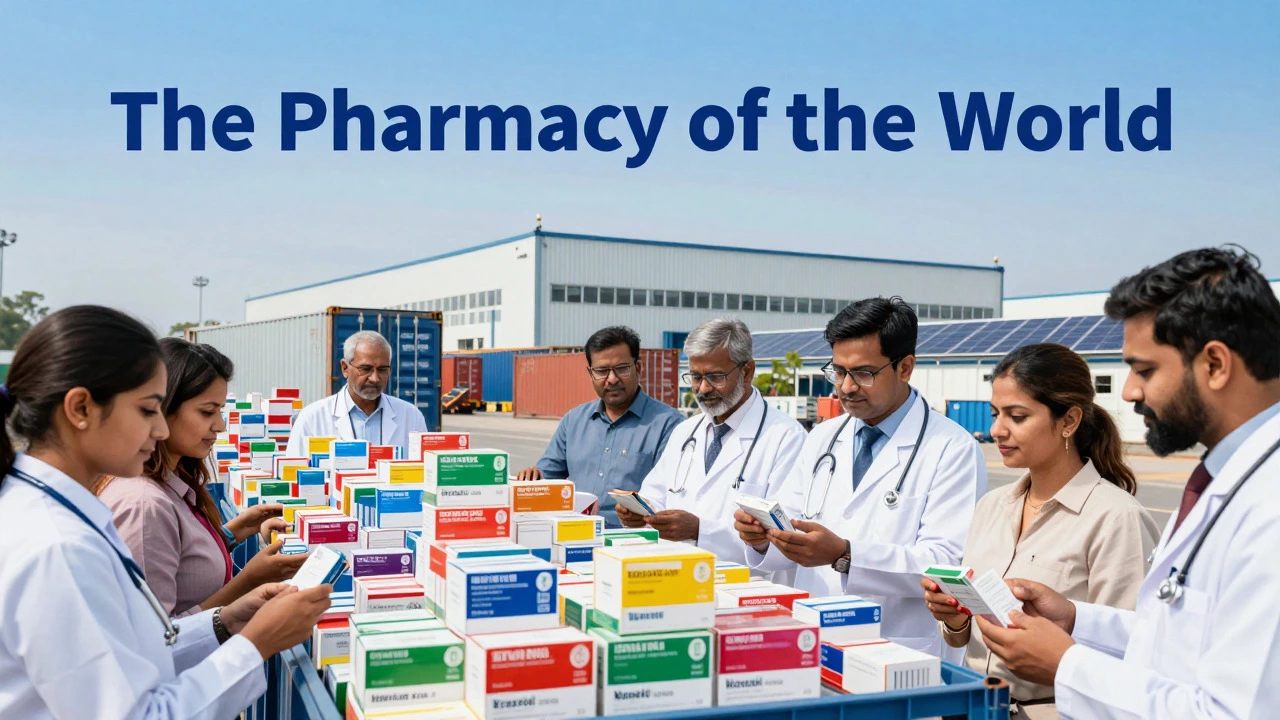
India is the largest producer of generic medicines in the world, supplying approximately 60% of the global vaccine demand and exporting APIs to major markets. Also known as the Pharmacy of the World, its dominance stems from a unique combination of regulatory flexibility, skilled labor, and established infrastructure.
There are three main reasons why Indian manufacturers hold such a strong position:
- Cost Efficiency: Labor costs in India are significantly lower than in the US or EU. This allows companies to produce high-quality drugs at a fraction of the cost while still maintaining competitive margins.
- Regulatory Speed: While the US FDA approval process can take years, Indian regulatory pathways for generics are often faster. This allows Indian firms to launch products quickly after patent expirations in other markets.
- API Mastery: Many countries import Active Pharmaceutical Ingredients (APIs) from China or India. India has developed a robust ecosystem for producing these raw chemicals, giving local manufacturers a vertical integration advantage that pure formulators lack.
Companies like Sun Pharma, Cipla, and Dr. Reddy’s Laboratories are not just domestic players; they are global giants. Sun Pharma, for instance, operates in over 100 countries and consistently ranks among the top 10 global pharmaceutical companies by revenue. Their ability to navigate complex international regulations while keeping costs low is what cements their status.
The Top Players: Who Are the Giants?
If we look at individual companies rather than countries, the list of leaders changes slightly. The top tier consists of a mix of US-based innovators and Indian/Chinese generic specialists. Here is how the major entities stack up based on recent annual reports and market analyses.
| Company Name | Headquarters | Primary Focus | Key Strength |
|---|---|---|---|
| Pfizer | United States | Innovative Drugs | Broadest pipeline of new molecular entities |
| Merck & Co. | United States | Oncology & Vaccines | High-revenue blockbuster drugs |
| Sun Pharmaceutical Industries | India | Generics & Specialty | Largest generic exporter to the US/EU |
| Cipla | India | Respiratory & Oncology | Strong presence in emerging markets |
| Novo Nordisk | Denmark | Diabetes & Obesity | Dominance in GLP-1 receptor agonists |
Notice the split. US companies like Pfizer and Merck lead in innovation and brand power. They spend massive amounts on R&D to create new molecules. On the other hand, Indian giants like Sun Pharma and Cipla lead in execution and scale. They take existing molecules, reverse-engineer them, and distribute them efficiently across the globe. Both models are essential, but they serve different parts of the global health equation.
China: The Emerging Challenger
You can’t talk about the top of the pharma industry without mentioning China. Historically, China was seen as the source of cheap APIs, sometimes with quality concerns. Today, that narrative is shifting. Chinese biotech companies are increasingly investing in original research and development, not just copying.
While India remains the king of finished dosage forms (the actual tablets and injections), China is catching up fast in biologics and advanced therapies. For a reader looking at future trends, the rivalry between Indian and Chinese manufacturers is the most significant dynamic in the sector right now. India holds the edge in regulatory trust with Western agencies (FDA/EMA), while China holds the edge in raw material supply chains and state-backed investment.
What Does "Number One" Mean for You?
If you are an investor, the "number one" country might be the US due to higher profit margins per unit. If you are a patient or a public health advocate, the "number one" country is likely India, because it provides access to life-saving medications for billions who cannot afford brand-name prices.
Understanding this duality is crucial. The global pharma industry isn't a zero-sum game where one country wins and others lose. It’s a complex web where the US funds innovation, India scales distribution, and China supports the supply chain. Each plays a vital role in keeping the global healthcare system functioning.
Future Outlook: Where Is the Industry Heading?
Looking ahead to 2026 and beyond, several factors will influence these rankings. First, the rise of biosimilars is creating a new battleground. Just as generics disrupted small molecule drugs, biosimilars are disrupting expensive biologics. India is positioning itself strongly here, aiming to become the hub for affordable biosimilars.
Second, geopolitical tensions are causing some reshoring of manufacturing. The US and EU are pushing to bring more API production back home to reduce dependency on Asia. This could slow India’s growth rate in the next decade, but it won’t eliminate its dominance in finished goods.
Finally, digital health and AI-driven drug discovery are changing the R&D landscape. While this benefits large US labs, it also opens doors for smaller Indian startups to compete on speed and data analytics rather than just chemical synthesis.
Frequently Asked Questions
Is India bigger than the US in the pharma industry?
It depends on the metric. The US is larger in terms of total market revenue (dollars) because of higher drug prices. India is larger or comparable in terms of production volume and export reach for generic medicines and vaccines. For global accessibility, India is often considered the leader.
Which company is the largest pharma company in the world?
As of recent fiscal years, Pfizer and Merck typically trade places for the top spot in terms of revenue. However, if you include all segments including consumer health, Johnson & Johnson is also a consistent top-three player. Among non-US companies, Sun Pharmaceutical Industries is frequently ranked as the largest.
Why are Indian drugs cheaper than American ones?
The price difference comes from several factors: lower labor and operational costs in India, less restrictive pricing regulations, and the fact that Indian companies often sell generics that do not require recouping massive R&D expenses. Additionally, the Indian government actively promotes affordable healthcare through policy support.
Does the US manufacture most of its own drugs?
Surprisingly, no. A significant portion of the Active Pharmaceutical Ingredients (APIs) used in US-made drugs are imported, primarily from China and India. While the final packaging may happen in the US, the core chemical components often come from Asian manufacturing hubs.
Who is the top pharma company in India?
Sun Pharmaceutical Industries is widely regarded as the largest pharmaceutical company in India by market capitalization and revenue. Other major players include Cipla, Dr. Reddy’s Laboratories, and Lupin, all of which have significant global footprints.