Indian Textile Authenticity Checker
Check Authenticity
Verify if your Indian textile is genuine using key verification criteria from the article.
Verify your textile
Select fabric type and verification criteria to check authenticity
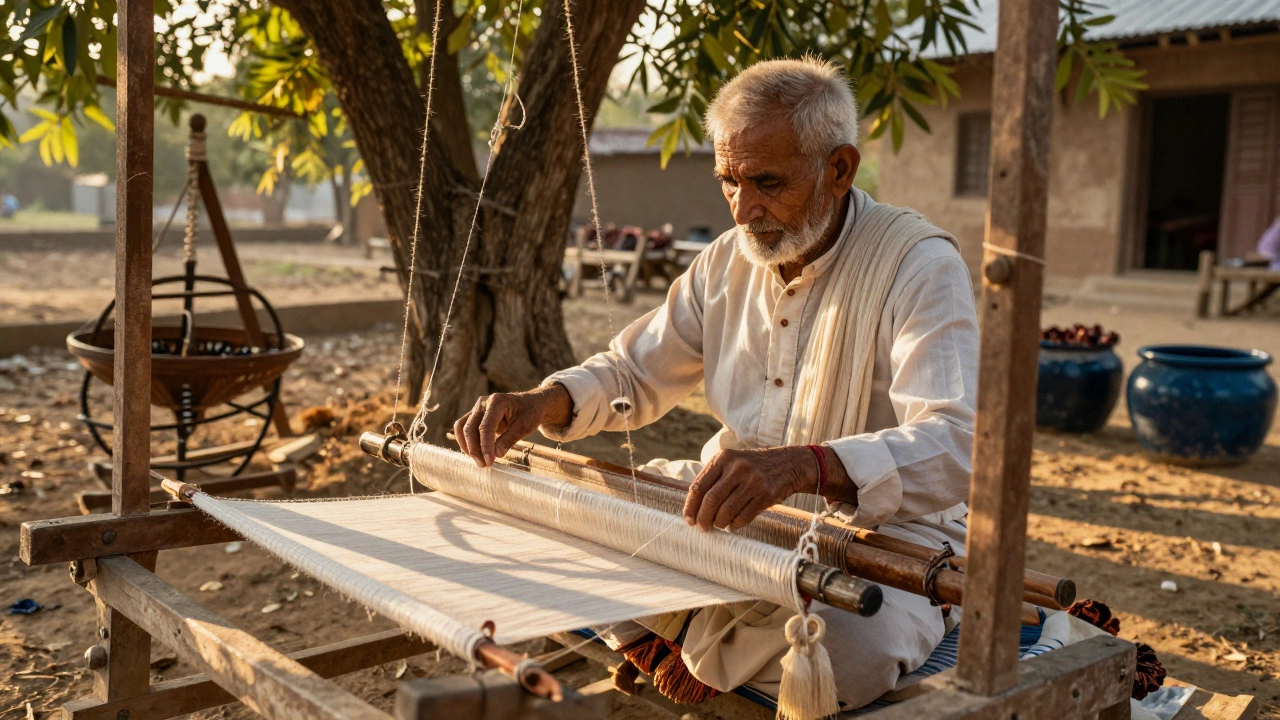
India doesn’t just make textiles-it owns them. For over 5,000 years, the country has shaped global fashion with fabrics that carry history, skill, and soul. When people ask what textile India is famous for, the answer isn’t one fabric. It’s a whole family of handwoven wonders, each tied to a region, a craft, and generations of weavers who refuse to let their art fade.
India’s most famous textile: Cotton
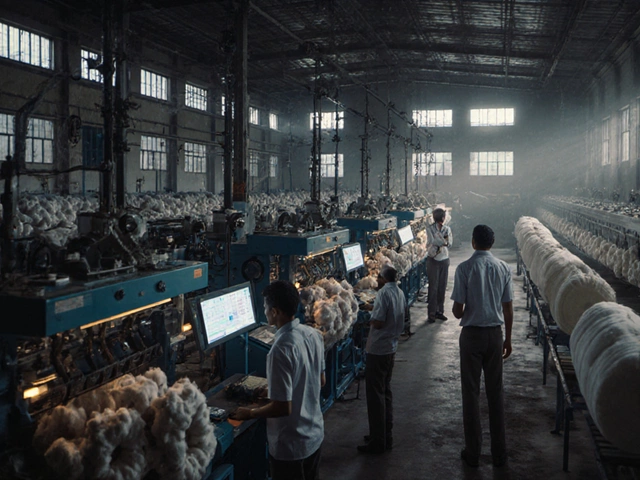
Cotton is India’s backbone. The country is the world’s largest producer of cotton, growing over 6 million bales a year. But it’s not just about volume. Indian cotton is known for its long staple fibers, especially from Gujarat and Maharashtra. These fibers are soft, strong, and perfect for fine weaves. Think of the crisp white dhotis worn in rural temples, the lightweight kurtas that stay cool in 40°C heat, or the breathable muslins that once traveled to Europe and were called ‘woven wind’.
India’s cotton isn’t just grown-it’s spun, dyed, and woven by hand in villages where looms have been passed down for centuries. The term ‘khadi’ isn’t just fabric-it’s a movement. Made from hand-spun, hand-woven cotton, khadi became a symbol of independence under Gandhi. Today, it’s still made using charkhas (spinning wheels) in over 50,000 rural units. The fabric is slightly uneven, raw, and real. That’s why global brands like Armani and Zara source Indian cotton for their premium lines.
Silk: The royal thread of India
If cotton is the people’s fabric, silk is the crown jewel. India produces four main types of silk: mulberry, eri, tassar, and muga. Each comes from a different region and silkworm. Mulberry silk, the smoothest and shiniest, is grown in Karnataka and West Bengal. It’s what makes Banarasi silk sarees so luxurious. These sarees, woven in Varanasi with real gold and silver zari threads, take weeks to complete. One piece can cost upwards of ₹50,000. They’re worn at weddings, passed down as heirlooms, and exported to the Middle East and Europe.
Muga silk, found only in Assam, is golden in color and naturally resistant to sunlight. It doesn’t need dye-it glows on its own. Eri silk, called ‘peace silk’, is made without killing the silkworm. It’s warm, fuzzy, and used in shawls for the Himalayan winters. Tassar silk, wild and earthy, comes from forests in Jharkhand and Chhattisgarh. It’s rougher than mulberry but has a rich, natural texture favored by designers who want authenticity.
Banarasi silk: The most iconic Indian textile
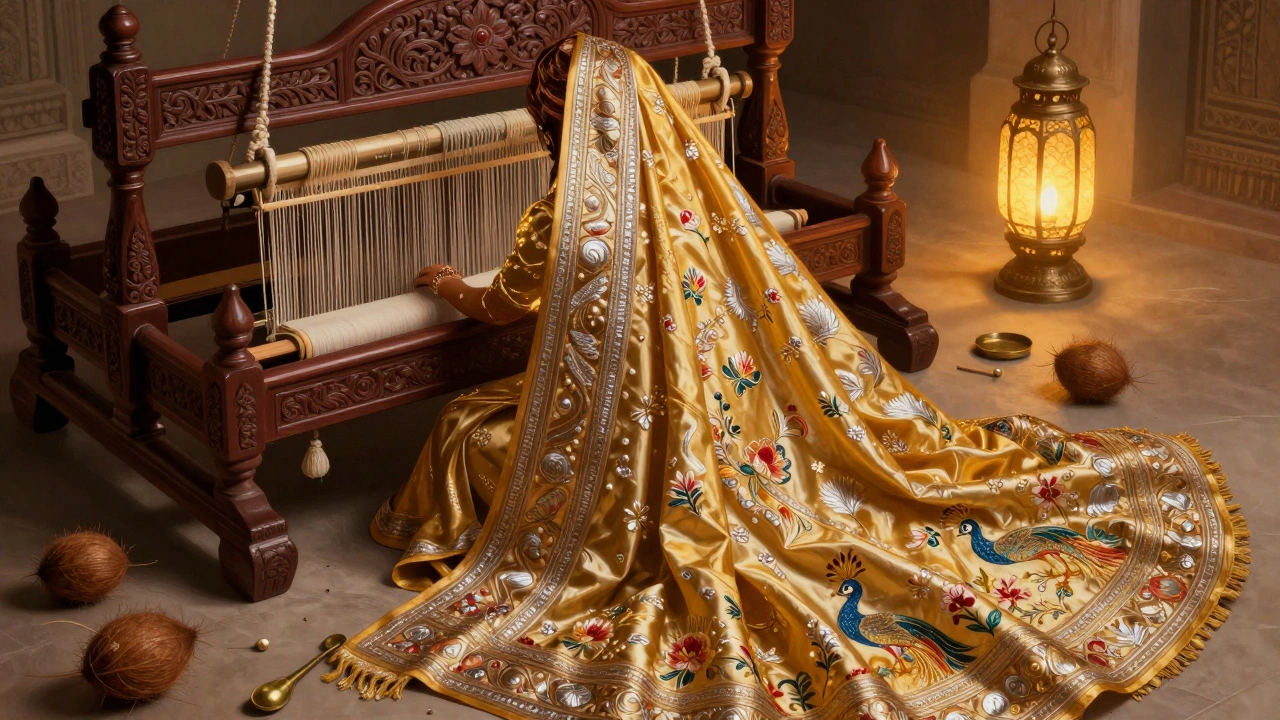
When you think of an Indian wedding, you think of a Banarasi silk saree. It’s not just a fabric-it’s a cultural icon. The weave is so dense that a single saree can have over 100,000 warp threads. Artisans use traditional jacquard looms, some dating back to the Mughal era, to create intricate floral motifs, peacocks, and paisleys. The zari work isn’t printed-it’s hand-embroidered with real metal threads. A single thread of zari can be as thin as a human hair.
There are over 300,000 weavers in Varanasi alone, many working from home in tiny rooms lit by a single bulb. Their fingers move faster than machines, but the work is slow. One saree takes 15 to 45 days to finish. The government has given Banarasi silk a Geographical Indication (GI) tag, meaning only sarees woven in Varanasi and nearby districts can legally be called ‘Banarasi’.
Other famous Indian textiles you need to know
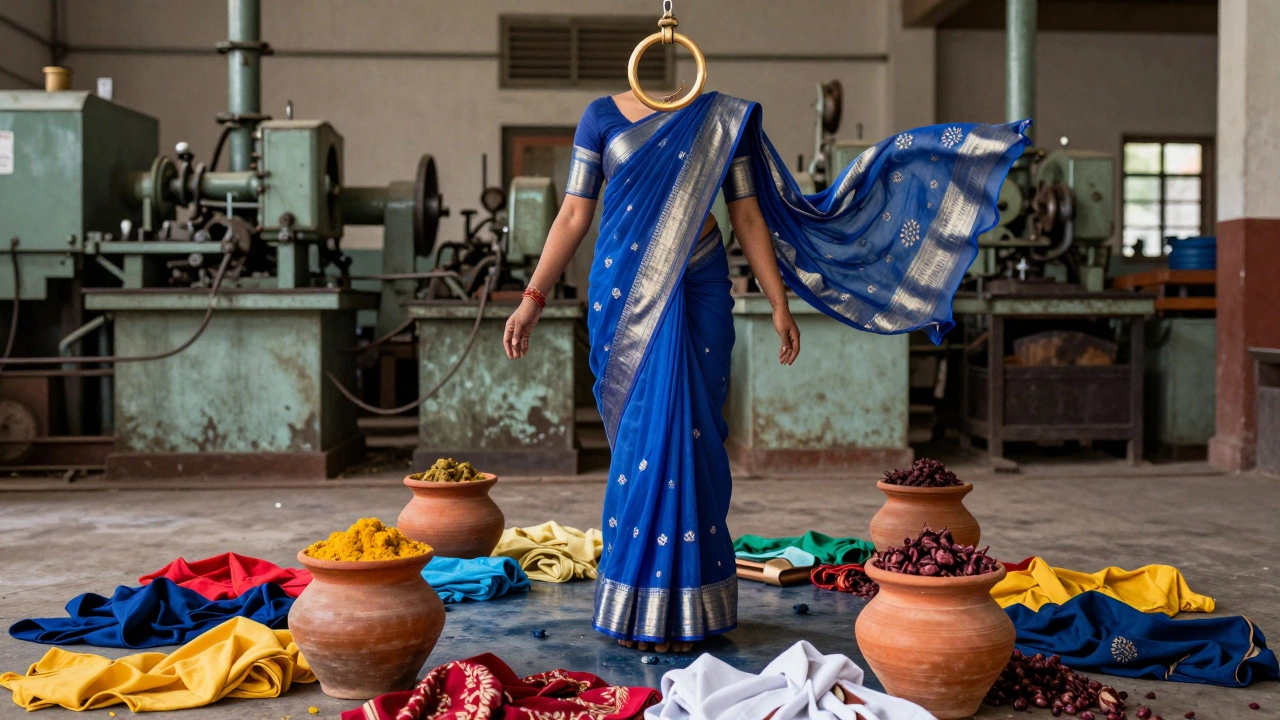
India’s textile map is full of hidden gems. In Odisha, the Ikat weave of Sambalpur creates blurred, dreamlike patterns by tying and dyeing threads before weaving. In Gujarat, the bandhani tie-dye technique turns fabric into constellations of tiny dots-each one made by hand with a needle and thread. In Rajasthan, block printing using carved wooden stamps has been done the same way since the 12th century. The dyes? Natural: indigo from plants, red from madder root, yellow from turmeric.
Chanderi, from Madhya Pradesh, is a lightweight silk-cotton blend with a subtle sheen. It’s so fine that a single saree can pass through a wedding ring. Kanchipuram silk from Tamil Nadu is heavier, with bold borders and temple motifs. Each saree is checked for quality by the weaver’s family before it leaves the house.
Why Indian textiles still matter today
Fast fashion tries to copy Indian prints and weaves, but it can’t replicate the soul. Machine-made imitations lack the slight imperfections that tell you it was made by hand. They don’t carry the stories of the weaver’s grandmother, the village festival where the design was first used, or the season when the cotton was harvested.
Indian textiles are sustainable by nature. They use no synthetic dyes, minimal electricity, and no plastic packaging. A handloom saree lasts 20 years. A machine-made one lasts two. That’s why eco-conscious brands in the U.S. and Germany are now partnering directly with Indian cooperatives. The demand is rising-not because it’s trendy, but because it’s true.
Organizations like the Handloom Mark and the National Handloom Development Corporation are helping weavers get fair prices. But the real power lies with buyers. Choosing an Indian handloom fabric isn’t just buying cloth-it’s supporting a 5,000-year-old economy of skill, patience, and pride.
What to look for when buying authentic Indian textiles
Not every ‘Indian silk’ or ‘handloom cotton’ is real. Here’s how to tell:
- Check the weave: Handloom fabrics have tiny irregularities. Machine-made fabric is perfectly even.
- Look at the edges: Handwoven sarees have self-finished borders. Machine-made ones are cut and stitched.
- Smell the fabric: Natural dyes have a faint earthy scent. Synthetic dyes smell chemical.
- Ask for the GI tag: Banarasi, Kanchipuram, Chanderi, and Mysore silk all have official GI certification.
- Buy from cooperatives: Look for labels like ‘Handloom Mark’ or ‘India Handloom’.
If the price seems too good to be true-like a Banarasi silk saree for ₹2,000-it probably is. Real ones start at ₹15,000 and go up from there.
Where to find real Indian textiles
You don’t need to fly to India to buy authentic pieces. Online platforms like Fabindia, Jaypore, and Sutra work directly with weaver collectives. In India, markets like Delhi’s Dilli Haat, Kolkata’s Burrabazar, and Varanasi’s Godowlia are treasure troves. Visit during Diwali or Pongal-many weavers sell directly then, with no middlemen.
Every time you buy an Indian textile, you’re not just adding a piece of clothing to your wardrobe. You’re keeping a tradition alive.
What is the most famous textile in India?
The most famous textile in India is cotton, especially hand-spun khadi and fine muslin. But silk, particularly Banarasi silk sarees, is equally iconic. India’s textile fame comes from its diversity-each region has its own signature fabric, from Chanderi in Madhya Pradesh to Ikat in Odisha.
Is silk the most expensive Indian textile?
Yes, silk is generally the most expensive, especially Banarasi and Kanchipuram silk. A single handwoven Banarasi saree with real zari can cost between ₹15,000 and ₹2 lakh. The price comes from the time it takes-up to 45 days-and the use of real gold and silver threads. Muga silk from Assam is also costly because it’s rare and naturally golden.
What makes Indian handloom different from machine-made fabric?
Indian handloom fabric has subtle imperfections-slight gaps in weave, uneven dyeing, and self-finished edges. These aren’t flaws; they’re proof of human craftsmanship. Machine-made fabric is uniform and fast, but lacks soul. Handloom takes weeks to make, uses natural dyes, and supports entire villages. It’s sustainable, durable, and carries cultural history.
Are Indian textiles eco-friendly?
Yes, traditional Indian textiles are among the most eco-friendly in the world. They use no synthetic fibers, rely on natural dyes from plants and minerals, and consume almost no electricity. Handlooms run on human power. Even packaging is often made from recycled paper or cloth. Fast fashion can’t match this level of sustainability.
How can I tell if a textile is genuinely Indian handloom?
Look for the Handloom Mark label, check for uneven weaving and self-finished borders, and smell the fabric-natural dyes have a mild earthy scent. Avoid anything priced too low. A real Banarasi silk saree can’t cost less than ₹15,000. Buy from trusted brands or cooperatives that work directly with weavers.