India to USA Garment Export Estimator
Shipment Details
Export Estimate Summary
- Estimated Transit Time:
- Total Cargo Value:
- Est. Shipping Cost:
- Est. US Duty Rate:
- Total Landed Cost (Inc. Ship):
Compliance Checklist
- ✓ Verify HTS Code with buyer's customs broker.
- ✓ Ensure permanent Care Label & "Made in India" tag.
- ✓ Confirm accurate Fiber Content listing.
- ✓ Prepare Bill of Lading matching invoice exactly.
Enter shipment details to calculate estimated costs and timeline.
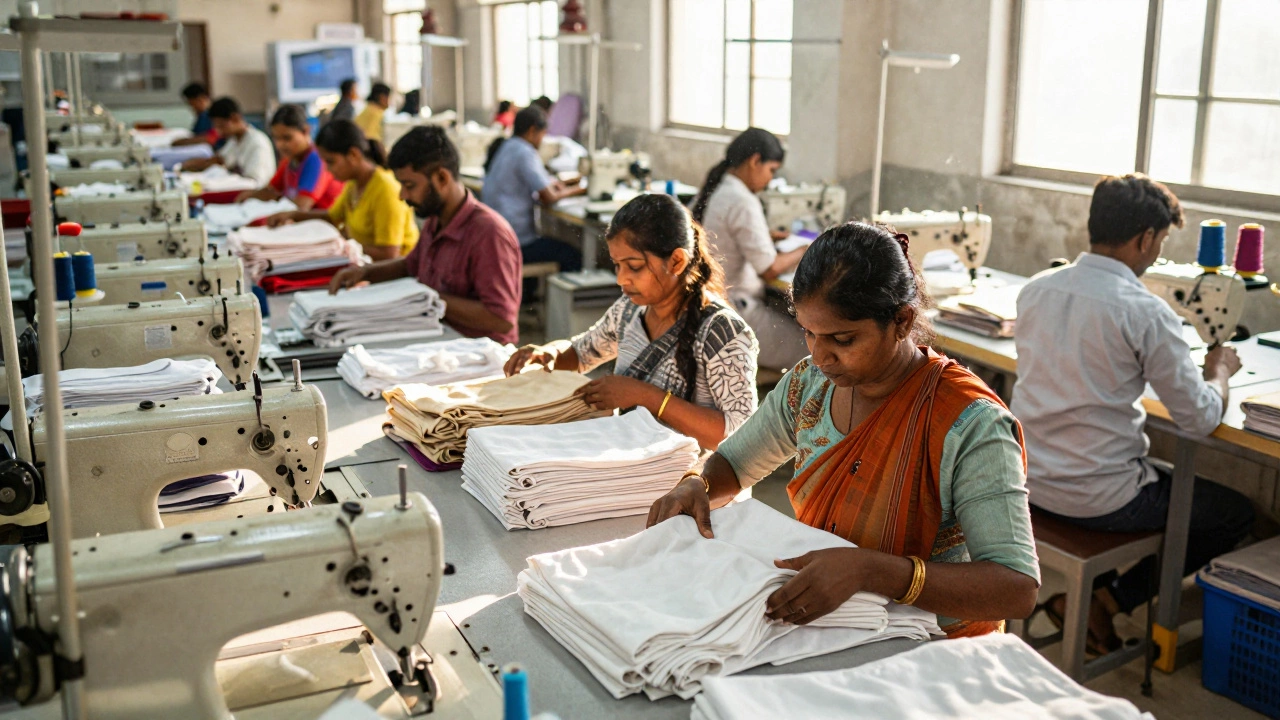
Shipping clothes from Mumbai or Tirupur to New York sounds like a straightforward transaction. You make the shirts, they pay you, and a ship carries the goods across the ocean. In reality, the gap between cutting fabric in India and having that inventory on a rack in Los Angeles is filled with paperwork, customs codes, and strict compliance rules. One wrong Harmonized System (HS) code can get your entire container held at the Port of Savannah for weeks, costing you thousands in demurrage fees.
If you are a textile manufacturer in India looking to tap into the massive American market, understanding the logistics is only half the battle. The other half is navigating the regulatory landscape that governs cross-border trade between these two nations. This guide breaks down exactly how to move your products legally, efficiently, and profitably.
Getting Your Legal Foundations Right
Before you even think about sewing a sample for an American buyer, you need to ensure your business entity is legally recognized as an exporter by the Indian government. The cornerstone of this process is the Import Export Code (IEC). Issued by the Director General of Foreign Trade (DGFT), this unique ten-digit number is mandatory for any entity engaging in international trade. Without it, banks won’t process your foreign currency payments, and customs won’t clear your shipments.
Obtaining an IEC is relatively simple today. It’s an online process through the DGFT portal. You’ll need your PAN card, proof of address, and bank account details. Once approved, this code never expires, so it’s a one-time setup cost that pays off for years. Alongside the IEC, you must register with the Registrar of Companies (ROC) if you haven’t already, ensuring your company structure-whether it’s a proprietorship, partnership, or private limited company-is sound.
Another critical step is joining the relevant commodity board. For garments, this means registering with the Textile Committee under the Ministry of Textiles. While not always strictly enforced for every single shipment, membership provides access to export promotion schemes, subsidies, and vital market intelligence. It signals to buyers that you are a serious player in the industry, not just a fly-by-night operator.
Understanding US Customs and Compliance
The United States has some of the most rigorous import standards in the world. As an exporter, you aren’t just selling a product; you are selling compliance. The first thing you need to master is the Harmonized Tariff Schedule (HTS) classification. Every garment type-from cotton t-shirts to synthetic jackets-has a specific six-to-ten-digit code that determines its duty rate. Misclassifying a "cotton blend" as "pure cotton" can lead to significant penalties upon arrival in the US.
For example, men’s cotton t-shirts typically fall under HTS code 6109.10, while women’s synthetic blouses might be under 6106.10. You must verify these codes with your US importer or a licensed customs broker. The duties vary significantly based on the material composition and construction method (knit vs. woven). Getting this wrong doesn’t just mean paying extra taxes; it can trigger audits and damage your reputation with your buyer.
Beyond tariffs, there are non-tariff barriers. The Federal Trade Commission (FTC) enforces strict labeling laws. Every garment entering the US must have a permanent care label and a country-of-origin label stating "Made in India." If you are using recycled materials or specific fibers like wool or silk, the fiber content must be listed accurately. Failure to comply can result in the FTC seizing the goods or issuing fines against the importer, who will then hold you liable.
Navigating Shipping and Logistics
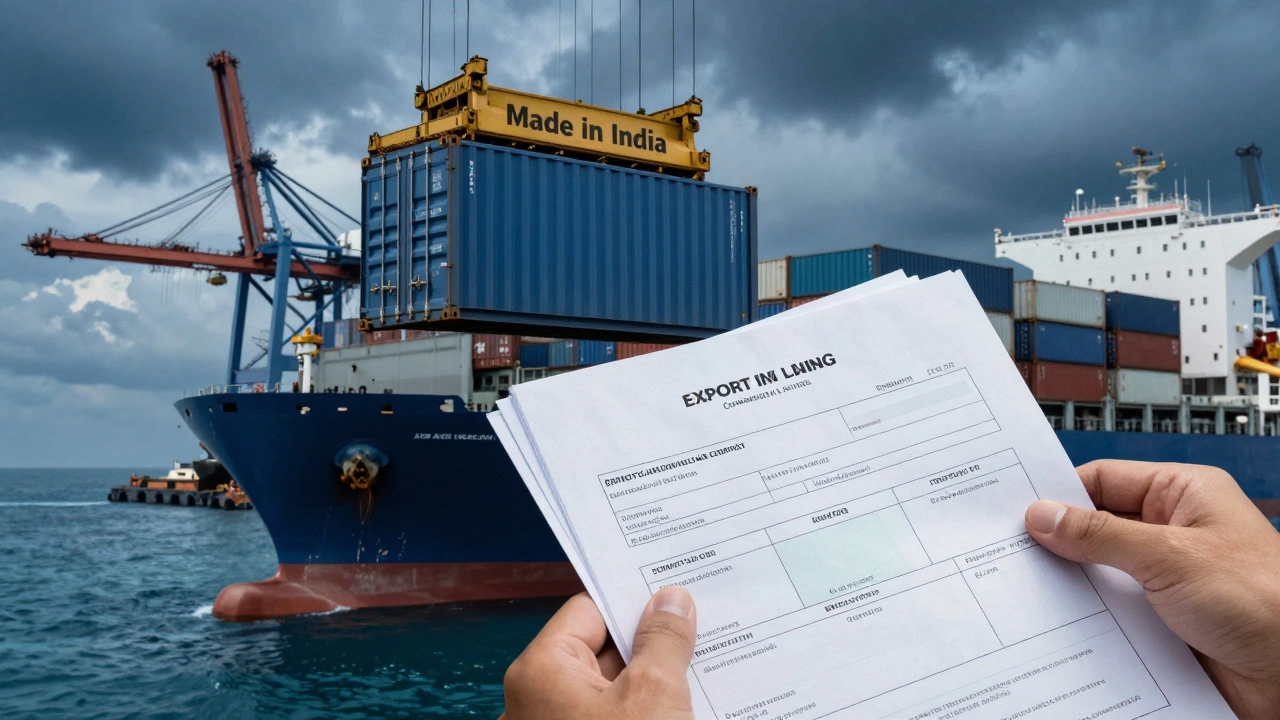
Once the legalities are sorted, the physical movement of goods begins. Most garment exporters choose between sea freight and air freight. Sea freight is the standard for bulk orders due to its cost-effectiveness. A 40-foot container can hold tens of thousands of units, bringing the per-unit shipping cost down to pennies. However, transit times from major Indian ports like Nhava Sheva (Mumbai) or Chennai to East Coast US ports can take 35 to 45 days. West Coast ports like Los Angeles or Long Beach are faster, usually around 20 to 25 days.
Air freight is reserved for urgent restocks or high-value fashion items where speed outweighs cost. It gets your goods to JFK or LAX in 3 to 5 days but costs exponentially more. You need to calculate the Incoterms (International Commercial Terms) carefully with your buyer. Are you shipping Ex Works (EXW), meaning the buyer picks up from your factory? Or are you shipping Cost, Insurance, and Freight (CIF), where you handle the logistics until it reaches their port? Understanding these terms protects you from unexpected liabilities during transit.
Packaging plays a huge role here. Garments are sensitive to moisture and pests. Use polybags with ventilation holes to prevent mold, and ensure cartons are sturdy enough to withstand stacking in a container. Include detailed packing lists inside each carton. When customs officials inspect your shipment, easy access to documentation speeds up the clearance process immensely.
Documentation That Cannot Be Skipped
Customs authorities in both India and the US rely heavily on paper trails. Your documentation package must be flawless. The Bill of Lading (B/L) is the most critical document for sea freight. It acts as a receipt, a contract of carriage, and a document of title. Ensure the B/L matches the commercial invoice exactly. Any discrepancy in weights, quantities, or descriptions can cause delays.
The Commercial Invoice serves as the basis for calculating customs duties in the US. It must include the HS code, value of goods, weight, and origin. Additionally, you’ll need a Certificate of Origin. While India and the US do not currently have a free trade agreement that eliminates all tariffs, certain preferential rates may apply depending on current trade policies. The Certificate of Origin proves where the goods were manufactured, which is essential for anti-dumping duty assessments.
Don’t forget the Packing List. This itemizes the contents of each package, helping the importer verify their stock upon arrival. For garments, this includes SKU numbers, sizes, colors, and quantities per style. Having a digital copy of all these documents sent to your buyer’s customs broker before the ship arrives is a pro tip that saves hours of waiting time.
Payment Security and Financial Risk
Money changes hands over long distances, which introduces risk. How you get paid is as important as what you sell. Letters of Credit (LC) are the safest method for new relationships. An LC guarantees payment once you present the required shipping documents to the bank. It protects both you and the buyer. However, LCs involve higher banking fees and slower processing times.
For established relationships, many exporters move to Telegraphic Transfer (TT). A common split is 30% advance payment and 70% against the copy of the Bill of Lading. This ensures you have cash flow to start production while securing the balance before releasing the goods. Avoid open account terms unless you have strong credit insurance or know the buyer intimately. Currency fluctuations between the Indian Rupee (INR) and the US Dollar (USD) can also eat into margins, so consider hedging strategies if your order values are large.
| Document | Purpose | Issuing Authority |
|---|---|---|
| Bill of Lading | Proof of shipment and ownership | Shipping Line |
| Commercial Invoice | Value declaration for customs | Exporter |
| Certificate of Origin | Proves manufacturing location | Chamber of Commerce / DGFT |
| Packing List | Details of cargo contents | Exporter |
| Insurance Certificate | Covers loss/damage during transit | Insurance Company |
Common Pitfalls to Avoid
New exporters often underestimate the importance of quality control. What looks perfect in your factory in Surat might arrive damaged in Dallas due to poor handling. Implement a pre-shipment inspection protocol. Check stitching, button strength, and color fastness rigorously. One batch of defective goods can lose you a client forever in the competitive US market.
Another frequent mistake is ignoring intellectual property rights. The US is aggressive about protecting trademarks and designs. Ensure your garments don’t inadvertently infringe on existing patents or copyrighted patterns. Even accidental similarities can lead to seized shipments and legal battles. Conduct thorough trademark searches before finalizing designs for US clients.
Finally, stay updated on geopolitical shifts. Trade policies change. Tariffs can be imposed or removed overnight based on diplomatic relations. Keep a close eye on announcements from the US Department of Commerce and the Indian Ministry of Commerce and Industry. Being proactive rather than reactive keeps your supply chain resilient.
What is the minimum order quantity for exporting garments to the USA?
There is no official minimum order quantity set by the government. However, practically speaking, US buyers usually look for container loads (FCL) to minimize shipping costs per unit. A 40-foot container can hold approximately 20,000 to 30,000 pieces depending on the garment type. Smaller orders via Less than Container Load (LCL) are possible but come with higher relative logistics costs and complexity.
Do I need a license to export textiles from India?
You do not need a special license for most general apparel items. However, you must have a valid Import Export Code (IEC) from the DGFT. Certain restricted items or those involving hazardous materials might require additional permits, but standard cotton, polyester, and blended garments generally only require the IEC and proper invoicing.
How long does it take to ship garments from India to the US?
Sea freight to the US West Coast (Los Angeles/Long Beach) typically takes 20-25 days. To the East Coast (New York/Savannah), it can take 35-45 days. Air freight is much faster, taking 3-5 days door-to-door, but it is significantly more expensive and usually reserved for small, high-value, or urgent shipments.
What are the main duties and taxes for importing Indian garments into the US?
Duty rates depend on the HTS code of the specific garment. Generally, duties range from 10% to 32% for various types of apparel. There is also a Merchandise Processing Fee (MPF) and a Harbor Maintenance Fee (HMF) for imports arriving via water. The US importer is responsible for paying these duties, but the cost is often factored into the price negotiated with the Indian exporter.
Can I use Amazon FBA for my exported garments?
Yes, many Indian manufacturers use Fulfillment by Amazon (FBA). You would ship your goods directly to Amazon’s US warehouses. However, you must ensure all labeling meets Amazon’s strict requirements, including FNSKU barcodes, along with standard US customs labels. Working with a freight forwarder experienced in FBA shipments is highly recommended to avoid rejection at the warehouse.