Semiconductor Readiness Calculator
Live Metrics
Estimated Timeline to Advanced Fabrication
Walk into any smartphone store in Mumbai or Bangalore, and you’ll see devices made by Indian brands. But look closer at the specs sheet, and you’ll find a familiar name: Samsung, TSMC, or Intel. These are the companies that actually make the brain of the phone-the semiconductor chip, also known as an integrated circuit.. Despite being one of the world’s fastest-growing economies and a hub for software engineering, India struggles to produce these tiny but critical components domestically. It is not a lack of ambition; the government has poured billions into incentives. It is not a lack of talent; Indian engineers work at every major tech firm globally. So, why can’t India just start making chips?
The answer lies in the sheer complexity of the process. Making a chip is less like traditional assembly line manufacturing and more like performing microscopic surgery while building a skyscraper. It requires a convergence of extreme precision, massive capital, and a deep ecosystem of suppliers that India simply does not have yet. As we move through 2026, the landscape is shifting with new factories coming online, but the historical barriers remain steep. Understanding these bottlenecks is key to understanding the future of Indian electronics manufacturing.
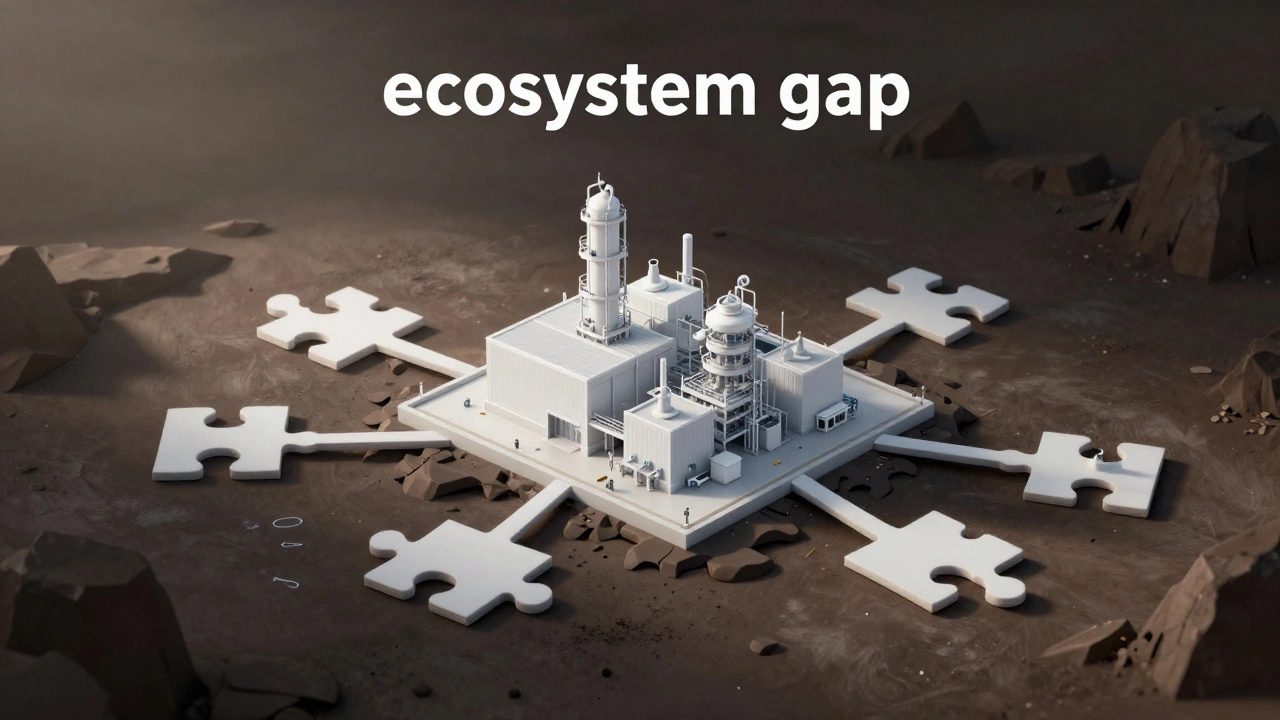
The Ecosystem Gap: It’s Not Just About One Factory
The biggest misconception about chipmaking is that you can build a single factory and start producing. You cannot. A modern semiconductor fab (fabrication plant) is part of a vast, interconnected web of suppliers. This is called the value chain. In mature markets like Taiwan, South Korea, and the United States, this chain took decades to build. If a machine breaks down in a Taiwanese fab, a specialist from Japan or Germany can be on-site within hours because the logistics and supplier networks are established.
In India, this network is fragmented. While companies like Tata Electronics and Micron Technology have announced major investments, they are essentially building islands of excellence in a sea of underdevelopment. For example, a chip needs photomasks, which require specialized glass and chemicals. It needs etching gases that must be pure to parts per billion. It needs advanced lithography machines from ASML, a Dutch company that doesn’t sell its most advanced tools to everyone due to geopolitical restrictions.
When India tries to manufacture locally, it often finds that 80-90% of the raw materials and equipment still need to be imported. This defeats the purpose of self-reliance to some extent. The PLI Scheme for Semiconductors aims to fix this by offering financial incentives to set up design centers and packaging units, but creating the upstream supply chain-making the chemicals, the gases, and the machinery-is a much slower, harder task.
The Talent Paradox: Software Giants, Hardware Novices
India is often called the "back office of the world" for IT services. We have millions of software developers who write code for banks, hospitals, and tech giants. However, writing code is fundamentally different from designing hardware at the atomic level. Chip design requires a specific type of electrical engineering expertise involving physics, materials science, and analog/digital circuit design.
While India produces thousands of engineering graduates annually, there is a shortage of professionals with hands-on experience in semiconductor fabrication. Most experienced chip designers in India work for foreign multinationals like Qualcomm or Nvidia, focusing on design rather than manufacturing processes. When a local company tries to set up a fab, they struggle to find managers who understand the day-to-day operational nuances of a cleanroom environment. This knowledge gap means that even if the machines are installed, running them efficiently requires importing foreign experts, which adds cost and dependency.
Capital Intensity and the "Valley of Death"
Semiconductor manufacturing is arguably the most capital-intensive industry on Earth. Building a state-of-the-art fab costs between $10 billion and $20 billion. That is money that sits idle for years before the first profitable chip comes out. For private investors, this is a terrifying risk. The return on investment is slow, and the technology becomes obsolete quickly. If you spend five years building a factory for 7-nanometer chips, the market might have already moved to 3-nanometer by the time you open.
This creates what economists call the "valley of death." Startups and mid-sized firms cannot afford the entry ticket. Only sovereign-backed entities or massive conglomerates can play. In India, this has led to reliance on joint ventures. For instance, the partnership between Tata Group and Micron involves significant government backing through the Production Linked Incentive (PLI) scheme. Without this direct financial injection from the state, the project would likely not exist. Private equity alone is too risk-averse for this sector.
| Region | Key Strength | Main Challenge for New Entrants | Government Support Level |
|---|---|---|---|
| Taiwan (TSMC) | Dominant ecosystem & scale | Geopolitical isolation risks | High (long-term strategic) |
| South Korea (Samsung) | Vertical integration (memory + logic) | Market saturation | Medium (Chaebol-led) |
| USA (Intel, AMD) | R&D and IP leadership | Labor costs and offshoring history | Very High (CHIPS Act) |
| India | Large domestic market & labor pool | Lack of supply chain & infrastructure | High (PLI Scheme) |
Infrastructure: Water, Power, and Purity
You might think that setting up a factory just requires land and electricity. For a semiconductor fab, it requires perfection. The water used to wash silicon wafers must be ultra-pure-more pure than distilled water found in labs. A single speck of dust can ruin an entire batch of chips worth millions of dollars. This requires massive water treatment plants and consistent, high-quality power supply.
India’s infrastructure has improved dramatically, but it still faces challenges. Power outages, though less frequent, are still a risk in industrial zones. More critically, the quality of water sources varies by region. Setting up a fab in a area with poor groundwater quality increases the cost of purification significantly. Additionally, the logistics of moving sensitive, high-value chips across the country require specialized secure transport, which is not as developed as the logistics for textiles or food.
Geopolitics and Access to Technology
Technology does not exist in a vacuum. The most advanced chip-making machines, particularly Extreme Ultraviolet (EUV) lithography tools, are controlled by a small group of countries. The Netherlands (ASML), Japan (Tokyo Electron), and the US form a tight alliance that restricts the sale of these tools to certain nations for national security reasons.
As of 2026, India is navigating these waters carefully. While India is not banned from buying these tools, the approval process is rigorous. Furthermore, intellectual property (IP) protection is a major concern. Foreign companies are hesitant to transfer their most cutting-edge technology to a new market where legal frameworks for IP theft might seem weaker compared to Europe or North America. This forces Indian manufacturers to start with older, less profitable node technologies (like 28nm or 40nm) rather than the bleeding edge (3nm or 5nm). This limits their competitiveness in the high-end smartphone and AI server markets initially.
The Path Forward: Packaging and Design First
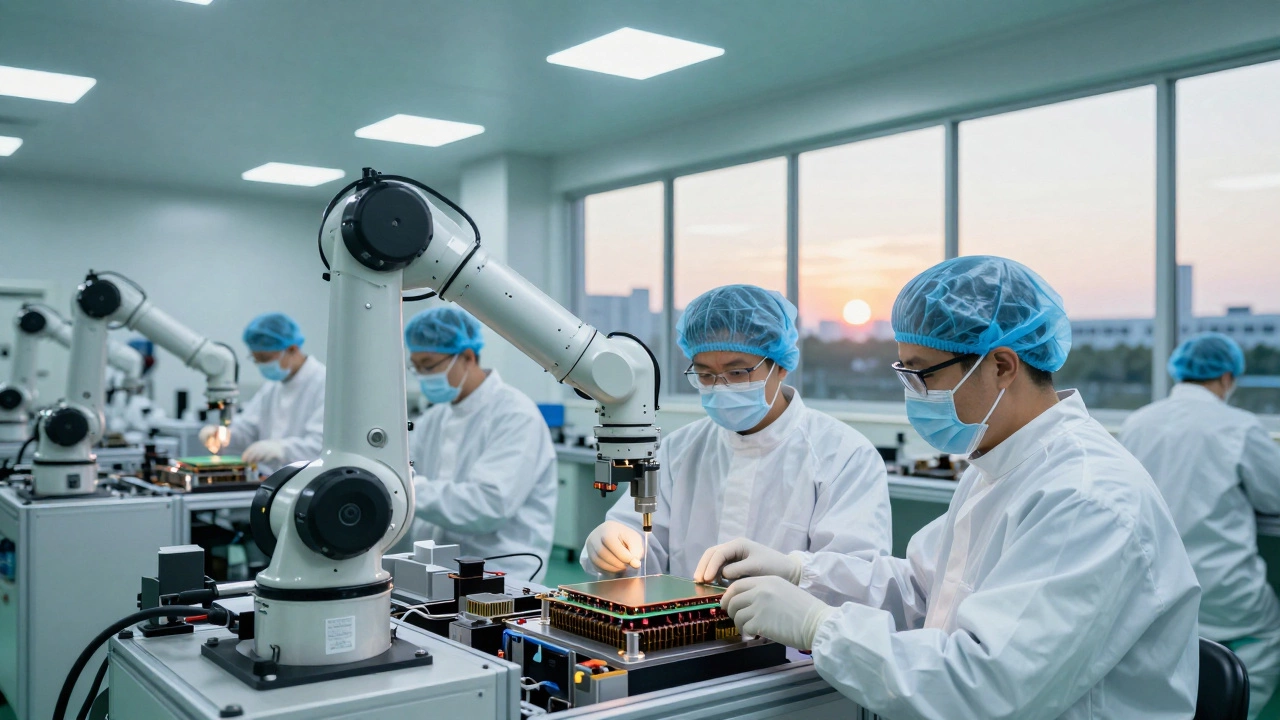
So, is it all doom and gloom? No. India is taking a pragmatic approach. Instead of trying to jump straight to the hardest part (advanced fabrication), it is focusing on the middle and end of the chain. Semiconductor packaging and testing is less capital-intensive and easier to set up. Companies like Tata Electronics are starting here. By mastering packaging, India can create jobs, build technical expertise, and generate revenue without needing $20 billion upfront.
Additionally, India is pushing hard in chip design. With strong engineering talent, Indian firms can design chips that are then manufactured elsewhere. This is a smarter entry point. Over time, as the ecosystem matures, the natural progression will be toward fabrication. The goal for 2026 and beyond is not to replace TSMC overnight, but to become a reliable alternative for mature-node chips used in cars, appliances, and basic electronics. This diversifies the global supply chain and reduces dependency on Asia-Pacific regions.
Conclusion: A Marathon, Not a Sprint
India’s inability to mass-produce advanced semiconductor chips today is not a failure of policy or people. It is a reflection of the immense barriers to entry in the most complex manufacturing sector in the world. The lack of a localized supply chain, the scarcity of specialized hardware talent, the astronomical capital requirements, and geopolitical constraints on technology transfer are real hurdles.
However, the situation is dynamic. With the PLI scheme providing a financial safety net and global players seeking supply chain diversification away from China, India is carving out a niche. The focus on packaging, testing, and design is a strategic stepping stone. It will take another decade for India to become a major player in advanced fabrication, but the foundation is being laid now. For consumers and businesses, this means continued imports in the short term, but greater resilience and potential cost reductions in the long run.
Will India ever make its own advanced chips?
Yes, but it will take time. India is currently focusing on mature nodes (older technology) and packaging. Advanced chips (under 7nm) require EUV lithography machines which are restricted and expensive. India is expected to enter the advanced fabrication space in the late 2020s or early 2030s as its ecosystem matures.
What is the PLI scheme for semiconductors?
The Production Linked Incentive (PLI) scheme is a government program that offers financial rewards to companies based on the value of goods they manufacture in India. For semiconductors, it provides incentives for setting up design centers, fabrication plants, and packaging facilities to encourage domestic production.
Why can't India just buy machines and start making chips?
Buying machines is only 20% of the challenge. You also need a supply chain for ultra-pure chemicals, gases, and materials. You need specialized engineers who know how to operate and maintain these machines. You need massive amounts of pure water and stable power. Without this ecosystem, the machines sit idle.
Which companies are investing in Indian semiconductor manufacturing?
Major players include Tata Electronics (partnering with Micron Technology), GlobalFoundries (which has a design center and is exploring manufacturing), and various startups in the design and packaging space. The government has selected several proposals for funding under the PLI scheme.
How does India's semiconductor strategy compare to China's?
China has invested heavily over the last decade to achieve self-sufficiency, facing heavy sanctions in return. India is taking a more gradual approach, focusing on integration into the global supply chain rather than complete isolation. India aims to be a partner to Western and Asian firms, whereas China has tried to build a parallel, independent ecosystem.