
India Electronics Export State Selector
Select your primary product category or business priority to discover the optimal Indian state for manufacturing and exporting electronics.
State Name
Match Score--
--
You might assume that Bangalore, with its reputation as India's Silicon Valley, tops the list for electronic goods leaving the country. It’s a logical guess. After all, it’s where the code is written and many tech giants have their headquarters. But when you look at the hard numbers of physical goods shipped out of Indian ports, the answer shifts dramatically to the south, specifically to Tamil Nadu and its capital, Chennai. While Karnataka leads in software and high-value design, Tamil Nadu has quietly built itself into the manufacturing powerhouse that actually moves the boxes.
Why does this matter? If you’re looking to start a business, invest in industrial real estate, or just understand how India fits into the global supply chain, knowing which state holds the export crown changes your strategy entirely. It’s not just about prestige; it’s about logistics, labor availability, and government incentives. Let’s break down exactly who is exporting what, why they are winning, and how the landscape is shifting in 2026.
The Undisputed King: Tamil Nadu’s Manufacturing Might
Tamil Nadu consistently ranks as the top state for electronics exports in India. This isn’t a recent trend; it’s been building for over two decades. The state accounts for roughly 35-40% of India’s total electronic goods exports, depending on the specific year and product mix (mobile phones vs. components).
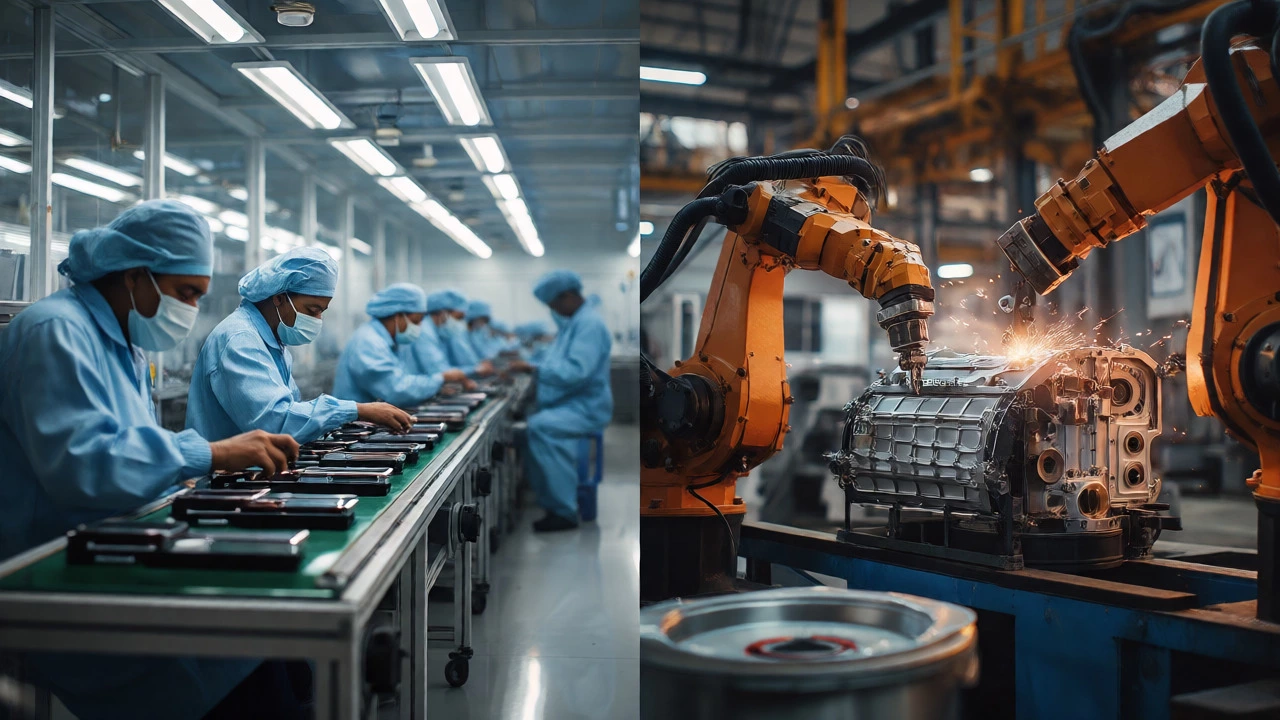
The secret sauce here is the "Detroit of Asia" ecosystem. Chennai and its surrounding districts like Sriperumbudur and Oragadam host massive factories for companies like Samsung, Foxconn, Pegatron, and Dixon Technologies. These aren’t just assembly lines; they are full-scale manufacturing hubs producing smartphones, washing machines, air conditioners, and increasingly, semiconductor components.
| State | Primary Export Focus | Key Industrial Hubs | Estimated Export Share |
|---|---|---|---|
| Tamil Nadu | Smartphones, Consumer Electronics, Components | Chennai, Sriperumbudur, Hosur | ~38% |
| Karnataka | IT Hardware, Semiconductors (Design), Telecom Equipment | Bangalore, Peenya | ~22% |
| Uttar Pradesh | Mobile Phone Assembly, White Goods | Noida, Greater Noida, Ghaziabad | ~18% |
| Gujarat | Solar Panels, Industrial Electronics, Lighting | Ahmedabad, Vadodara, Gandhinagar | ~12% |
| Haryana | Automotive Electronics, Components | Manesar, Gurugram | ~8% |
Why Tamil Nadu Beats Bangalore
You might wonder, if Bangalore is the tech hub, why doesn’t it export more physical goods? The distinction lies between services and manufacturing. Karnataka excels in IT services, software development, and R&D. You don’t "export" code in shipping containers; you export it via fiber optics. When we talk about electronics exports, we mean tangible products crossing borders.
Tamil Nadu wins because of three critical factors:
- Port Access: Chennai Port and Ennore Port provide direct sea access. Shipping a million smartphones from Chennai to Europe is faster and cheaper than trucking them from Bangalore to Tuticorin or Chennai.
- Supply Chain Density: There is an unmatched cluster of component suppliers around Chennai. If you need a camera module, a battery, or a PCB, there is likely a supplier within a 50-kilometer radius. This reduces inventory costs and lead times.
- Labor Availability: Tamil Nadu has a long-standing tradition of skilled technical labor in manufacturing, supported by a dense network of polytechnics and engineering colleges focused on mechanical and electrical trades.
The Rising Challenger: Uttar Pradesh’s Mobile Boom
While Tamil Nadu holds the crown, Uttar Pradesh is closing the gap fast, particularly in the smartphone segment. Thanks to aggressive state-level policies and proximity to Delhi’s consumer market, UP has become a major assembly hub for brands like Xiaomi, Vivo, Oppo, and Realme.
Noida and Greater Noida have transformed from IT parks into massive manufacturing zones. The Production Linked Incentive (PLI) scheme has been a game-changer here. Companies get cash incentives for every unit produced domestically, provided they meet incremental sales thresholds. This has made assembling phones in Noida competitive with Vietnam and China.
However, UP still lags in exporting complex components. Most of what leaves UP is final assembly-screwing together parts imported from elsewhere. Tamil Nadu, conversely, is moving up the value chain by manufacturing more components locally, such as display modules and battery packs.
Karnataka’s High-Value Niche
Don’t count Karnataka out. While its volume of exported physical units might be lower than Tamil Nadu’s, the value per unit is often higher. Bangalore is home to major semiconductor design centers and firms working on telecom infrastructure equipment, networking gear, and specialized industrial electronics.
If you are looking for high-margin, low-volume exports, Karnataka is the place. It’s also becoming a hub for semiconductor fabrication units under new national missions. As India builds its first wafer fabs, Karnataka’s role in electronics exports will likely shift from purely IT-centric to include high-tech silicon chips, potentially rivaling Tamil Nadu in value terms within the next decade.
Gujarat and Haryana: The Specialized Players
Two other states deserve mention for specific niches. Gujarat dominates in solar panel manufacturing and LED lighting exports. With abundant sunlight and strong industrial infrastructure in Ahmedabad and Vadodara, Gujarat is the go-to destination for renewable energy electronics.
Haryana, particularly the Manesar belt, focuses heavily on automotive electronics. As cars become computers on wheels, the demand for ECUs, sensors, and infotainment systems has skyrocketed. Haryana leverages its proximity to Delhi-NCR’s automotive industry to export these components globally.

How the PLI Scheme Changed the Map
Before 2020, India’s electronics manufacturing was fragmented. The Production Linked Incentive (PLI) scheme changed everything. It didn’t just give money; it forced companies to consolidate production in specific zones to maximize efficiency.
This led to the rise of large-scale contract manufacturers like Dixon Technologies and Kaynes Technology. These companies set up mega-factories in Tamil Nadu and UP, attracting ancillary industries. The result? A virtuous cycle where more exports attract more suppliers, which lowers costs, leading to even more exports.
If you are an entrepreneur looking to enter this space, consider this: The easiest entry point is no longer just assembly. The opportunities are now in component localization. Making screws, connectors, plastic casings, or packaging materials for these big players is a lucrative niche, especially if you locate near Chennai or Noida.
What This Means for Your Business
If you are sourcing electronics from India, where should you look?
- For Smartphones & Consumer Gadgets: Look at Tamil Nadu and Uttar Pradesh. These regions offer the best economies of scale.
- For Telecom & Networking Gear: Karnataka is your best bet due to the depth of engineering talent and established OEM relationships.
- For Solar & Renewable Energy Tech: Gujarat offers competitive pricing and robust export logistics through Mundra Port.
- For Automotive Electronics: Haryana and Tamil Nadu share this market, but Haryana benefits from proximity to auto OEMs in Delhi/NCR.
Logistics play a huge role. If your customers are in Europe, Chennai’s port connectivity is superior. If your focus is domestic distribution across North India, Noida’s location is unbeatable. Understanding these geographic advantages saves significant freight costs.
Future Outlook: Will the Crown Change?
Tamil Nadu’s lead is comfortable, but not unassailable. The push for semiconductor manufacturing could disrupt the hierarchy. If India successfully launches multiple fab clusters in Gujarat or Assam, those states could leapfrog traditional leaders in high-value chip exports.
Additionally, environmental regulations are tightening. States with better green energy infrastructure may attract eco-conscious brands. Tamil Nadu has invested heavily in wind and solar power, giving it another edge in sustainable manufacturing exports.
The bottom line? Tamil Nadu remains the heavyweight champion of electronics exports in India today. Its combination of port access, deep supply chains, and skilled labor creates a moat that other states are trying to cross. For anyone involved in Indian manufacturing, keeping an eye on Chennai’s industrial corridors is essential.
Which city is known as the electronics hub of India?
While Bangalore is the IT hub, Chennai is widely recognized as the manufacturing and export hub for electronics. It hosts major factories for global brands like Samsung and Foxconn and has excellent port connectivity for shipping goods internationally.
Does Karnataka export more electronics than Tamil Nadu?
No, in terms of volume and total value of physical goods, Tamil Nadu exports significantly more. Karnataka leads in software services and high-value niche hardware like telecom equipment, but Tamil Nadu dominates mass-market electronics like smartphones and appliances.
What is the PLI scheme in electronics?
The Production Linked Incentive (PLI) scheme is a government initiative that provides financial incentives to companies based on their incremental sales of manufactured goods. In electronics, it encourages local manufacturing by offering cash back on eligible sales, helping Indian factories compete with global rivals like China and Vietnam.
Why is Uttar Pradesh growing in electronics exports?
Uttar Pradesh has grown rapidly due to favorable state policies, lower land costs compared to southern states, and proximity to the vast North Indian consumer market. Cities like Noida have become major assembly hubs for smartphone brands targeting both domestic consumption and export markets.
Which state is best for starting an electronics manufacturing business?
It depends on your product. For consumer electronics and smartphones, Tamil Nadu and Uttar Pradesh offer the best supply chains. For specialized industrial electronics or IT hardware, Karnataka is preferable. For solar-related electronics, Gujarat is the top choice.