Indian Furniture Wood Selector
Why this choice?
Key Characteristics
You walk into a showroom in Mumbai or browse an online store shipping from Jodhpur, and you see a stunning dining table. It looks solid, rich, and expensive. But if you ask the salesperson what it’s made of, you might get a vague answer like "solid wood" or worse, a name that sounds exotic but means nothing to you. Here is the hard truth: knowing the specific species of wood used in Indian furniture is the single biggest factor in determining whether your purchase will last ten years or warp in two.
India isn't just one forest. We have tropical hardwoods in the south, temperate woods in the north, and fast-growing plantations everywhere else. The choice of timber dictates everything-how much you pay, how heavy the piece is, and how well it survives a humid monsoon season. If you are buying a bed frame for a bedroom in Chennai, the rules are different than buying a bookshelf for a dry apartment in Delhi. Let’s break down exactly what trees end up in your home, why manufacturers choose them, and which ones are actually worth your money.
The Heavyweight Champion: Teak (Tectona Grandis)
If there is one king of Teak in the Indian furniture market, it is this. When people think of high-end, durable Indian furniture, they are thinking of teak. It’s not just a trend; it’s been the gold standard for centuries because it contains natural oils and rubber that make it incredibly resistant to water, rot, and termites.
Why do carpenters love it? Because it doesn’t split easily when you drive nails into it. Why do homeowners love it? Because it ages beautifully. Instead of looking worn out, old teak develops a silvery-grey patina that many people find attractive. However, real teak has become scarce and expensive due to government logging restrictions in states like Kerala and Karnataka. Most "teak" you see today comes from plantations in Central India or imports from Africa.
| Wood Type | Density/Hardness | Termite Resistance | Price Range | Best For |
|---|---|---|---|---|
| Teak | High | Excellent | $$$$ | Outdoor, High-Traffic Areas |
| Sheesham | Medium-High | Good | $$ | Cabinets, Tables |
| Mango | Medium | Moderate | $ | Trendy, Budget-Friendly Pieces |
| Rosewood | Very High | Excellent | $$$$$ | Antique Replicas, Luxury |
| Neem | Low-Medium | Natural Repellent | $ | Rustic, Eco-friendly Items |
The People’s Choice: Sheesham (Indian Rosewood)
Don’t let the name confuse you. Sheesham is botanically known as Dalbergia sissoo, and while it shares the genus with true Rosewood, it is far more affordable and widely available. This is the workhorse of Indian furniture manufacturing. You will find it in almost every mid-range furniture store across North India, particularly in Punjab and Haryana.
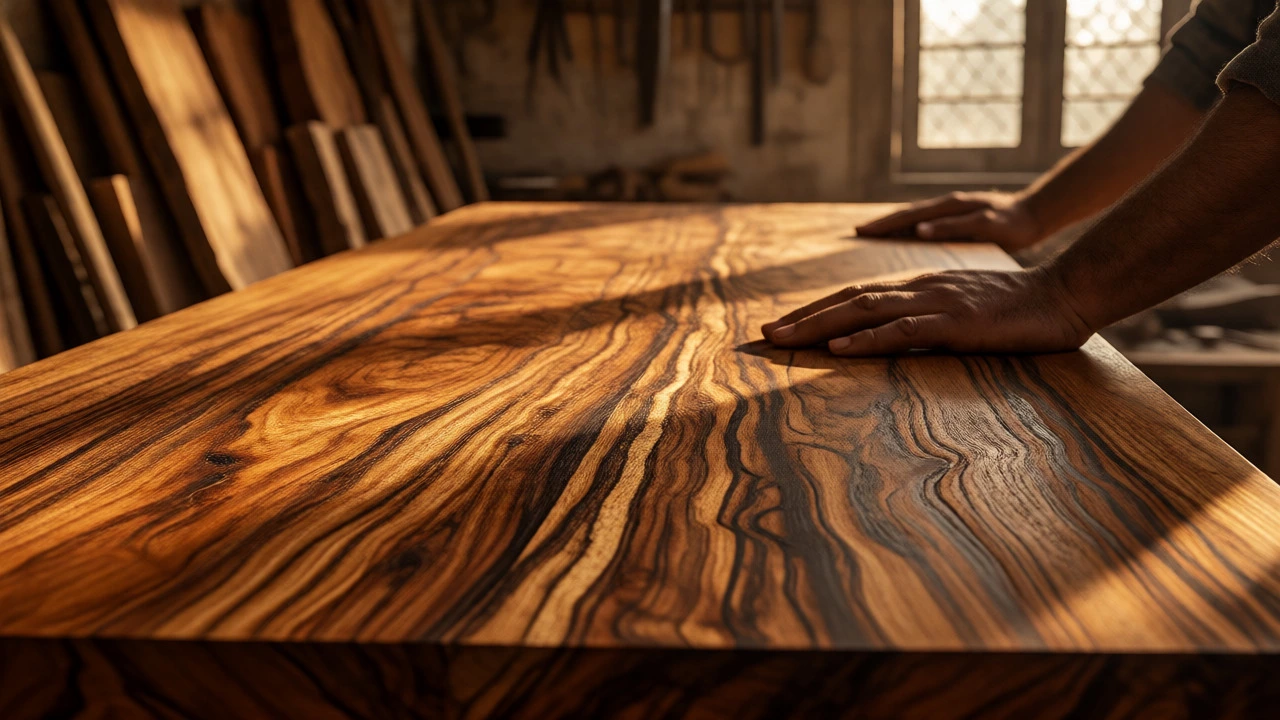
Sheesham has a distinctive look. It features dark brown heartwood with golden streaks and a grain pattern that can be quite wavy. Because it grows relatively fast compared to teak, it is sustainable and cheaper. But here is the catch: Sheesham is prone to warping if not properly dried (seasoned). If you buy a cheap Sheesham cabinet that was kiln-dried poorly, it might crack within six months. Always check the moisture content if you can, or buy from reputable brands that guarantee their seasoning process.
It is dense enough to hold screws tightly, making it perfect for cabinets and drawers that open and close daily. Unlike teak, it doesn’t have the same natural oil protection, so it requires a good finish-varnish, lacquer, or polish-to keep moisture out. In humid coastal cities, untreated Sheesham can suffer. Treated Sheesham? It lasts decades.
The Eco-Friendly Trendsetter: Mango Wood
A few years ago, you couldn’t buy Mango wood furniture in India without feeling like you were buying something experimental. Today, it is everywhere. Why the shift? Sustainability. Farmers cut down mango trees after about 15-20 years when fruit production drops. Instead of burning them, manufacturers harvest the timber. It’s a circular economy win.
Mango wood is a medium-density hardwood with a light golden-brown color. It is lighter than Sheesham and Teak, which makes furniture easier to move. It also takes stains very well, allowing designers to create modern, minimalist looks that appeal to younger buyers in urban centers like Bangalore and Pune.
But it has weaknesses. Mango wood is softer than the others on this list. If you drag a heavy chair across a Mango wood floor, you might leave a dent. It is also less resistant to insects naturally, so it must be treated with borax or other preservatives during processing. If you live in a termite-prone area, ensure the manufacturer confirms the treatment standards. Despite this, its affordability and eco-story make it a top pick for trendy, short-to-medium-term furniture investments.
Luxury and Legacy: Indian Rosewood and Mahogany
When you want to impress guests or invest in heirloom quality, you look at Indian Rosewood (Dalbergia latifolia). Also called Sonokali, this wood is incredibly dense and heavy. You can literally sink it in water. Its deep reddish-brown color and black streaks give it a regal appearance. Historically, this was the wood of kings and temples.
The problem with Rosewood today is availability. Due to strict environmental laws and CITES regulations (which control international trade of endangered species), genuine Indian Rosewood is rare and extremely expensive. Much of what is sold as "Rosewood" in local markets might actually be Sheesham stained darker, or imported African Mahogany. True Rosewood is brittle, meaning it can chip if worked incorrectly. It is best reserved for intricate carvings and small luxury items rather than large structural pieces, unless you have a skilled artisan handling it.
Then there is Mahogany. While technically not native to India, African Mahogany is widely imported and used in premium Indian furniture. It is stable, easy to carve, and resists decay. It lacks the extreme hardness of Rosewood but offers better workability. If you see a smooth, polished console table with no visible knots, it is likely Mahogany.
Regional Specialties: Neem, Acacia, and Bamboo
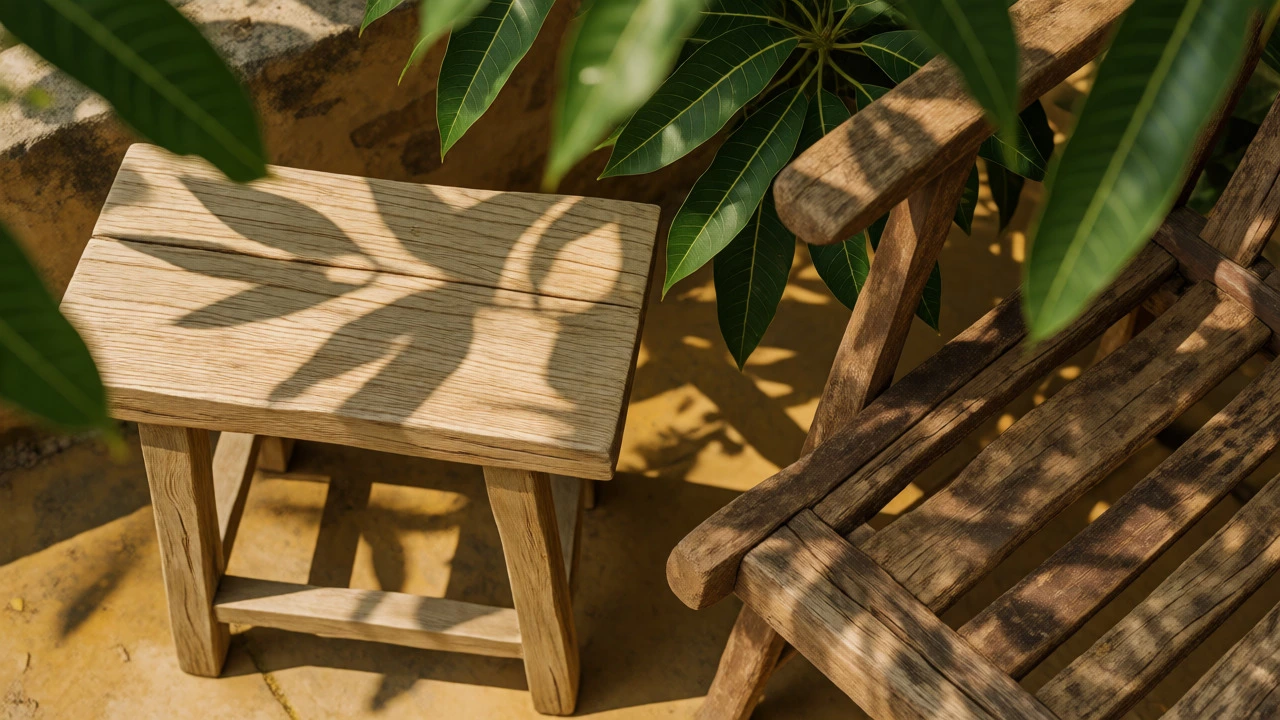
Not all furniture is about status symbols. In rural India and among eco-conscious urbanites, materials like Neem and Acacia (Babool) are gaining traction. Neem wood is famous for its medicinal properties, but as furniture, it is valued for its natural insect-repelling qualities. It is lightweight and has a straight grain, though it can be tricky to dry without cracking. You often see it in rustic beds and stools.
Acacia, locally known as Babool, is another hardy option. It is tough, thorny in nature (though the wood is smooth), and highly durable. It is often used for outdoor garden furniture because it withstands weather changes well. Then there is bamboo. Technically a grass, bamboo is being engineered into laminated boards that mimic hardwood. It is incredibly strong for its weight and grows rapidly, making it one of the most sustainable options available. Modern designs use bamboo for sleek, contemporary shelving and chairs that challenge the idea that "eco" means "flimsy."
How to Spot Quality Wood Furniture
Knowing the names is half the battle. Knowing if the wood is *real* is the other half. Manufacturers sometimes use veneers-a thin slice of expensive wood glued over a cheap core like plywood or MDF. Here is how to tell the difference:
- Check the End Grain: Look at the edges of the table or shelf. If the grain pattern on the top surface continues seamlessly onto the edge, it is solid wood. If the edge is perfectly smooth with no pores, it is likely a veneer.
- Look for Imperfections: Solid wood has knots, mineral streaks, and slight variations in color. Veneers are often too perfect. If a "Teak" table has no knots and identical grain on every side, be suspicious.
- Weight Test: Lift a drawer front or a small stool. Teak and Rosewood should feel surprisingly heavy. Mango and Pine will feel lighter. If a "Mahogany" desk feels like plastic, it is probably particleboard.
- Smell It: Freshly sanded Teak has a distinct oily, leather-like scent. Sheesham smells slightly sweet. Chemical-smelling furniture usually indicates heavy adhesives or finishes masking poor-quality wood.
Climate Matters: Matching Wood to Your Location
You cannot buy the same furniture for a house in Goa as you would for a flat in Chandigarh. Humidity and temperature fluctuations affect wood differently.
In coastal areas like Mumbai, Kochi, or Kolkata, humidity levels stay high year-round. This causes wood to expand. Teak handles this expansion best due to its natural oils. Sheesham needs excellent sealing. Avoid porous woods like Pine or low-grade Mango in these regions unless they are heavily treated.
In dry, hot climates like Rajasthan or parts of Gujarat, wood tends to shrink and crack. Hardwoods like Teak and Acacia perform well here. Softwoods may split along the grain. In northern plains where winters are cold and summers are scorching, stability is key. Kiln-dried Sheesham and Teak are safe bets. Never buy air-dried wood for these regions; it will warp as it adjusts to indoor heating or cooling.

Cost vs. Value: What Are You Really Paying For?
Let’s talk numbers. As of late 2026, prices for raw timber fluctuate based on monsoon seasons and export bans. Generally, Teak commands a 30-40% premium over Sheesham. Mango wood is roughly 40-50% cheaper than Sheesham. Rosewood can cost double or triple that of Teak.
Is the extra cost worth it? For a dining table used daily, yes. Teak’s resistance to scratches and spills saves you maintenance headaches. For a decorative side table in a guest room, Mango wood offers similar aesthetics at a fraction of the price. The "value" depends on usage frequency. High-traffic zones demand density and durability. Low-traffic zones allow for aesthetic choices.
Also, consider labor costs. Intricate carvings in Rosewood require master artisans, driving up the price significantly. Machine-cut Sheesham or Mango pieces are cheaper because they require less skilled handwork. If you want ornate details, budget for the craftsmanship, not just the material.
Sustainability and Ethical Sourcing
The Indian furniture industry is under scrutiny regarding deforestation. Buying illegal timber contributes to habitat loss. How can you be sure your furniture is ethical?
Look for certifications. The Forest Stewardship Council (FSC) label is a global standard, though not all small Indian workshops carry it. Ask suppliers for proof of origin. Plantation-grown Teak and Mango are generally safer bets than wild-harvested Rosewood. Supporting companies that use waste wood or reclaimed timber is another way to reduce your footprint. Reclaimed Teak, often salvaged from old buildings or ships, is prized for its character and zero new tree cutting.
Remember, "green" doesn’t always mean "cheap." Sustainable practices add cost. But they also add longevity. Well-sourced wood is usually better seasoned and treated, leading to a longer lifespan for your furniture.
Frequently Asked Questions
Which wood is best for Indian furniture overall?
There is no single "best" wood, but Teak is widely considered the gold standard for durability and water resistance. For a balance of cost and quality, Sheesham is the most popular choice for general household furniture. If sustainability and budget are priorities, Mango wood is an excellent modern alternative.
Is Sheesham the same as Rosewood?
No, they are different species. Sheesham is Dalbergia sissoo, while Indian Rosewood is Dalbergia latifolia. They belong to the same genus, which is why they share some traits, but Rosewood is denser, rarer, and significantly more expensive. Sheesham is more commonly used for everyday furniture.
How can I tell if my furniture is solid wood or veneer?
Check the edges and underside. Solid wood will show continuous grain patterns wrapping around corners. Veneered furniture often has a separate edge banding that looks like a strip of tape. Additionally, solid wood feels heavier and cooler to the touch, and shows natural imperfections like knots.
Does Teak wood need polishing?
Teak does not strictly require frequent polishing because of its natural oils. Over-polishing can actually clog the pores and prevent the wood from breathing. A simple wipe-down with a damp cloth is usually sufficient. If you prefer a glossy look, apply a thin coat of teak oil once a year, but avoid heavy varnishes if you want to maintain its natural texture.
Is Mango wood durable enough for a bed frame?
Yes, provided it is properly treated and constructed. Mango wood is strong enough for bed frames, especially in platform styles. However, it is softer than Teak, so it may show dents if subjected to heavy impact. Ensure the joints are reinforced with metal brackets or dowels, as softwood screws can loosen over time.