Indian Pharma Partner Finder
Select your primary business objective below to see which of India's top pharmaceutical labs aligns best with your strategy.
High Volume
Commodities & ScaleComplex Forms
Injectables & InhalersRaw Materials
APIs & ChemicalsEmerging Markets
Africa, Asia, LatAmThink about the last time you picked up a prescription at your local pharmacy. There is a decent chance that the pill bottle was filled with medication manufactured thousands of miles away, right here in India. We often call India the "pharmacy of the world," but what does that actually mean for you as a buyer, investor, or healthcare professional? It means that when you look for reliable pharma labs in India, you aren't just looking for factories; you are looking for massive research ecosystems capable of producing billions of doses while keeping costs low enough to save lives globally.
Finding the right partner among these giants can feel like navigating a maze. Do you need a company that specializes in complex generics? Or perhaps one with a strong foothold in active pharmaceutical ingredients (APIs)? The landscape is crowded, competitive, and constantly shifting. To cut through the noise, we have analyzed market capitalization, export volumes, and regulatory track records to identify the top ten players dominating the scene in 2026. This isn't just a list of names; it is a breakdown of who they are, what they do best, and why they matter to your specific needs.
Why India Dominates Global Pharmaceutical Supply Chains
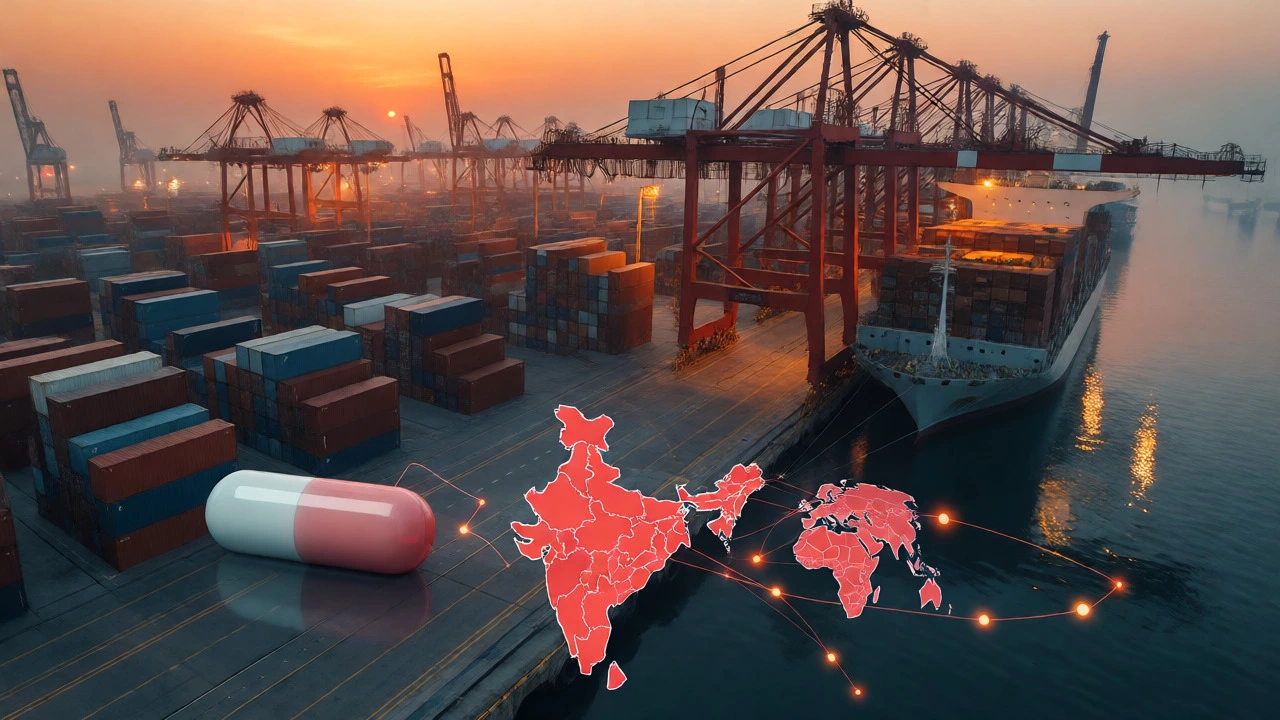
Before we name the top labs, you need to understand the engine behind their success. Why did companies like Pfizer or Novartis choose to outsource so much production to Hyderabad or Ahmedabad? It comes down to a unique combination of skilled labor, cost efficiency, and regulatory maturity. India supplies roughly 20% of global generic medicines by volume and 50% of vaccines. That scale is not an accident.
The country has invested heavily in Good Manufacturing Practice (GMP) compliance. In the early 2000s, many Indian facilities struggled with US Food and Drug Administration (FDA) inspections. Today, the situation has flipped. Major Indian firms now maintain some of the most rigorous quality control systems in the industry. If you are sourcing from these labs, you are tapping into a supply chain that has been stress-tested by global regulators for two decades.
Moreover, the cost advantage remains significant. Labor costs for chemists and lab technicians in India are a fraction of those in Europe or North America. But do not mistake cheap for poor quality. The top-tier labs listed below operate with profit margins that allow them to reinvest in automation and AI-driven drug discovery, ensuring they stay ahead of the curve rather than just cutting corners.
The Heavyweights: Market Leaders You Cannot Ignore
When we talk about the biggest names, three companies consistently rise to the top due to their sheer size and global reach. These are the entities you should consider first if you need high-volume production or established brand recognition.
Specialists in Generics and APIs
Not every top lab tries to be everything to everyone. Some have carved out niches that make them indispensable for specific types of contracts. For instance, if you need Active Pharmaceutical Ingredients (APIs)-the raw chemical components of drugs-you cannot overlook Aurobindo Pharma. Aurobindo is a giant in the API space, particularly for antibiotics and antivirals. They own several manufacturing units in Andhra Pradesh and Telangana, allowing them to control the supply chain from the raw material stage all the way to the finished tablet. This vertical integration reduces dependency on Chinese suppliers, a critical factor given recent geopolitical tensions affecting supply chains.
Similarly, Lupin Limited has built a reputation for excellence in women’s health and cardiovascular diseases. Lupin was one of the first Indian companies to gain FDA approval for a generic version of a blockbuster drug in the US. Their focus on niche therapeutic areas allows them to command higher margins than pure commodity producers. If you are looking for a partner that understands complex regulatory pathways in the US and Europe, Lupin’s experience is invaluable.
Then there is Torrent Pharmaceuticals. While they may not have the same global brand visibility as Sun Pharma, Torrent is a powerhouse in domestic sales and exports to regulated markets. They excel in central nervous system (CNS) disorders and gastrointestinal treatments. Their manufacturing facilities are known for high efficiency and low waste, which translates to consistent pricing for long-term contracts.

Innovation-Driven Mid-Tier Players
The middle tier of the market is where you find the most agile innovators. These companies are large enough to handle substantial orders but small enough to pivot quickly when new regulations or technologies emerge.
Zydus Cadila (now Zydus Lifesciences) is another name synonymous with vaccine technology. During the pandemic, they played a crucial role in developing DNA-based vaccines. Their expertise extends beyond tablets to include biologics and gene therapy. Zydus owns a robust network of hospitals and diagnostic centers in India, giving them direct access to patient data. This feedback loop helps them refine their products faster than competitors who rely solely on third-party distributors.
Mankind Pharma has surged in popularity recently due to its consumer healthcare segment. They produce over-the-counter (OTC) medications and wellness products alongside prescription drugs. Mankind’s marketing prowess is unmatched in rural India, where brand trust drives sales. For businesses targeting the mass market in South Asia, Mankind offers unparalleled reach and understanding of local consumer behavior.
How to Choose the Right Partner Among Top Labs
Selecting one of these top ten labs depends entirely on your business model. Are you a startup looking for contract manufacturing? Or a distributor seeking exclusive rights? Here is a practical framework to help you decide:
- For High-Volume Commodities: Go with Sun Pharma or Cipla. Their economies of scale ensure the lowest per-unit cost.
- For Complex Formulations: Choose Dr. Reddy’s or Glenmark. Their R&D teams can handle difficult-to-manufacture drugs like inhalers or injectables.
- For Raw Materials (APIs): Aurobindo Pharma is your safest bet due to vertical integration.
- For Emerging Markets: Mankind Pharma or Lupin offer better distribution networks in non-US regions.
You also need to check their current FDA warning letter status. Even the best companies occasionally face compliance issues. Before signing any contract, verify the latest inspection reports on the FDA website. A clean record is non-negotiable if you plan to import into the US or EU.
| Company Name | Primary Specialty | Key Strength | Global Presence |
|---|---|---|---|
| Sun Pharma | Dermatology, Oncology | Market Cap & Distribution | Strong in US/EU |
| Dr. Reddy’s | Biosimilars, Injectables | R&D Innovation | Global |
| Cipla | Respiratory, Anti-Retrovirals | Affordability & Access | Emerging Markets |
| Aurobindo | APIs, Antibiotics | Vertical Integration | US/India/Africa |
| Lupin | Cardiovascular, Women’s Health | Niche Therapeutics | US/Japan |
| Glenmark | Immunology, Novel Molecules | Patient-Centric Products | Global |
| Zydus | Vaccines, Biologics | Technology Leadership | Global |
| Mankind | Consumer Healthcare | Brand Reach | South Asia |
| Torrent | CNS, Gastrointestinal | Operational Efficiency | US/UK/Germany |
| Alkem Labs | Oncology, Hormones | High Growth Rate | US/India |
Regulatory Compliance and Quality Standards
One thing you will notice immediately when dealing with these top labs is their obsession with documentation. In the pharmaceutical world, if it is not written down, it did not happen. The top ten companies mentioned above adhere strictly to WHO-GMP, US-FDA, and EU-GMP standards. This is not just bureaucracy; it is risk management.
For example, Dr. Reddy’s and Sun Pharma have dedicated teams solely for regulatory affairs. They monitor changes in laws across 200+ countries. When the European Medicines Agency (EMA) updates a guideline, these teams adjust protocols within weeks. Smaller labs might take months. This agility protects your investment. If you partner with a lab that lags in compliance, you risk product recalls that can destroy your brand reputation overnight.
Furthermore, sustainability is becoming a new metric for quality. Companies like Cipla and Biocon (often cited alongside these top labs for biotech) are investing in green chemistry to reduce solvent waste. As global buyers face pressure to meet ESG (Environmental, Social, and Governance) goals, choosing a lab with clear sustainability initiatives adds value to your final product.
The Future of Indian Pharma Labs
Where is this industry heading? The shift from simple generics to complex generics and biosimilars is accelerating. The easy money in copying old drugs is drying up because patents expire and prices drop. The future belongs to labs that can innovate.
We are seeing increased collaboration between Indian labs and global tech firms. Artificial Intelligence is being used to predict molecular interactions, speeding up the drug discovery process. Labs like Glenmark and Zydus are already leveraging AI to screen potential candidates. Additionally, the push for self-reliance (Atmanirbhar Bharat) is driving government support for local API manufacturing. This means fewer dependencies on imports and more stable pricing for buyers.
If you are planning to enter the Indian pharma market, do not just look at the bottom line. Look at the R&D spend. Look at the regulatory history. Look at the leadership team’s vision. The top ten labs listed here have proven they can navigate uncertainty. Whether you need a single batch of antibiotics or a decade-long partnership for a new cancer drug, these companies provide the stability and scale required to succeed.
Which is the largest pharmaceutical company in India?
As of 2026, Sun Pharmaceutical Industries is the largest pharmaceutical company in India by both revenue and market capitalization. It dominates the domestic market and has a significant presence in the United States through various acquisitions.
Are Indian pharma labs safe for importing into the USA?
Yes, many top Indian pharma labs, including Sun Pharma, Dr. Reddy’s, and Cipla, have multiple FDA-approved manufacturing facilities. However, you must always check the current FDA inspection status of the specific facility you intend to use, as compliance can vary between plants even within the same company.
What is the difference between a pharma lab and a manufacturer?
In this context, "lab" refers to the Research and Development (R&D) centers where drugs are formulated and tested. "Manufacturer" refers to the factory where bulk production occurs. Most top companies like Aurobindo and Lupin have integrated operations, meaning they do both under one roof, ensuring tighter quality control.
Why is India called the pharmacy of the world?
India earns this title because it supplies approximately 20% of global generic medicines by volume and provides around 50% of the world's vaccines. The combination of low-cost skilled labor, strict regulatory adherence, and high production capacity makes it the primary source for affordable medication worldwide.
Which Indian pharma company is best for biosimilars?
Dr. Reddy’s Laboratories and Biocon are widely considered leaders in the biosimilars space. Dr. Reddy’s has a strong portfolio of complex injectables and biosimilars approved in major regulated markets like the US and Europe.