Global Plastic Demand Calculator
Input Parameters
Did you know?
Packaging alone accounts for nearly half of all plastic resin produced on Earth, driven largely by single-use convenience.
Industry Breakdown
When you hear "plastic pollution," you probably picture a bottle floating in the ocean or a bag tangled in a tree. It’s easy to blame the single-use items we toss away after one trip to the store. But if you want to know what industry produces the most plastic, the answer isn’t just about those disposable bottles. It’s about the massive, often invisible systems that keep our modern world running.
The short answer is Packaging. It accounts for roughly 40% of all global plastic demand. That’s nearly half of every ton of plastic resin produced on Earth. However, looking only at packaging misses the bigger picture. Other sectors like construction, automotive, and textiles are heavy consumers too, but they use plastic differently-often embedding it into structures where it stays for decades rather than weeks.
The Dominance of Packaging Plastics
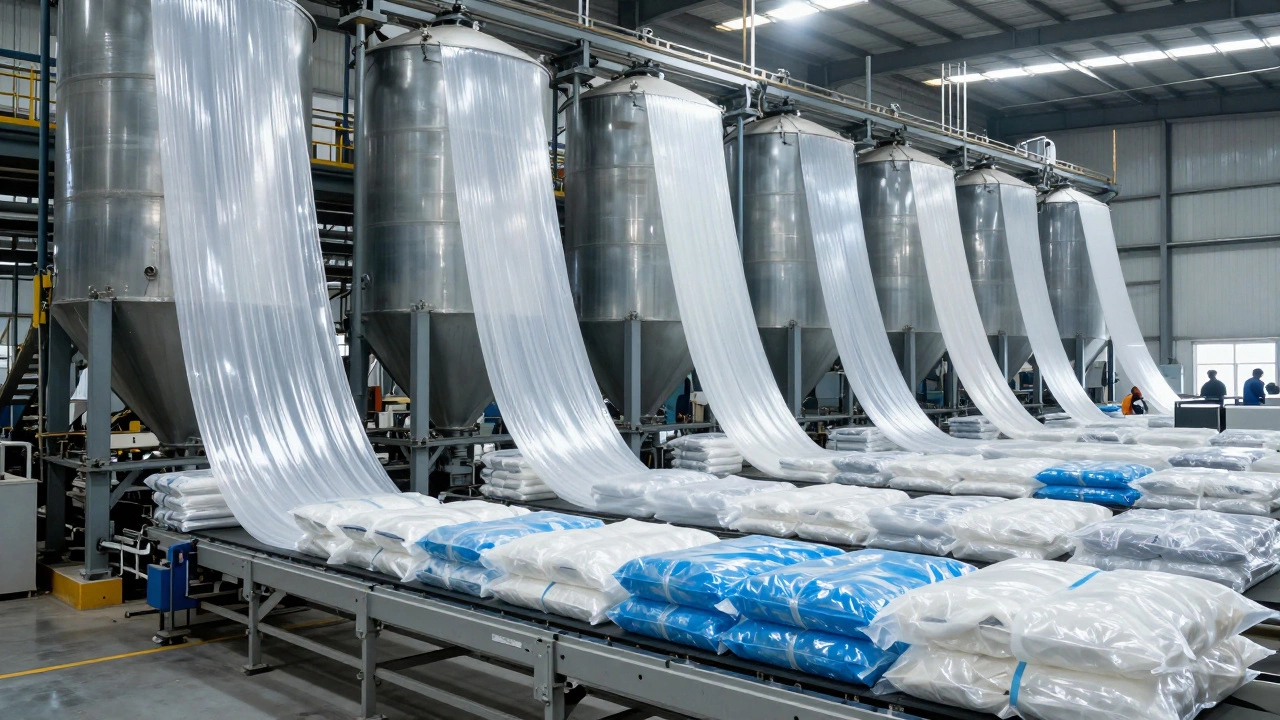
Packaging is the undisputed leader in plastic consumption. This category includes everything from food wrappers and beverage bottles to protective foam and shipping boxes. The reason for its dominance is simple: convenience and cost. Plastic is lightweight, durable, and cheap to produce compared to glass, metal, or paper alternatives.
In 2025, global plastic production hit approximately 460 million metric tons. Of that total, around 184 million tons went directly into packaging. This sector drives the highest volume of single-use plastics, which are designed for short lifespans. Think about the layers of plastic protecting your electronics when you buy a new phone, or the shrink wrap around a carton of eggs. These materials serve a critical function in reducing food waste and preventing product damage during transport, but they also create the most visible environmental burden.
The primary polymers used here are Polyethylene (PE) and Polypropylene (PP). PE is flexible and tough, making it ideal for bags and films. PP is rigid and heat-resistant, perfect for yogurt containers and bottle caps. Together, these two materials form the backbone of the packaging industry, accounting for more than half of all plastic resins sold worldwide.
Construction: The Hidden Plastic Giant
If packaging is the most visible consumer, Construction is the heaviest user by weight in many regions. While it typically accounts for about 20% of global plastic demand, this percentage is rising as buildings become more energy-efficient. Construction doesn’t usually involve disposable items; instead, it uses plastic for long-term infrastructure.
You’ll find plastic everywhere in modern buildings. Polyvinyl Chloride (PVC) is the star here, used extensively for pipes, window frames, and flooring. PVC is durable, resistant to corrosion, and requires minimal maintenance, which makes it a favorite for plumbing systems that need to last for decades. Without plastic pipes, replacing aging metal infrastructure would be far more expensive and disruptive.
Beyond PVC, construction relies on Polystyrene (PS) for insulation boards. Good insulation keeps homes warm in winter and cool in summer, significantly reducing energy consumption. So, while construction plastic contributes to the overall footprint, it also plays a vital role in improving energy efficiency. The challenge lies in recycling these materials at the end of a building’s life, which is rarely done efficiently today.
Automotive and Transportation
The Automotive industry uses about 10-12% of global plastic production. Cars have transformed from steel-heavy machines to lightweight composites over the last few decades. Engineers swap metal parts for plastic ones to reduce vehicle weight, which directly improves fuel efficiency and lowers carbon emissions.
Inside a typical car, you can find over 100 kilograms of plastic. It’s used for dashboards, door panels, bumpers, and even under-the-hood components like air intake manifolds. Nylon and Acrylonitrile Butadiene Styrene (ABS) are common choices because they withstand high temperatures and impact forces. As electric vehicles gain popularity, the demand for specialized plastics increases further. Batteries require robust housing materials that are both lightweight and fire-resistant, pushing manufacturers to develop advanced polymer blends.
This sector faces unique recycling challenges. Unlike a water bottle made of one type of plastic, car interiors combine multiple materials glued together. Separating them for recycling is labor-intensive and costly, leading much of this plastic to end up in landfills when the vehicle reaches the end of its life.

Textiles and Synthetic Fibers
Here’s a surprising fact: Synthetic textiles account for roughly 7-10% of global plastic production. When you wear polyester, nylon, or acrylic clothing, you’re wearing plastic. These fibers are derived from petroleum-based polymers, just like the bottles and pipes mentioned earlier.
The fashion industry is a massive driver of this demand. Fast fashion trends encourage frequent buying and discarding of clothes, creating a cycle of rapid turnover. Polyester is particularly dominant because it’s cheap, durable, and easy to dye. It’s also blended with natural fibers like cotton to improve strength and reduce wrinkling.
The environmental impact here is subtle but significant. Every time you wash synthetic clothing, tiny microplastics shed off the fabric and enter wastewater systems. Most treatment plants can’t filter these microscopic particles, so they flow into rivers and eventually the ocean. This means that even if you never throw away a plastic bottle, your wardrobe might still be contributing to plastic pollution.
Agriculture and Horticulture
Agriculture consumes about 3-5% of global plastic, but its importance shouldn’t be underestimated. Modern farming relies heavily on plastic mulch films, greenhouse covers, and irrigation pipes. These applications help conserve water, suppress weeds, and extend growing seasons, allowing farmers to produce more food with fewer resources.
Mulch films, typically made from low-density polyethylene (LDPE), cover soil around crops like strawberries and tomatoes. They retain moisture and warmth, boosting yields significantly. However, removing and recycling these thin films after harvest is difficult. They often tear and mix with soil, leaving fragments behind that degrade slowly. This creates a persistent problem for agricultural lands, especially in regions without robust recycling infrastructure.
Comparison of Major Plastic-Using Industries
| Industry | Estimated Share | Primary Polymers Used | Lifespan of Products |
|---|---|---|---|
| Packaging | ~40% | PE, PP, PET | Days to Months |
| Construction | ~20% | PVC, PS, PE | Decades |
| Automotive | ~10-12% | Nylon, ABS, PP | 10-20 Years |
| Textiles | ~7-10% | Polyester, Nylon | Months to Years |
| Agriculture | ~3-5% | LDPE, LLDPE | Seasonal |

Why Does Packaging Dominate?
You might wonder why packaging takes such a large slice of the pie compared to other industries. The core reason is volume versus value. In construction or automotive, plastic adds structural integrity or safety features, so it’s used strategically. In packaging, plastic is often the primary material, used in bulk to protect goods that may not be worth much themselves.
Consider the supply chain for fresh produce. To keep apples crisp and bananas unbruised from farm to supermarket, multiple layers of plastic are required. Each layer serves a specific purpose: ventilation, cushioning, moisture control, and branding. Removing any one of these layers could lead to spoilage, which wastes more resources than the plastic itself. This trade-off between protection and pollution is central to the packaging dilemma.
Additionally, consumer behavior drives packaging demand. We expect convenience-ready-to-eat meals, individually wrapped snacks, and refillable containers. These preferences push manufacturers to innovate with thinner, stronger, and more versatile plastics, inadvertently increasing total usage. Even eco-friendly initiatives sometimes backfire; for example, adding a "recyclable" label might make consumers feel less guilty, leading to higher consumption rates.
The Role of Chemical Manufacturers
All these industries rely on Chemical manufacturing companies to produce the raw resins. Giants like SABIC, BASF, and Dow Chemical operate massive facilities that convert crude oil and natural gas into ethylene, propylene, and other monomers. These monomers are then polymerized into the plastics we recognize.
The chemical industry doesn’t just sell generic plastic; it customizes formulations for specific needs. A plastic for a medical syringe must be sterile and biocompatible, while a plastic for a football helmet must absorb impact. This specialization means that different sectors depend on distinct types of plastic, complicating efforts to standardize recycling processes. You can’t easily recycle a medical-grade polymer alongside a packaging film because their chemical compositions differ too greatly.
Future Trends and Shifts
As regulations tighten and public awareness grows, the landscape is shifting. Many governments are banning single-use plastics, forcing the packaging industry to innovate. Bioplastics, made from renewable sources like corn starch or sugarcane, are gaining traction. However, they currently represent a small fraction of total production and face challenges related to scalability and compostability.
Circular economy models are also emerging. Instead of producing new plastic from fossil fuels, companies aim to keep existing plastic in use through better recycling technologies. Mechanical recycling works well for clean, single-material streams, but chemical recycling-which breaks down plastics into their original molecules-is still developing. If successful, it could handle mixed and contaminated plastics, opening doors for more complex products like automotive parts and textiles.
Meanwhile, the construction and automotive sectors are exploring bio-based alternatives for non-critical components. Imagine window frames made from recycled wood-plastic composites or car interiors using hemp-reinforced polymers. These innovations won’t replace traditional plastics overnight, but they signal a gradual move toward sustainability across all major industries.
Which specific type of plastic is produced the most?
Polyethylene (PE) is the most produced plastic globally. It comes in various forms, including High-Density Polyethylene (HDPE) for bottles and Low-Density Polyethylene (LDPE) for films and bags. Its versatility and low cost make it the top choice for packaging and agriculture.
Is the packaging industry responsible for all plastic waste?
No, while packaging generates the most visible waste due to its short lifespan, other industries contribute significantly. Textiles shed microplastics, construction leaves behind durable plastics that are hard to recycle, and automotive parts often end up in landfills. The issue is systemic, not limited to one sector.
How does plastic use in construction compare to packaging?
Construction uses about half as much plastic as packaging by weight. However, construction plastics last much longer, often embedded in buildings for decades. Packaging plastics are designed for immediate disposal, creating a faster cycle of production and waste.
Are synthetic fabrics considered plastic production?
Yes, synthetic fibers like polyester and nylon are made from petroleum-based polymers, the same base materials as conventional plastics. The textile industry is a major consumer of these resins, turning them into threads for clothing and upholstery.
What is driving the increase in plastic demand?
Population growth, urbanization, and rising incomes in developing nations drive plastic demand. People want safer food storage, lighter vehicles, and more comfortable homes-all of which rely heavily on plastic technology. Convenience and performance remain key factors.
Can recycling solve the plastic problem entirely?
Recycling alone cannot solve the problem because current rates are low, and many plastics degrade in quality after each cycle. A combination of reduced consumption, improved design for recyclability, and advanced chemical recycling is needed to close the loop effectively.
Which countries produce the most plastic?
China is the largest producer of plastic globally, followed by the United States and members of the European Union. These regions have extensive chemical manufacturing infrastructures that support both domestic consumption and export markets.
What are bioplastics, and do they help?
Bioplastics are derived from renewable biomass sources like vegetable fats or agricultural waste. While they reduce reliance on fossil fuels, they don’t always biodegrade easily and require specific conditions to decompose. They are part of the solution but not a silver bullet.