
Micro-Manufacturing Budget Planner
Select a business model to generate your personalized $1000 budget breakdown:
Most people think you need a factory and millions of dollars to start a manufacturing business. The reality is quite different. In 2026, the barrier to entry for making physical goods has never been lower. With just $1000, you can launch a legitimate production line from your garage or kitchen. The key is shifting your mindset from mass production to micro-manufacturing. This approach focuses on high-margin, low-volume products where craftsmanship and customization beat scale every time.
You don't need investors. You need a clear idea, a tight budget, and the willingness to do the work yourself initially. Let’s look at seven specific manufacturing models that fit this budget constraint while offering real growth potential.
Soap Making and Cosmetic Production
Cold process soap making remains one of the most accessible entry points into manufacturing. Why? Because the raw materials are cheap, and the markup is significant. A batch of soap costing $20 in ingredients (oils, lye, essential oils) can sell for $80-$100 if branded correctly.
With your $1000, here is how you break it down:
- $300: High-quality stainless steel pots, molds, and safety gear (goggles, gloves). Safety is non-negotiable when handling lye.
- $250: Bulk raw materials: olive oil, coconut oil, shea butter, and sodium hydroxide.
- $250: Packaging. Simple kraft paper boxes and custom stickers make a huge difference in perceived value.
- $200: Marketing samples and listing fees for platforms like Etsy or local craft fairs.
The secret here isn't just making soap; it's creating a brand story. Focus on a niche, such as soaps for sensitive skin or eco-friendly zero-waste bars. The demand for natural, chemical-free personal care products continues to rise, driven by consumers who want transparency in what they put on their bodies.
Candle Manufacturing
Similar to soap, candle making is a classic low-cost manufacturing model. However, the competition is fierce. To succeed with a small budget, you must avoid generic scents like "Lavender" or "Vanilla." Instead, focus on unique shapes, sustainable waxes, or specific functional uses, like soy candles designed for anxiety relief with calming aromatherapy blends.
Your equipment list is simple: a double boiler setup, thermometers, wax melts (soy or beeswax), cotton wicks, and fragrance oils. You can source these supplies online for under $400. The remaining $600 goes into premium packaging and branding. Candles are often bought as gifts, so the unboxing experience matters more than the candle itself. Invest in sturdy boxes and handwritten thank-you notes to build customer loyalty early on.
Custom Apparel and Screen Printing
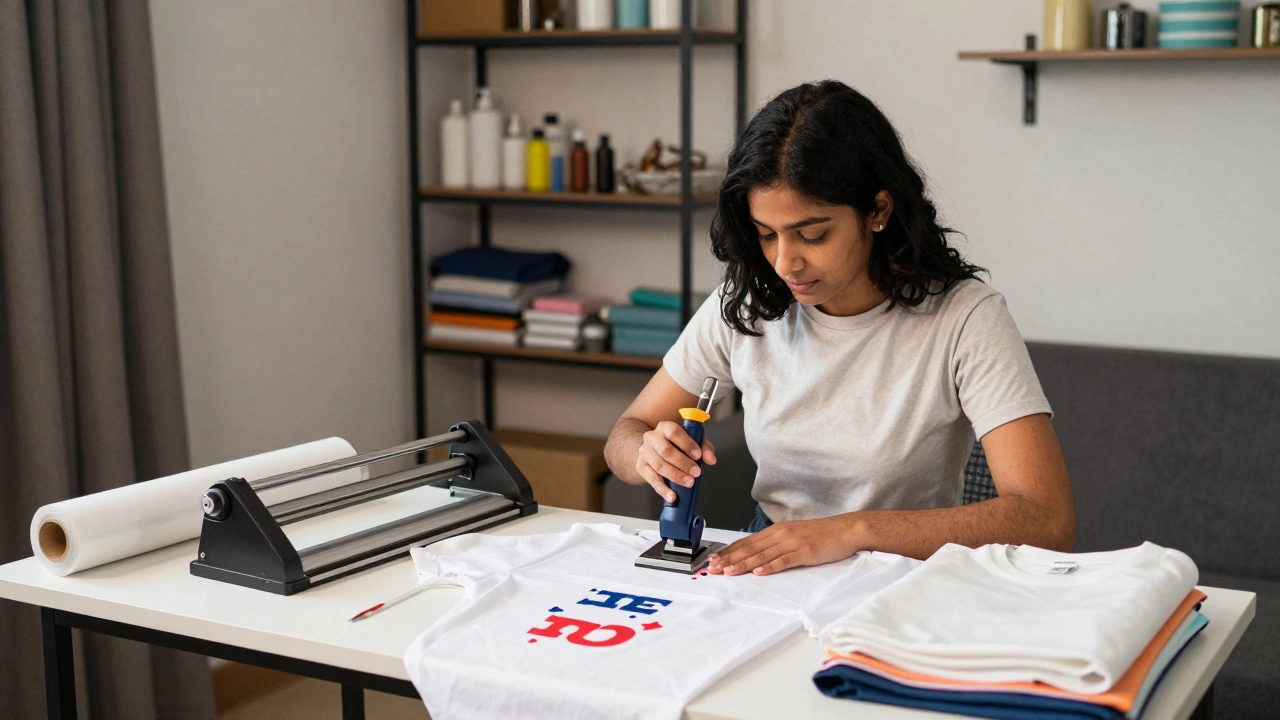
You don't need an industrial screen printing press to start a clothing manufacturing business. Heat transfer vinyl (HTV) cutting allows you to create professional-grade designs on t-shirts, hoodies, and tote bags using a standard household iron or a basic heat press.
A decent manual heat press costs around $150-$200. A vinyl cutter (like a Cricut or Silhouette) runs about $200-$300. Blank garments can be sourced wholesale for $3-$5 each. With the remaining $500, you buy a variety of vinyl colors and set up an online store.
This model works best when targeting specific communities. Think local sports teams, hobby groups, or political campaigns. By manufacturing on-demand, you hold no inventory risk. You only buy the blank shirt after the customer pays. This keeps your cash flow positive from day one.
Packaging and Gift Wrapping Supplies
While everyone talks about the product, few consider the packaging. Custom packaging manufacturing is a hidden gem. Small businesses everywhere need branded mailers, tissue paper, and gift boxes. You can manufacture these items using cardstock, adhesive, and a die-cutting machine.
A desktop die-cutting machine costs between $300 and $600. Cardstock and adhesives are inexpensive. Your value proposition is customization. Offer local businesses short-run orders that big manufacturers won't touch. For example, a local bakery might need 50 custom boxes for holiday cookies. Big factories require minimums of 1,000 units. You fill that gap. This B2B (business-to-business) model often leads to recurring monthly contracts, providing stable income.
Woodworking and Laser Cutting
If you have access to wood scraps or can buy reclaimed lumber cheaply, small-scale woodworking is highly profitable. You don't need a full workshop. A laser engraver or a small CNC router can be found used for under $1000. Alternatively, invest in hand tools like chisels and planes for artisanal items like cutting boards or phone stands.
Laser cutters allow you to produce intricate designs quickly. Keychains, ornaments, and personalized nameplates sell well at local markets. The margin on wood products is excellent because the material cost is low compared to the labor and design skill involved. Position your products as "handcrafted" and "locally made" to justify higher prices. Consumers are willing to pay a premium for items that have a human touch behind them.
Food Processing: Hot Sauce and Spices
Small-batch food manufacturing requires strict adherence to health regulations, but it is incredibly rewarding. Starting with hot sauce, spice blends, or dried fruit snacks is feasible. In many regions, including the UK, you can operate under "Cottage Food Laws" which allow certain non-perishable foods to be made at home without a commercial kitchen license.
Check your local council regulations first. If permitted, your $1000 covers jars, lids, labels, and ingredients. Bottles and caps can be bought in bulk. Labeling is critical; ensure you comply with all nutritional and ingredient disclosure laws. Market your product through farmers' markets and local grocery stores. Food products have high repeat purchase rates if the taste is right. Word-of-mouth marketing is powerful in this sector.

3D Printing Services and Products
FDM 3D printing has matured enough to be a viable manufacturing tool. You can buy a reliable printer for $300-$500. Use the rest of the budget for filament (PLA, PETG) and post-processing tools like sandpaper and paint.
Instead of selling generic miniatures, solve specific problems. Print replacement parts for broken appliances, custom brackets for DIY projects, or architectural models for students. You can also offer a service where customers send you their digital files, and you print and ship the physical object. This turns your printer into a flexible manufacturing unit capable of producing thousands of different SKUs without changing machinery.
| Business Idea | Initial Cost Estimate | Skill Level Required | Profit Margin Potential | Regulatory Hurdles |
|---|---|---|---|---|
| Soap Making | $800 - $1000 | Low | High (60-70%) | Low (Cosmetic regulations) |
| Candle Making | $600 - $900 | Low | Medium-High (50-60%) | Low |
| Custom Apparel | $700 - $1000 | Medium | Medium (40-50%) | None |
| Packaging Supplies | $800 - $1000 | Medium | High (50-65%) | Low |
| Woodworking/Laser | $900 - $1000 | High | Very High (70%+) | Low |
| Food Processing | $500 - $800 | Medium | Medium (40-50%) | High (Health & Safety) |
| 3D Printing | $600 - $900 | High | Variable | Low |
Key Steps to Launch Successfully
Having an idea is only half the battle. Execution determines success. Follow these steps to ensure your $1000 stretches as far as possible.
- Validate Before You Build: Don't manufacture 100 units immediately. Make five. Sell them to friends, family, or at a local market. Get feedback. Adjust your recipe or design based on real user input.
- Keep Overhead Zero: Work from home. Use free social media channels for marketing. Avoid renting space until your revenue consistently exceeds your living expenses.
- Price Correctly: Many beginners underprice their goods. Calculate your Cost of Goods Sold (COGS) including materials, packaging, and your time. Multiply by at least 2.5 to get a retail price. This ensures you cover marketing and taxes.
- Focus on Niche: General stores fail. Specialized stores thrive. Be the "go-to" person for vegan leather accessories or ergonomic wooden gadgets, not just "crafts."
Common Pitfalls to Avoid
One major mistake is overspending on branding before validating the product. You don't need a professional logo designer on day one. Use Canva or similar free tools. Another pitfall is ignoring legal requirements. Even small businesses need to register with tax authorities and comply with local zoning laws regarding home-based manufacturing. Always check with your local council in Birmingham or elsewhere in the UK regarding noise, waste disposal, and customer visits.
Finally, don't try to do everything alone forever. As soon as you have consistent sales, reinvest profits into better equipment or outsourcing repetitive tasks. The goal is to move from being a maker to being a business owner.
Is $1000 really enough to start a manufacturing business?
Yes, if you focus on micro-manufacturing and low-cost materials like soap, candles, or printed apparel. The key is to minimize equipment costs by buying used or starting with manual tools, and to avoid holding large inventory by producing on-demand.
Do I need a separate workspace for home manufacturing?
Not necessarily, but you should check local zoning laws. In the UK, many small-scale operations like candle making or soap crafting can be done in a spare room or garage. Ensure good ventilation and keep hazardous materials away from children and pets.
How do I handle shipping for handmade goods?
Start by offering local pickup to save costs. For online sales, compare courier services. Royal Mail and other carriers offer competitive rates for small parcels. Factor shipping costs into your product price or charge the customer directly to protect your margins.
What are the biggest risks with low-budget manufacturing?
The main risks are underpricing your labor, failing to comply with safety regulations, and burning out from doing everything yourself. Mitigate these by tracking every expense, reading local guidelines carefully, and setting realistic production goals.
Can I scale a $1000 startup into a larger business?
Absolutely. Many successful brands started in garages. Reinvest your early profits into better equipment, hiring help, and expanding your product line. The initial $1000 is just the seed capital to prove your concept works.