Toyota Camry Ownership Value Estimator
Enter your estimated purchase price and ownership duration to see how the Camry's high resale value and low maintenance costs impact your net cost compared to other premium sedans.
Estimated Net Cost of Ownership
Total spent minus resale value + maintenance savings
Market Comparison Insights
| Metric | Toyota Camry | German Rivals | Korean Rivals |
|---|---|---|---|
| Resale Value (3 Yrs) | High (65-70%) | Moderate (50-55%) | Low-Moderate (45-50%) |
| Maintenance Complexity | Low | High | Moderate |
| Spare Parts Availability | Excellent | Average | Excellent |
| Status Perception | Subtle Prestige | Overt Wealth | Value for Money |
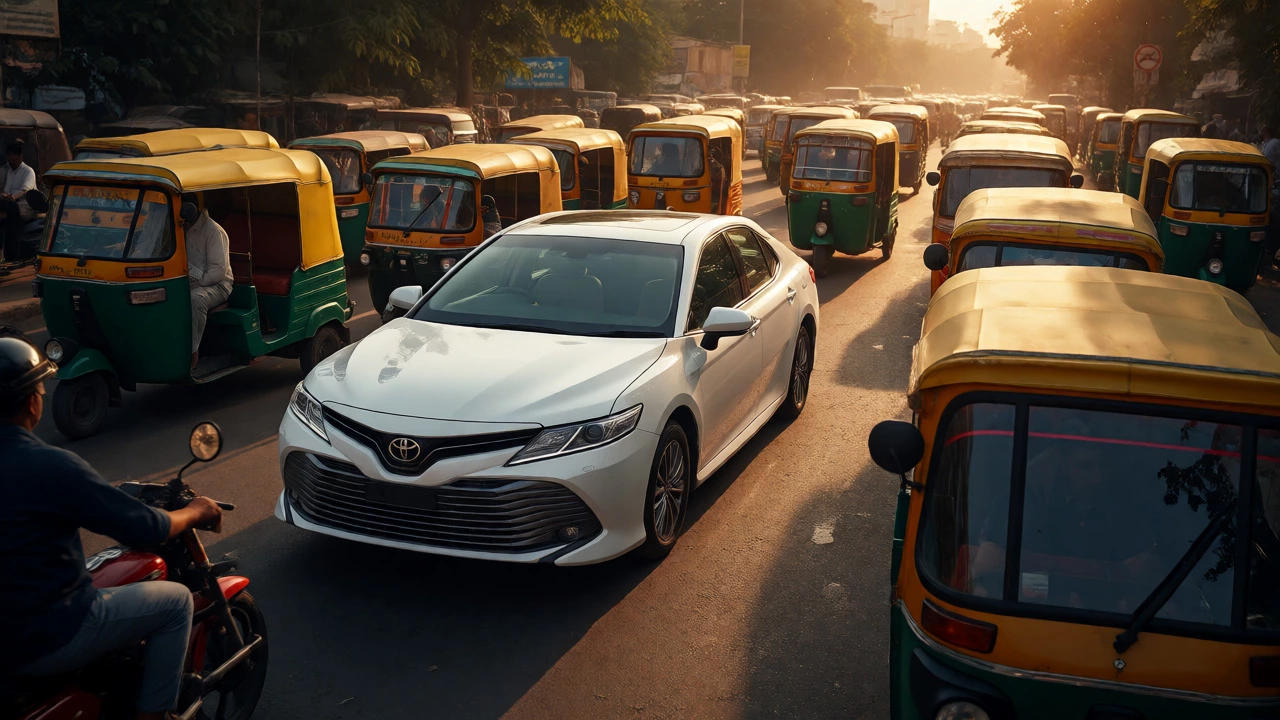
You spot a white Toyota Camry in traffic. It’s not the fastest thing on the road. It doesn’t have the badge prestige of a BMW or the tech-heavy dashboard of a Hyundai. Yet, for decades, this specific sedan has held an almost mythical status in India. Why do people pay a premium for a car that looks conservative and drives predictably? The answer isn’t just about horsepower; it’s about a complex mix of social signaling, economic pragmatism, and a deep-seated trust in engineering that few other brands can replicate.
If you’re looking to understand the Indian automotive psyche, the Camry is your Rosetta Stone. It represents a shift from buying cars purely for utility to buying them as assets that retain value while projecting stability. Let’s break down exactly why this Japanese sedan remains a favorite among the Indian elite, despite fierce competition from German rivals and Korean upstarts.
The Psychology of the "Safe" Luxury Choice
In many Western markets, driving a Camry might signal practicality or even invisibility. In India, it signals something different: quiet confidence. There is a specific demographic in metropolitan cities like Mumbai, Delhi, and Bangalore that prefers not to shout with their wealth. They don’t want the aggressive styling of a Mercedes C-Class or the maintenance nightmares often associated with European imports. They want a car that says, "I have made good money, and I am sensible enough to keep it."
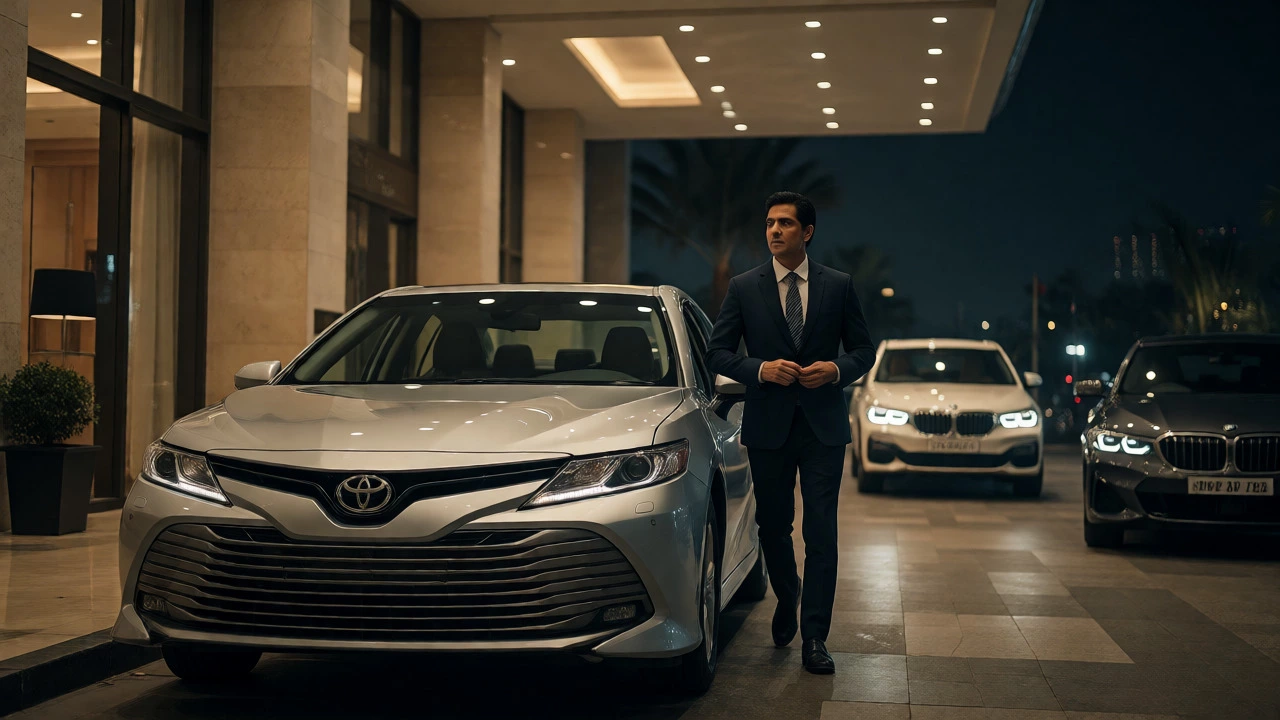
This psychological comfort stems from the concept of "status without ostentation." For business owners and senior corporate executives, a flashy car can sometimes attract unwanted attention or scrutiny regarding their lifestyle versus their income. A Camry blends into the background of high-end neighborhoods but commands respect when parked at a five-star hotel. It’s the automotive equivalent of wearing a well-tailored suit rather than a neon shirt. This subtlety is a powerful tool in Indian social hierarchies, where showing off too much can be seen as tacky, but showing too little can be mistaken for struggling.
Reliability as a Financial Strategy
Let’s talk numbers, because in India, a car is rarely just a toy-it’s a major financial decision. When you buy a vehicle here, you are thinking about resale value more than almost any other factor. This is where Toyota’s reputation shines. The brand consistently ranks highest in customer satisfaction surveys within the country, largely due to its legendary durability.
Consider the total cost of ownership. While the upfront price of a Camry is higher than many competitors, the depreciation curve is significantly flatter. You can drive a Camry for five years and sell it for a substantial portion of what you paid. Compare this to some European sedans that lose 50% of their value in the same period. Furthermore, the mechanical simplicity of the Camry means fewer breakdowns. In a country where traffic congestion can turn a minor engine light into a day-long ordeal, reliability isn’t a luxury feature; it’s a necessity.
| Feature | Toyota Camry | German Rivals (BMW/Mercedes) | Korean Rivals (Hyundai/Kia) |
|---|---|---|---|
| Resale Value after 3 Years | High (65-70%) | Moderate (50-55%) | Low-Moderate (45-50%) |
| Maintenance Complexity | Low | High | Moderate |
| Spare Parts Availability | Excellent | Average (Import delays common) | Excellent |
| Status Perception | Subtle Prestige | Overt Wealth | Value for Money |
The Impact of Automobile Manufacturing India
To understand the Camry’s dominance, you have to look at the broader context of automobile manufacturing India. The country has transitioned from being a hub for small, fuel-efficient hatchbacks to becoming a serious player in the global export market for mid-size and large vehicles. Companies like Maruti Suzuki and Hyundai have massive local footprints, but Toyota’s strategy has always been slightly different. They focus heavily on quality control and long-term partnerships with local suppliers.
This local manufacturing ecosystem affects the Camry directly. While earlier models were imported as Completely Built Units (CBUs), which attracted heavy customs duties, recent shifts toward local assembly and hybrid technology have changed the landscape. The introduction of the Camry Hybrid was a game-changer. By leveraging India’s growing infrastructure for electric and hybrid components, Toyota reduced the running costs significantly. This aligns perfectly with the Indian consumer’s obsession with mileage, even in the luxury segment.
Moreover, the "Make in India" initiative has pushed manufacturers to localize more parts. For Toyota, this means better supply chain resilience. When global chip shortages hit, brands with strong local ties fared better. This stability reassures buyers that they won’t be left waiting months for a critical component, a fear that plagues owners of niche European imports.

Comfort Over Performance
Indian roads are a unique beast. Potholes, speed breakers, and unpredictable traffic patterns demand a suspension system that prioritizes absorption over agility. This is where the Camry excels. Its chassis is tuned for comfort, isolating passengers from the harshness of the tarmac. For families who use the car for weekend getaways or daily commutes through chaotic city centers, this isolation is worth its weight in gold.
Performance enthusiasts might find the acceleration modest. But let’s be honest: how often does a family sedan need to launch from 0 to 100 km/h in under six seconds? Rarely. What matters more is the smoothness of the ride at 80 km/h on a highway, the silence inside the cabin, and the ease of parking. The Camry delivers these basics flawlessly. It doesn’t try to be a sports car; it tries to be a sanctuary on wheels. And in the stress-inducing environment of Indian urban driving, a sanctuary is highly valuable.
The Role of After-Sales Service Networks
Buying a car in India is easy. Keeping it running smoothly across different states can be a challenge. This is where Toyota’s dealer network plays a crucial role. Unlike some boutique brands that have limited service centers, Toyota has a widespread presence. Whether you are in tier-1 metros or emerging tier-2 cities, finding a certified technician is relatively straightforward.
Service experience in India has improved dramatically, but it still varies. Toyota dealerships are generally known for transparency in pricing and adherence to scheduled maintenance intervals. There’s less of the "surprise bill" culture that plagues some other segments. This predictability builds trust. Once a buyer has a positive experience with one Toyota, they are likely to stick with the brand for their next purchase, creating a loyal customer base that sustains the Camry’s sales figures year after year.
Cultural Resonance and Generational Shifts
There’s also a cultural element at play. Older generations in India associate Toyota with the iconic Corolla, a car that defined middle-class mobility for decades. As these individuals moved up the economic ladder, upgrading to the Camry felt like a natural progression. It kept them within a trusted family of products while elevating their status.
However, the narrative is shifting. Younger buyers are increasingly drawn to SUVs and electric vehicles. Brands like Tesla and BYD are entering the conversation. Yet, the Camry holds its ground because it appeals to a specific life stage-the established professional who values peace of mind over gadgetry. It’s a car for those who have already proven themselves and no longer feel the need to prove anything with their vehicle choice.
Key Takeaways
- Status Symbol: The Camry represents subtle, understated wealth rather than flashy display.
- Financial Prudence: High resale values and low maintenance costs make it a smart financial asset.
- Road Suitability: Superior suspension tuning handles Indian road conditions better than many European rivals.
- Manufacturing Strength: Local production and hybrid technology integration enhance affordability and efficiency.
- Trust Factor: Decades of reliability data and a robust service network reduce ownership anxiety.
Is the Toyota Camry considered a luxury car in India?
Yes, it is positioned as a premium executive sedan. While it may not carry the badge prestige of Mercedes or BMW, it competes directly with them in terms of price, features, and target demographic. It is viewed as a "smart luxury" choice.
Why is the Camry Hybrid popular in India?
The hybrid variant offers exceptional fuel efficiency, which is a critical concern for Indian buyers. It also provides a smoother, quieter ride and benefits from lower emission taxes in certain regions, making it economically attractive despite the higher initial cost.
How does the Camry compare to the Honda Accord?
Both are excellent sedans, but the Camry generally wins on resale value and perceived status in the Indian market. The Accord often offers more power and sharper handling, but Toyota’s brand equity and service network give the Camry a significant edge in long-term ownership satisfaction.
Are spare parts expensive for the Camry in India?
Spare parts are moderately priced compared to European luxury brands but higher than mass-market cars like Maruti or Hyundai. However, because the car breaks down so infrequently, the overall maintenance budget remains reasonable. Routine services are predictable and transparent.
Does the Camry hold its value well?
Yes, Toyota vehicles historically have some of the best residual values in the Indian used car market. Buyers know that a used Camry will still perform reliably, which keeps demand high and prices stable for sellers.