Global Furniture Sourcing Explorer
Discover which country best fits your business needs. Select your primary priority to see a detailed comparison of the top four furniture-producing nations.
You might think Italy or Germany owns the crown for making the world's best chairs and tables. After all, their design heritage is legendary. But if you look at raw volume-who actually churns out the most units-China is the undisputed largest producer of furniture in the world. It dominates the global supply chain so heavily that it often accounts for more than a third of total international exports. Yet, the landscape is shifting fast. While China holds the top spot by sheer output, countries like Vietnam and India are climbing the ranks rapidly, driven by lower labor costs and changing trade dynamics.
Why does this matter to you? Whether you're sourcing products for a retail business, investing in manufacturing stocks, or just curious about where your IKEA shelf came from, understanding the hierarchy of production tells you a lot about pricing, lead times, and future availability. The answer isn't just a single country; it's a complex web of economic shifts. Let's break down who is really building the world's furniture and why the map is redrawing itself right now.
The Undisputed King: Why China Leads Global Output
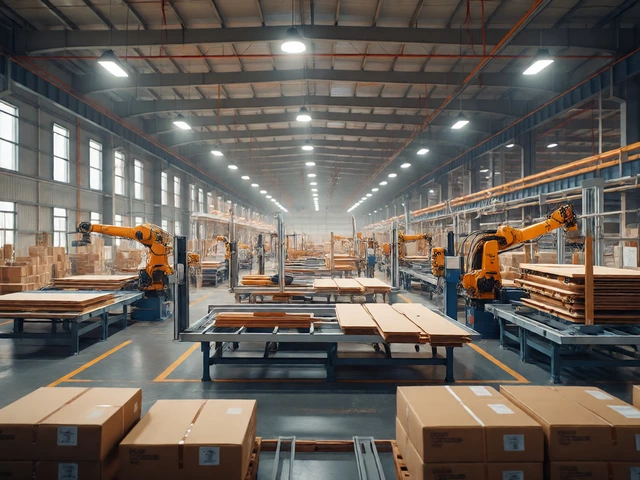
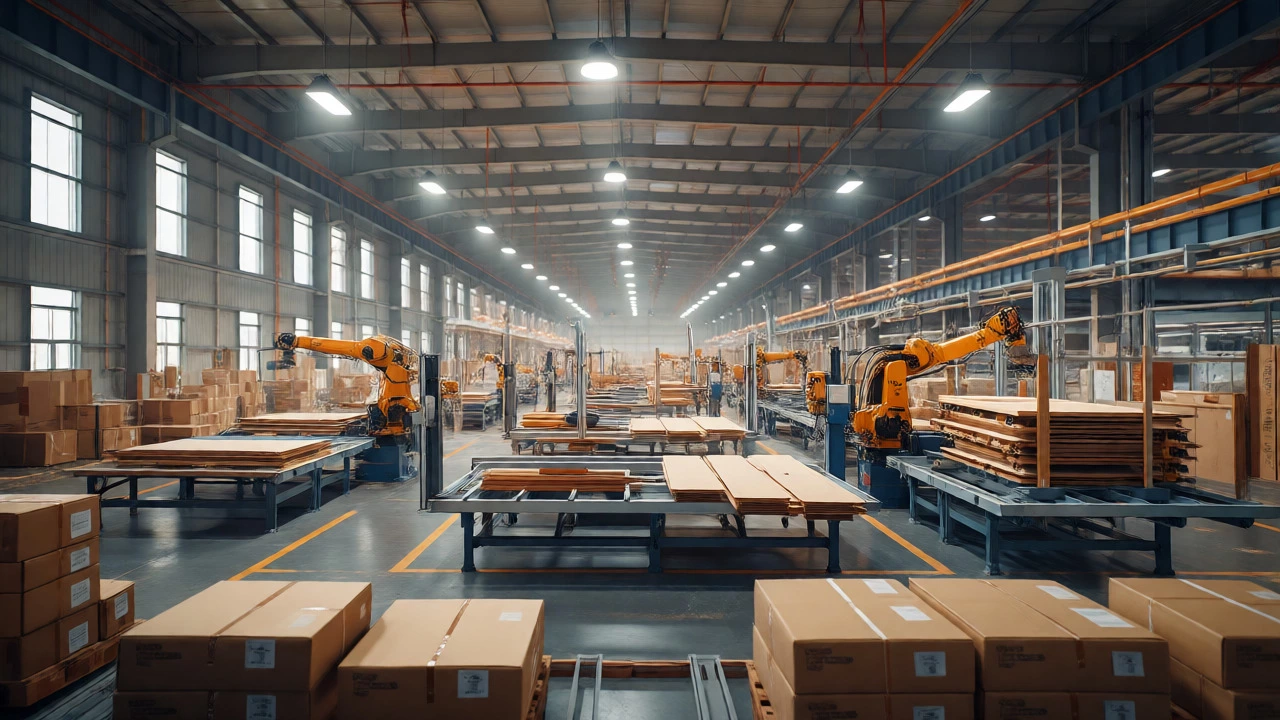
China remains the dominant force in global furniture manufacturing due to its massive industrial infrastructure and integrated supply chains. For decades, the country has benefited from what economists call "agglomeration effects." This means that factories, suppliers of wood, metal, foam, and fabric, and logistics networks are all clustered together in regions like Guangdong and Zhejiang provinces. If a factory needs a specific type of screw or a particular finish, they can get it within hours, not weeks. This speed and efficiency are hard to beat.
According to data from the United Nations Comtrade database, China consistently exports over $50 billion worth of furniture annually. That’s a staggering amount. But volume isn't the only metric. China produces everything from high-end solid wood pieces to cheap particleboard flat-packs. Their ability to scale production up or down quickly makes them attractive to global giants like Walmart and Wayfair. However, this dominance faces headwinds. Rising wages in coastal cities and trade tensions, particularly tariffs imposed during recent US-China trade disputes, have pushed some buyers to look elsewhere. Still, no other nation has replicated China’s depth of supply chain integration yet.
The Rapid Climber: Vietnam’s Rise in Furniture Exports
If China is the giant, Vietnam is the fastest-growing major furniture exporter, capitalizing on free trade agreements and competitive labor costs. Over the last decade, Vietnam has surged to become the second-largest exporter of wooden furniture globally, particularly for the US market. You’ll see Vietnamese labels on many mid-range home goods sold in Western big-box stores.
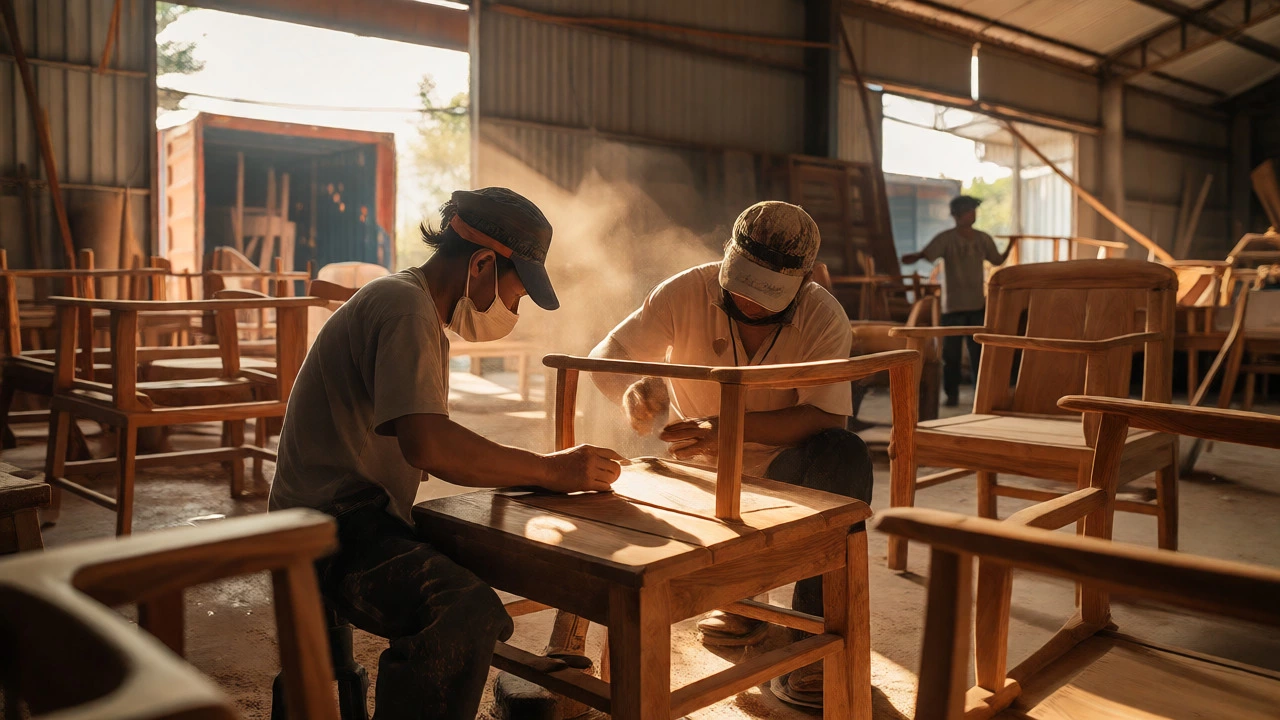
Vietnam’s rise is fueled by strategic trade deals, such as the Comprehensive and Progressive Agreement for Trans-Pacific Partnership (CPTPP) and bilateral ties with the EU. These agreements reduce tariffs, making Vietnamese goods cheaper for European and American buyers compared to Chinese alternatives burdened by tariffs. Cities like Binh Duong and Ho Chi Minh City have transformed into manufacturing hubs. Unlike China’s shift toward automation, Vietnam still relies heavily on skilled manual craftsmanship, which appeals to brands selling hand-finished or artisanal-style furniture. But here’s the catch: Vietnam lacks the deep raw material base of China. They import much of their timber from Africa and South America, which adds logistical complexity and vulnerability to global shipping disruptions.
The Emerging Giant: India’s Potential and Current Standing
While India ranks among the top producers by volume but lags behind China and Vietnam in export value due to fragmented manufacturing, its potential is enormous. India has a massive domestic market, meaning much of what is produced stays within the country. However, the government’s "Make in India" initiative is pushing hard to boost exports. Sectors like Jodhpur and Moradabad are famous for traditional handicrafts and metal-inlaid furniture, catering to niche luxury markets rather than mass-market flat-packs.
India’s strength lies in its abundant raw materials-teak, rosewood, mango wood-and a large pool of low-cost labor. Yet, the industry remains highly fragmented. Most manufacturers are small-scale enterprises lacking the capacity to fulfill huge orders for multinational retailers without significant delays. Infrastructure challenges, such as port congestion and inconsistent power supply, also hinder competitiveness compared to Vietnam’s more streamlined export zones. Despite these hurdles, Indian furniture is gaining traction in Europe and the Middle East for its unique aesthetic and durability. For buyers seeking distinctive, non-mass-produced items, India offers options that neither China nor Vietnam can easily replicate.
Comparing the Top Three Furniture Producers
To understand how these countries stack up, we need to look beyond just total output. Each serves different segments of the global market. China handles volume and variety; Vietnam excels in cost-effective wooden goods for Western retail; India focuses on craftsmanship and domestic consumption. Here’s a breakdown of their key attributes.
| Country | Primary Strength | Key Export Markets | Labor Cost Index | Supply Chain Maturity |
|---|---|---|---|---|
| China | Scale & Variety | USA, EU, Japan | Medium-High | Very High |
| Vietnam | Cost Efficiency | USA, EU | Low | High |
| India | Craftsmanship | EU, Middle East, Domestic | Low | Medium |
| Poland | Proximity to EU | Germany, France, UK | Medium | High |
Notice Poland’s inclusion? While not mentioned in the title’s primary focus, Poland is actually the largest furniture producer in Europe and a top-five global exporter. It benefits from proximity to wealthy Western European consumers, allowing for faster delivery times than Asian competitors. This highlights that "largest" depends on whether you mean global volume or regional relevance.
Beyond Asia: The Role of Europe and North America
It’s easy to assume all furniture comes from Asia, but that’s misleading. Europe remains a critical hub for high-value, designer, and specialized furniture manufacturing. Germany, Italy, and Poland form a powerful triad. Italy, for instance, may not compete with China on unit volume, but it leads in value per unit. Italian furniture commands premium prices due to design prestige and material quality. Similarly, Germany is known for engineering precision in office furniture and modular systems.
In North America, the United States and Mexico play distinct roles. The US retains strong domestic manufacturing, particularly for custom cabinetry and commercial office furniture. Mexico, meanwhile, has become a significant supplier to the US market under the USMCA trade agreement. Mexican factories benefit from lower labor costs than the US while offering shorter shipping times than Asia. This "nearshoring" trend is growing as companies seek to diversify away from reliance on distant Asian supply chains.

What Drives Future Production Shifts?
The question of who is the largest producer today won’t have the same answer in ten years. Several factors will reshape the map. First, automation. As robots become cheaper, the advantage of low-cost labor diminishes. Countries with advanced robotics, like Germany and increasingly China, will retain an edge in mass production even if wages rise. Second, sustainability regulations. The EU’s new deforestation rules require strict proof of sustainable sourcing. This favors countries with transparent forestry practices, potentially boosting Scandinavian and Canadian producers while challenging those with opaque supply chains.
Third, consumer preference for customization. Mass-produced flat-packs are losing ground to made-to-order pieces. This favors agile manufacturers in smaller economies who can handle smaller batch sizes efficiently. Finally, geopolitical stability plays a huge role. Buyers are wary of political risk. If trade wars escalate, production could fragment further, with regional hubs serving local markets rather than one global factory floor.
Practical Implications for Buyers and Investors
If you’re sourcing furniture, knowing the origin helps you predict risks. Buying from China offers reliability but exposes you to tariff volatility. Vietnam provides cost savings but requires careful vetting of raw material sources. India offers unique designs but demands patience with lead times. For investors, watching the stock performance of major manufacturers in these regions reveals broader economic health. A slowdown in Chinese furniture exports often signals weakening global consumer demand, while growth in Vietnamese exports indicates successful trade diversion.
For the average consumer, this knowledge demystifies price tags. When you see a chair priced suspiciously low, it likely came from a high-volume, low-margin operation in Southeast Asia. When you pay a premium, you’re often paying for European design, German engineering, or Indian craftsmanship. Understanding the source empowers you to make informed choices based on what matters most to you: price, speed, style, or sustainability.
Is China still the largest furniture producer in the world?
Yes, China remains the largest producer of furniture globally by both volume and export value. Despite rising labor costs and competition from Southeast Asia, its comprehensive supply chain and manufacturing capacity keep it firmly in first place.
Which country is the second largest exporter of furniture?
Vietnam is widely recognized as the second-largest exporter of wooden furniture, particularly to the United States and Europe. Its rapid growth is driven by competitive labor costs and favorable trade agreements.
How does India compare to China in furniture manufacturing?
India produces a significant amount of furniture, largely for its vast domestic market. In terms of exports, it trails China and Vietnam significantly due to fragmented manufacturing and infrastructure challenges, though it excels in niche, handcrafted segments.
Why is Vietnam becoming popular for furniture sourcing?
Buyers turn to Vietnam to avoid tariffs on Chinese goods and to benefit from lower labor costs. Additionally, Vietnam has invested heavily in export-oriented industrial zones, improving logistics and reliability for international clients.
Does Europe produce more furniture than Asia?
No, Asia produces far more furniture by volume. However, Europe, led by Germany, Italy, and Poland, produces higher-value furniture. Europe focuses on design, quality, and specialized niches rather than mass-market commodity goods.