Manufacturing Process Explorer & Quiz
Select a process below to learn more about its core action, material state, and best applications. Then, take the quiz to test your understanding!
Casting
Liquid → SolidMachining
Solid → Solid (Subtracted)Forming
Solid → Solid (Reshaped)Joining
Solid + Solid → CompositeAdditive
Powder/Liquid → SolidFinishing
Surface ModificationTest Your Knowledge
You walk into a hardware store, pick up a steel bracket, a plastic bottle cap, or a machined aluminum part. They all look different, feel different, and cost different amounts. But behind every single one of them lies one of just six fundamental ways humans turn raw material into finished goods. It’s not magic; it’s physics and chemistry applied at scale.
Most people think manufacturing is about big robots and noisy factories. In reality, it’s about choosing the right method to change a shape. Do you melt it? Cut it? Bend it? Glue it? Print it? If you’re starting a business, working in supply chain, or just trying to understand why your custom part quote was £500 instead of £50, knowing these six main manufacturing processes is the difference between guessing and knowing.
| Process Category | Core Action | Material State | Best For |
|---|---|---|---|
| Casting | Pouring molten material into a mold | Liquid → Solid | Complex shapes, high volume |
| Machining | Removing material from a solid block | Solid → Solid (subtracted) | High precision, tight tolerances |
| Forming | Deforming material without removing it | Solid → Solid (reshaped) | Sheet metal, structural parts |
| Joining | Combining separate pieces | Solid + Solid → Composite | Assemblies, large structures |
| Additive | Building layer by layer | Powder/Liquid → Solid | Prototyping, complex geometry |
| Finishing | Surface treatment and enhancement | Surface modification | Aesthetics, durability, corrosion resistance |
Casting: Pouring Potential into Shape
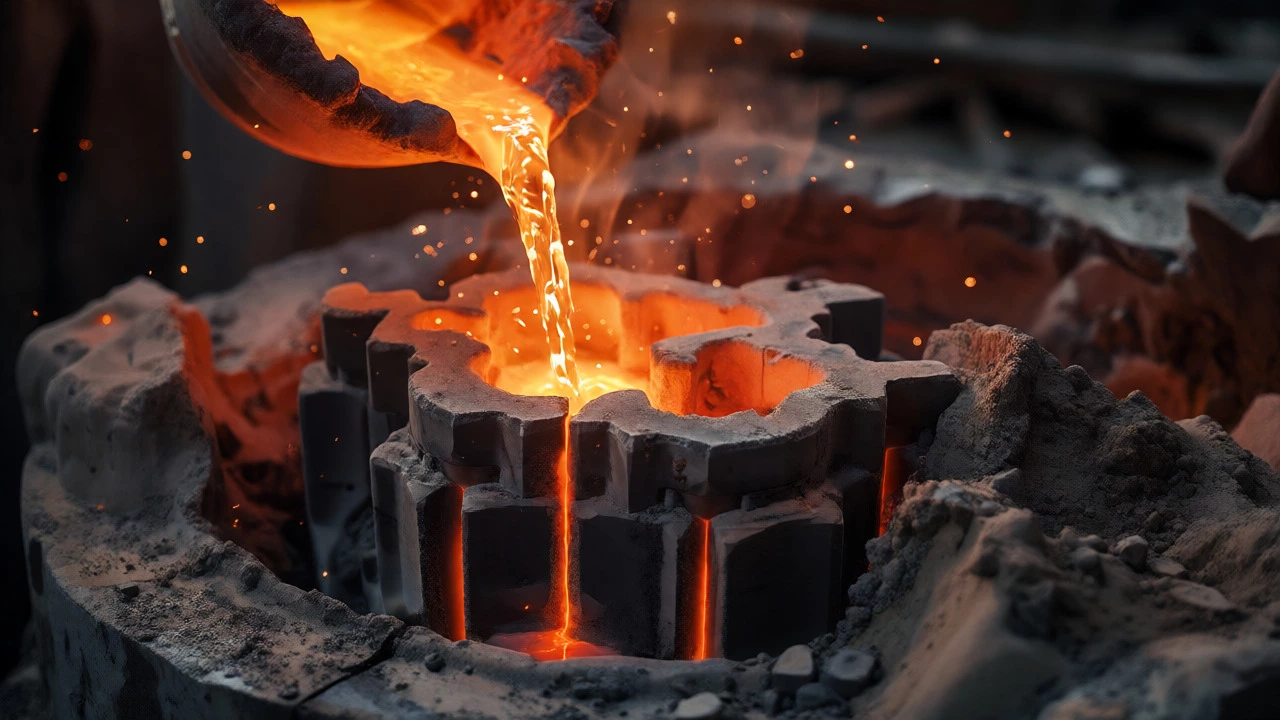
Casting is old-really old. We’ve been doing it since we figured out how to melt copper and tin. The concept is simple: heat a material until it flows like water, pour it into a hollow cavity (the mold), let it cool, and pop it out. You get the exact shape of the negative space inside that mold.
This is the go-to process for complex geometries that would be a nightmare to cut away with a tool. Think engine blocks, turbine blades, or decorative ironwork. There are dozens of types of casting, but they generally fall into two camps: expendable molds (like sand casting) where the mold breaks apart to release the part, and permanent molds (like die casting) where reusable steel molds allow for faster production cycles.
Why choose casting? If you need internal cavities, intricate details, or are producing thousands of identical metal parts, casting wins on cost per unit. The downside? Surface finish is usually rough, and you often have to machine critical surfaces afterward to make them smooth enough for mating parts.
Machining: Subtracting to Reveal
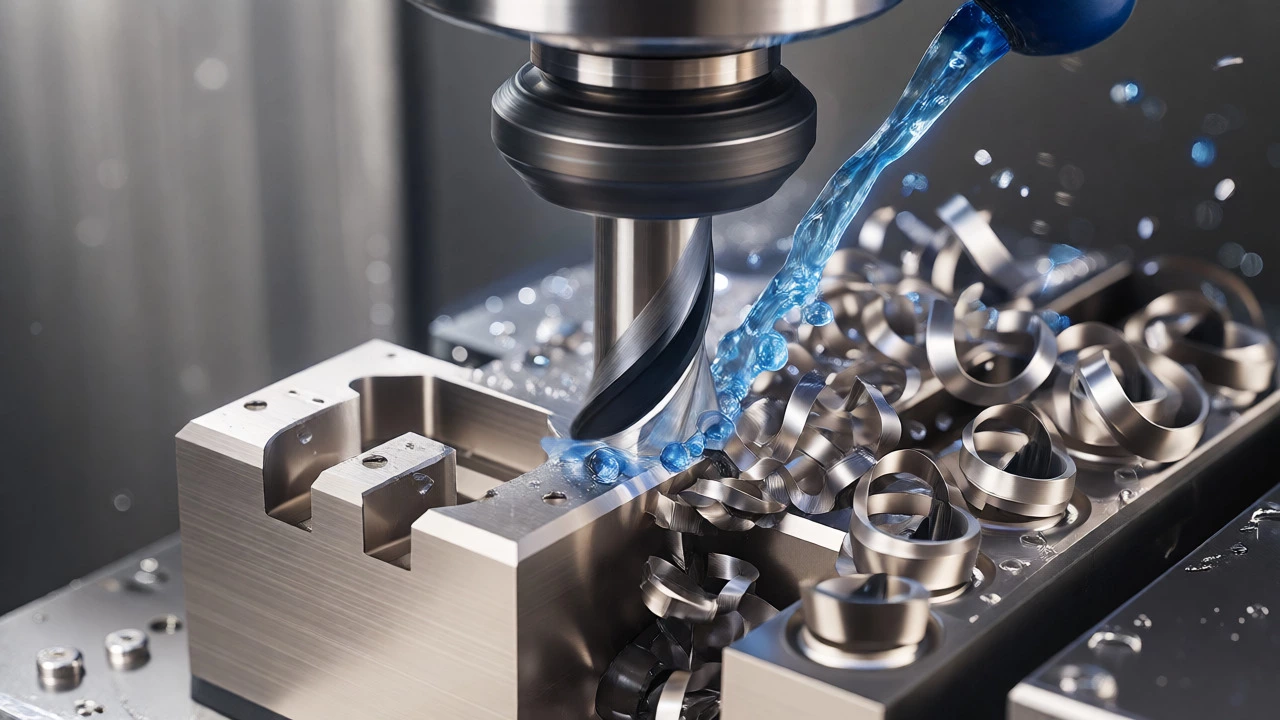
If casting adds material to a shape, machining takes it away. This is subtractive manufacturing. You start with a solid block of material-metal, wood, plastic-and use cutting tools to remove everything that isn’t the final part.
When someone asks for "tight tolerances," they are asking for machining. A CNC mill can hold dimensions within thousandths of a millimeter. That’s why aerospace components, medical implants, and high-end automotive pistons are machined. You control the geometry by controlling the tool path.
The trade-off here is waste. If you buy a 10kg block of titanium to make a 2kg bracket, you’re throwing away 8kg of expensive material as chips. Machining is also slower than molding because the tool has to physically travel through the material. But for low-volume, high-precision parts, nothing beats it.
Forming: Bending Without Breaking
Forming changes the shape of the material without adding or removing mass. You apply force to deform the material plastically-it stays deformed when you let go. Think of bending a paperclip. You didn’t melt it, and you didn’t cut it. You formed it.
This category includes stamping, forging, rolling, and extrusion. Sheet metal stamping is everywhere: car body panels, appliance casings, computer chassis. Forging is used for high-strength parts like crankshafts because aligning the grain structure of the metal makes it stronger than cast or machined equivalents.
Extrusion is fascinating because it forces material through a die to create long profiles with constant cross-sections. Aluminum window frames, PVC pipes, and even pasta are made this way. Forming is incredibly efficient for high-volume production because cycle times are measured in seconds, not minutes.
Joining: Putting It All Together
Rarely does a product come out of a machine as one single piece. Most things are assemblies. Joining is the art of connecting separate components. This isn't just welding; it's adhesives, fasteners, soldering, brazing, and riveting.
Welding fuses materials together using heat and pressure, creating a continuous joint. It’s strong but can distort thin metals due to heat input. Adhesive bonding distributes stress over a larger area and joins dissimilar materials (like gluing carbon fiber to aluminum) which welding can’t do easily. Mechanical fasteners (bolts, screws) allow for disassembly, which is crucial for repairability.
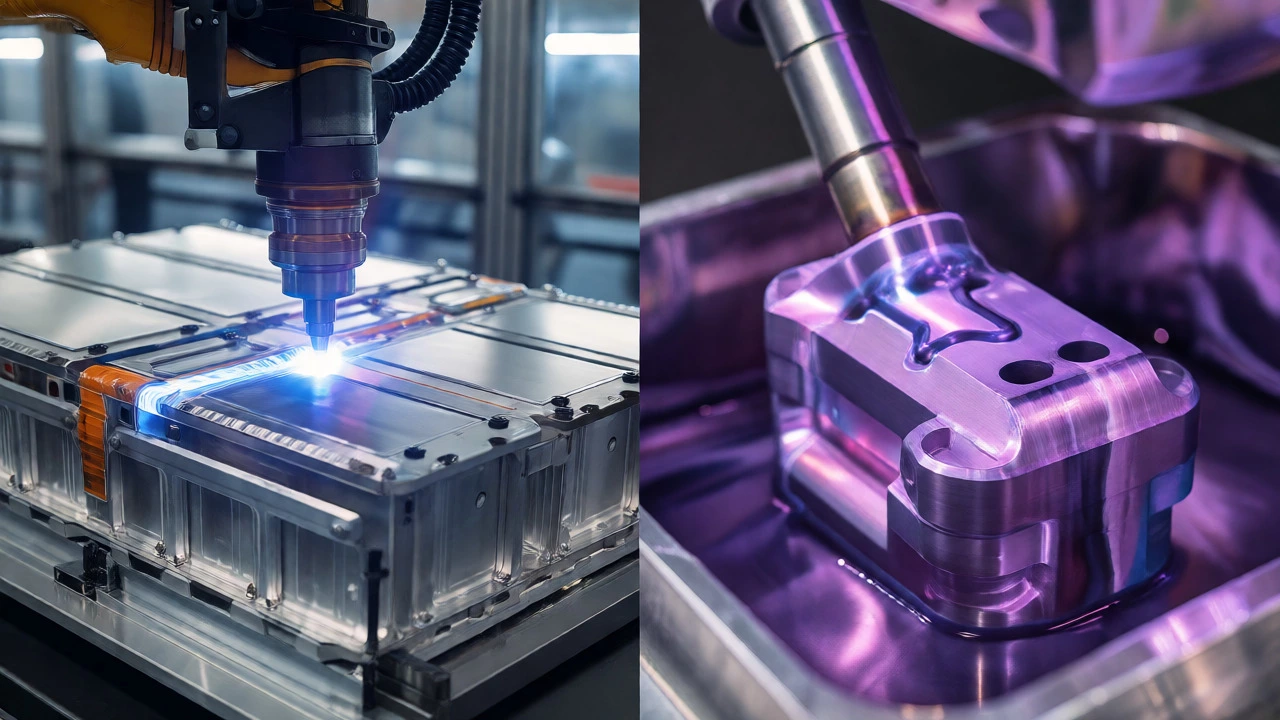
Choosing the right joining method depends on whether the joint needs to conduct electricity, resist vibration, handle extreme temperatures, or simply be cheap and quick. In modern EV battery packs, laser welding joins cells, while structural adhesives bond the casing. It’s a hybrid approach.
Additive Manufacturing: Building Layer by Layer
Additive manufacturing (AM), commonly known as 3D printing, builds objects by adding material layer upon layer. Unlike machining, there is zero waste from cutting. Unlike casting, you don’t need a mold. This freedom allows for geometries that were previously impossible to manufacture, such as internal lattice structures or organic, bionic shapes.
For years, AM was just for prototyping. Now, with technologies like Selective Laser Melting (SLM) for metals and Stereolithography (SLA) for resins, it’s moving into end-use production. Medical devices, dental crowns, and specialized aircraft brackets are printed daily.
However, AM is still slow compared to injection molding or stamping. If you need 100,000 identical plastic clips, injection molding is cheaper. If you need 50 custom titanium hip implants with patient-specific geometries, AM is the only viable option.
Finishing: The Final Touch
You might argue finishing isn’t a "primary" process because it doesn’t create the shape. But ask any engineer: a part isn’t done until it’s finished. Finishing alters the surface properties without changing the bulk geometry significantly.
This includes painting, anodizing, plating, polishing, and heat treating. Anodizing aluminum creates a hard, corrosion-resistant oxide layer. Heat treating steel changes its hardness and toughness. Polishing removes scratches for aesthetic appeal or functional smoothness.
Ignoring finishing leads to failure. A stainless steel bolt might corrode if not passivated. A plastic housing might look cheap if not textured correctly. Finishing protects the investment you made in the primary manufacturing process.
How to Choose the Right Process
Selecting the right manufacturing process is a balance of three factors: Volume, Complexity, and Material.
- Low Volume + High Complexity: Go Additive or Machining. No tooling costs.
- High Volume + Low Complexity: Go Casting or Forming. Tooling costs are amortized over millions of units.
- Medium Volume + Medium Complexity: Machining or Injection Molding (for plastics).
- Assembly Required: Design for Joining. Minimize the number of parts to reduce assembly time.
Remember, most products use multiple processes. Your smartphone case is molded plastic (casting/forming), glued (joining) to glass, with machined aluminum buttons (machining), and coated with oleophobic oil (finishing). Understanding these six pillars helps you design better, cost more accurately, and talk to suppliers with confidence.
What is the difference between casting and molding?
While often used interchangeably, casting typically refers to pouring molten metal into a mold, whereas molding is a broader term often associated with plastics and polymers. Injection molding forces molten plastic under high pressure into a closed mold, while casting relies more on gravity or lower pressure for metals. The core principle of filling a cavity remains the same, but the materials and pressures differ significantly.
Is 3D printing considered a manufacturing process?
Yes, 3D printing falls under the category of Additive Manufacturing. It is distinct from traditional methods because it builds objects layer by layer rather than subtracting material (machining) or deforming it (forming). It is now widely accepted as a legitimate production method for prototypes and low-volume end-use parts, particularly in aerospace and medical fields.
Which manufacturing process is cheapest for high volumes?
For high volumes of plastic parts, injection molding is usually the cheapest per unit after the initial tooling cost is paid. For metal parts, high-pressure die casting or stamping are often the most cost-effective. These processes have high upfront costs for molds or dies but extremely fast cycle times, driving down the price per piece as volume increases.
Can you combine manufacturing processes?
Absolutely. In fact, most complex products require a combination. A common example is a cast engine block that is then machined to ensure cylinder bores are perfectly round, joined with bolts to other components, and finally painted for corrosion protection. Hybrid manufacturing systems that combine additive and subtractive techniques in one machine are also becoming popular for repairing worn parts.
What is the role of finishing in manufacturing?
Finishing improves the surface quality, appearance, and performance of a part. It can increase hardness, improve corrosion resistance, reduce friction, or enhance aesthetics. Without proper finishing, many manufactured parts would fail prematurely due to environmental exposure or wear, regardless of how well they were shaped initially.