
Small Factory Setup Cost Estimator
Select your production tier and specific needs to estimate your initial capital requirement. This tool accounts for machinery, fit-out, compliance, and working capital based on 2026 market rates.
Includes Contingency & Working Capital
Cost Breakdown
You have the product idea. You have the passion. Maybe you even have a few early customers lining up. But then reality hits: how much cash do you actually need to get those doors open? If you ask ten different consultants, you might get ten wildly different answers. Some say £50,000. Others warn you not to start without £500,000. The truth is, small factory setup cost is rarely a single number; it is a complex equation involving location, industry, and how much sweat equity you are willing to invest.
Here is the hard truth: underestimating your initial outlay is the fastest way to kill a manufacturing business before it makes its first profit. Overestimating it can paralyze you into never starting. This guide breaks down where that money actually goes, using real-world scenarios from the UK market in late 2026. We will look at what you can buy new, what you should buy used, and the hidden fees that catch most first-time founders off guard.
The Three Tiers of Small-Scale Manufacturing
Before we talk about specific line items, you need to identify which tier you fall into. Your budget depends entirely on the complexity of your production process. Think of these as three distinct levels of commitment.
Tier 1: The Garage or Workshop Model involves minimal heavy machinery. Think artisanal food production, small-batch cosmetics, or basic assembly. Here, you are likely working within an existing space, perhaps a spare warehouse unit or a converted garage. Your primary costs are raw materials, basic safety compliance, and lightweight equipment like mixers, sealers, or hand tools. Expect to spend between £15,000 and £40,000. This tier relies heavily on manual labor and low-volume output.
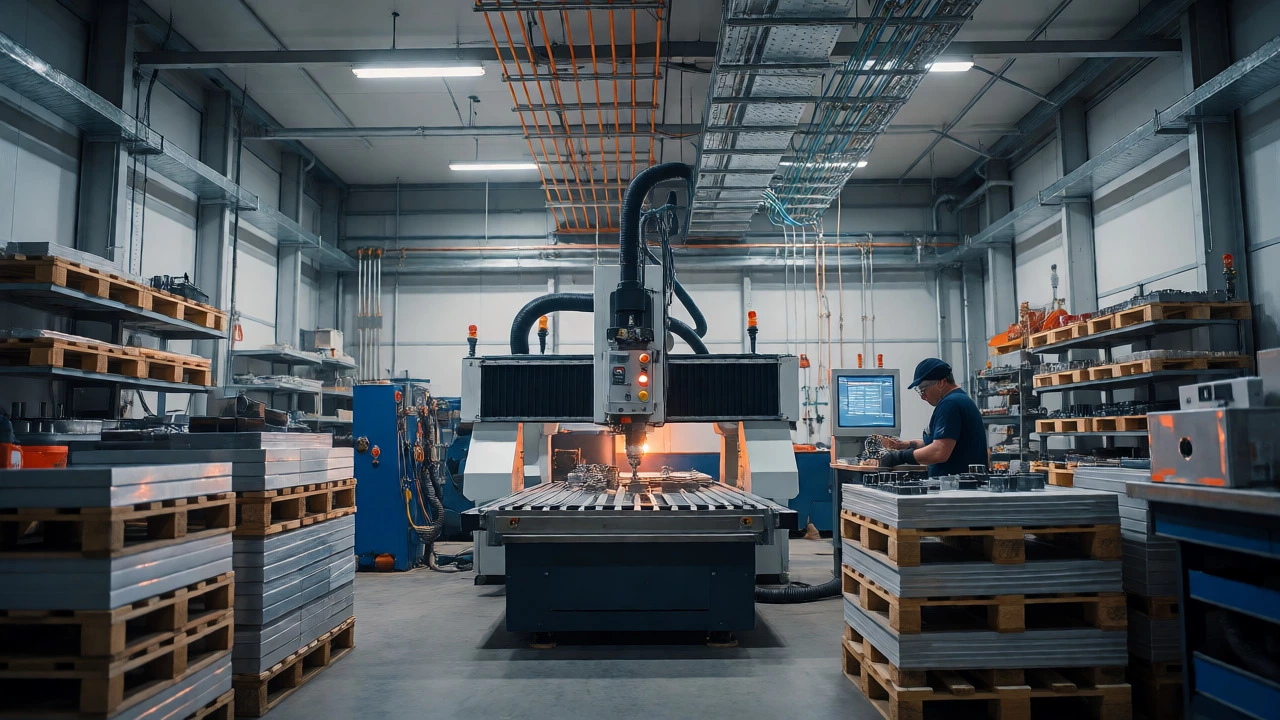
Tier 2: The Light Industrial Unit is where most "small factories" live. You are leasing a proper industrial shed-maybe 2,000 to 5,000 square feet. You need dedicated power supplies (three-phase electricity), ventilation systems, and mid-range machinery like CNC routers, injection moulding machines, or automated packaging lines. This requires significant capital expenditure (CapEx). Budgets here typically range from £75,000 to £250,000. This allows for semi-automated production and higher throughput.
Tier 3: The Specialized Facility deals with high-compliance industries like pharmaceuticals, medical devices, or precision electronics. These setups require clean rooms, specialized HVAC systems, and expensive calibration equipment. Regulatory hurdles are steep. You are looking at £300,000 to £1 million+. Even if your physical footprint is small, the cost per square foot is astronomical due to environmental controls and validation requirements.
Machinery: New vs. Used vs. Leased
Machinery is usually the biggest chunk of your CapEx. Let’s be honest: buying everything brand new is often a mistake for startups. Depreciation hits hard in the first year. If you buy a new lathe for £20,000, it might only be worth £12,000 the moment you unbox it. That is £8,000 gone before you make a single part.
Consider the secondary market. Platforms like eBay Business, Machinio, or local auction houses often sell well-maintained industrial gear from closing businesses. A machine that is five years old but serviced regularly can perform just as well as a new one for half the price. However, there is risk. Do you know the maintenance history? Can you find parts for it?
| Strategy | Upfront Cost | Risk Level | Best For |
|---|---|---|---|
| Buying New | High (100% list price) | Low (Warranty included) | Critical precision tasks, long-term asset building |
| Buying Used | Medium (40-60% list price) | Medium (Hidden wear) | General purpose machines, non-critical processes |
| Leasing/Renting | Low (Monthly fee) | Low (Flexibility) | Testing new products, seasonal spikes |
Leasing is another powerful tool. Instead of tying up £50,000 in a machine, you pay £1,500 a month. This keeps your cash flow healthy. It is particularly smart if you are testing a new product line and aren’t sure if it will stick. If it fails, you return the lease rather than trying to resell a niche machine.
Real Estate and Leasehold Improvements
Rent is just the beginning. In the UK, commercial leases often come with "repairing obligations." This means you are responsible for maintaining the roof, walls, and foundations, not just the interior. Before signing, get a survey done. A £200 survey could save you £20,000 in unexpected repairs later.
Then there are the fit-out costs. An empty shell is rarely ready for manufacturing. You might need:
- Power Upgrades: Moving from single-phase to three-phase electricity can cost £5,000 to £15,000 depending on distance from the substation.
- Compressed Air Lines: Essential for pneumatic tools. Installing pipework throughout a unit costs roughly £50-£100 per linear meter.
- Safety Flooring: Epoxy coatings or anti-slip tiles are required by health and safety standards. Budget £20-£40 per square meter.
- Fire Safety Systems: Sprinklers, alarms, and extinguishers must meet current regulations. Retrofitting these can run into the tens of thousands.
Don't forget the office space. Even if it's just a partitioned corner, you need a place for invoices, customer calls, and admin. Fitting out a small office area with desks, computers, and internet infrastructure adds another £5,000 to £10,000.
Licensing, Insurance, and Compliance
Bureaucracy has a price tag. Depending on your sector, you need specific licenses. Food manufacturers need registration with the local authority and potentially approval from the Food Standards Agency. Chemical handlers need COSHH assessments and storage permits.
Insurance is non-negotiable. You cannot operate without Public Liability Insurance. Most landlords also require Employers' Liability Insurance if you have staff. Add Product Liability Insurance, especially if you are selling consumer goods. If a defective part causes injury, this covers legal defense and damages. Premiums vary wildly based on risk, but expect to pay £1,000 to £5,000 annually for a small operation.
Planning permission is another potential trap. If you are changing the use of a building from retail to light industrial, you may need planning consent. This process can take months and cost thousands in application fees and architect drawings. Always check with your local council before moving in.
Working Capital: The Silent Killer
Most failed startups don’t run out of assets; they run out of cash. You can build a perfect factory, but if you cannot buy raw materials or pay wages while waiting for customer payments, you are stuck. This is working capital.
A good rule of thumb is to have enough cash to cover six months of operating expenses. Calculate your monthly burn rate: rent, utilities, salaries, marketing, and material purchases. Multiply that by six. If your monthly costs are £10,000, you need £60,000 sitting in the bank on day one. Why six months? Because B2B customers often pay on 30, 60, or even 90-day terms. You might ship goods in January and not see the money until April. Meanwhile, your suppliers want payment now.
Staffing and Training Costs
Do not assume you can hire skilled operators immediately. The skills gap in manufacturing is real. You might need to train your team. Factor in training costs, uniforms, and personal protective equipment (PPE). PPE sounds cheap-boots, goggles, gloves-but multiply it by every employee and replace it quarterly. It adds up.
Also, consider recruitment agency fees if you are hiring specialists. Agencies typically charge 15-20% of the first year’s salary. If you hire a Production Manager at £35,000, that is a £7,000 fee upfront. Doing it yourself takes time, but saves cash. Which resource is more scarce for you right now?
Technology and Software
Gone are the days of clipboards and paper invoices. Modern manufacturing needs data. You need software to track inventory, manage orders, and schedule production runs. Cloud-based ERP (Enterprise Resource Planning) or MRP (Material Requirements Planning) systems are affordable now. Solutions like Xero for accounting, plus a specialized manufacturing app, might cost £100-£300 a month.
Hardware matters too. You need reliable Wi-Fi coverage across the factory floor so tablets can scan barcodes. You need ruggedized laptops or tablets that can withstand dust and grease. Don’t skimp on IT infrastructure; downtime due to network failure stops production.
Marketing and Sales Launch
You built it, but will they come? Marketing costs are often overlooked in factory budgets. You need a professional website, sample kits for potential clients, and trade show presence. Trade shows are expensive but effective for B2B manufacturing. A small stand at a regional engineering expo can cost £2,000 to £5,000 for the space alone, plus travel and accommodation.
Digital marketing helps too. LinkedIn advertising targeting procurement managers isn’t cheap, but it reaches the right people. Allocate at least £500-£1,000 a month for digital promotion during your launch phase. Remember, your sales cycle in manufacturing is long. You might spend money today to close a deal eight months from now.
Contingency Fund
Things break. Suppliers deliver late. Machines malfunction. Prices for steel or plastic resin spike unexpectedly. You need a contingency fund. Industry veterans recommend adding 15-20% to your total estimated budget. If you think you need £100,000, plan for £120,000. This buffer prevents panic when the inevitable surprises hit.
Summary Checklist for Your Budget
To wrap this up, here is a quick checklist to ensure you haven’t missed anything major:
- Define your tier (Garage, Light Industrial, or Specialized).
- Get quotes for three-phase power installation.
- Survey the property for repair liabilities.
- Price machinery options: New vs. Used vs. Lease.
- Calculate 6 months of working capital.
- Quote insurance premiums accurately.
- Add 20% contingency to the total.
Setting up a small factory is not just about buying machines. It is about creating a system that converts raw materials into revenue efficiently. By understanding the true cost drivers-from the electric bill to the fire sprinklers-you can build a realistic financial model. Start small, validate your demand, and scale your capacity only when the orders justify the expense.
Can I start a small factory with less than £50,000?
Yes, but it limits your scope. You would likely need to operate from a home workshop or a very small rented unit with minimal automation. You would rely heavily on manual labor and second-hand equipment. Industries like artisanal baking, candle making, or simple assembly are feasible at this level. High-volume or precision manufacturing usually requires more capital.
What is the biggest hidden cost in setting up a factory?
Utility upgrades are frequently underestimated. Connecting to three-phase electricity, installing compressed air lines, and upgrading water drainage for industrial waste can cost significantly more than anticipated. Additionally, legal fees for lease agreements and compliance certifications add up quickly.
Is it better to lease or buy manufacturing equipment?
Leasing is better for startups with limited cash flow or uncertain demand, as it preserves capital and offers flexibility. Buying is better if you have strong credit, stable long-term contracts, and want to build equity in your assets. Consider a hybrid approach: lease flexible machines and buy core, essential equipment.
How long does it take to recoup the initial investment?
This varies greatly by industry. Typically, small-scale manufacturers aim for a return on investment (ROI) within 3 to 5 years. Faster turnover industries like food processing may see returns sooner, while heavy machinery sectors might take longer due to higher depreciation and maintenance costs.
Do I need a full-time accountant for my small factory?
Not necessarily full-time initially, but professional advice is crucial. Manufacturing accounting is complex, involving inventory valuation, cost of goods sold (COGS), and capital allowances. Using cloud accounting software with a specialist advisor is often more cost-effective than hiring a full-time CFO in the early stages.