US Manufacturing Workforce Estimator (2026)
Workforce Calculator
Enter your state's total civilian labor force to see how many people would be working in manufacturing based on the national average (7-8%).
Results for Your State
Enter data to see the estimated manufacturing workforce size.
You might think that making things is a dying art in America. If you look at Silicon Valley or Wall Street, it’s easy to believe that services and software have completely replaced factories. But here is the reality check: manufacturing still employs millions of Americans. The question isn’t whether manufacturing exists-it’s exactly how big its slice of the economic pie really is today.
As of 2026, the answer has shifted significantly from what it was two decades ago. While the absolute number of jobs has fluctuated, the percentage of the total workforce dedicated to making physical goods has settled into a new normal. Understanding this number helps explain everything from wage growth in rural towns to the push for reshoring supply chains.
The Current Number: Where We Stand in 2026
To get the real picture, we need to look at the data from the Bureau of Labor Statistics (BLS). In recent years, the U.S. manufacturing sector has employed approximately 13 million workers. When you compare that to the total civilian labor force, which hovers around 165 million people, manufacturing accounts for roughly 7% to 8% of all jobs in the country.
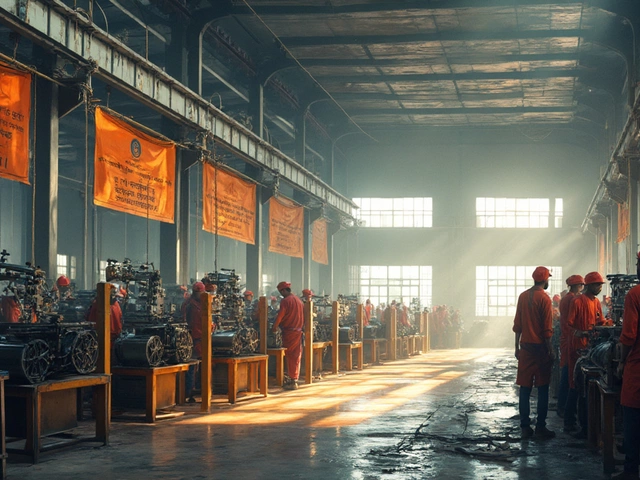
This might sound low compared to historical peaks, but context matters. In 1945, right after World War II, nearly one-third of the American workforce worked in manufacturing. That number dropped steadily as automation took over repetitive tasks and service industries expanded. Today, that 7-8% figure represents a stabilization rather than a collapse. The sector has become more efficient, meaning fewer people are needed to produce more value.
It is also important to distinguish between "manufacturing" and "industrial" jobs. Manufacturing specifically refers to the transformation of materials into new products. It does not typically include construction or mining, though these sectors often work hand-in-hand with factories. When you hear politicians talk about bringing back "industrial jobs," they are usually referring to this core manufacturing base plus the supply chain that supports it.
Why the Percentage Dropped: Automation vs. Offshoring
A common misconception is that the decline in manufacturing’s share of the workforce was solely due to companies moving factories overseas. While offshoring played a role, especially in textiles and electronics during the 1990s and early 2000s, technology is the bigger driver today.
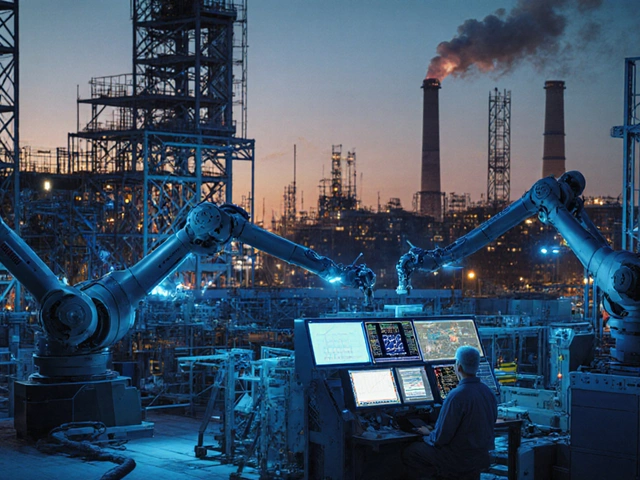
Consider the automotive industry. A modern car assembly plant produces far more vehicles per hour than it did in the 1970s, but it employs fewer humans. Robots handle welding, painting, and heavy lifting. This increase in productivity means the U.S. can maintain high output levels with a smaller workforce. This phenomenon, known as "jobless growth" in production, explains why manufacturing output (GDP contribution) remains strong even as employment percentages dip.
- Automation Impact: Advanced robotics and AI-driven quality control have reduced the need for manual assembly line workers.
- Efficiency Gains: Lean manufacturing principles allow plants to operate with slimmer headcounts while maintaining higher throughput.
- Service Integration: Many traditional manufacturing roles have shifted to logistics, maintenance, and software management within the same facilities.
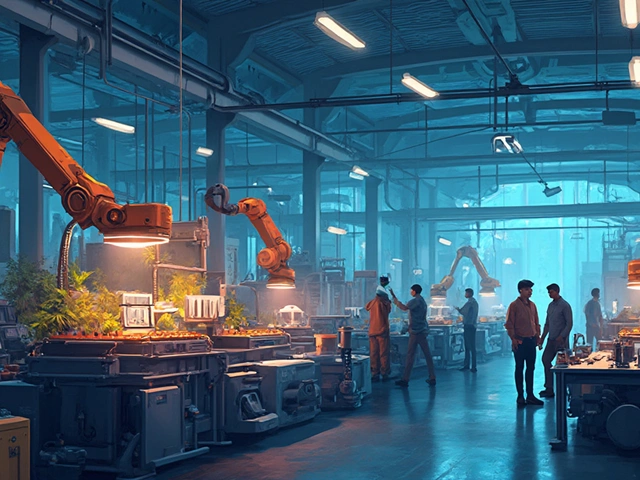
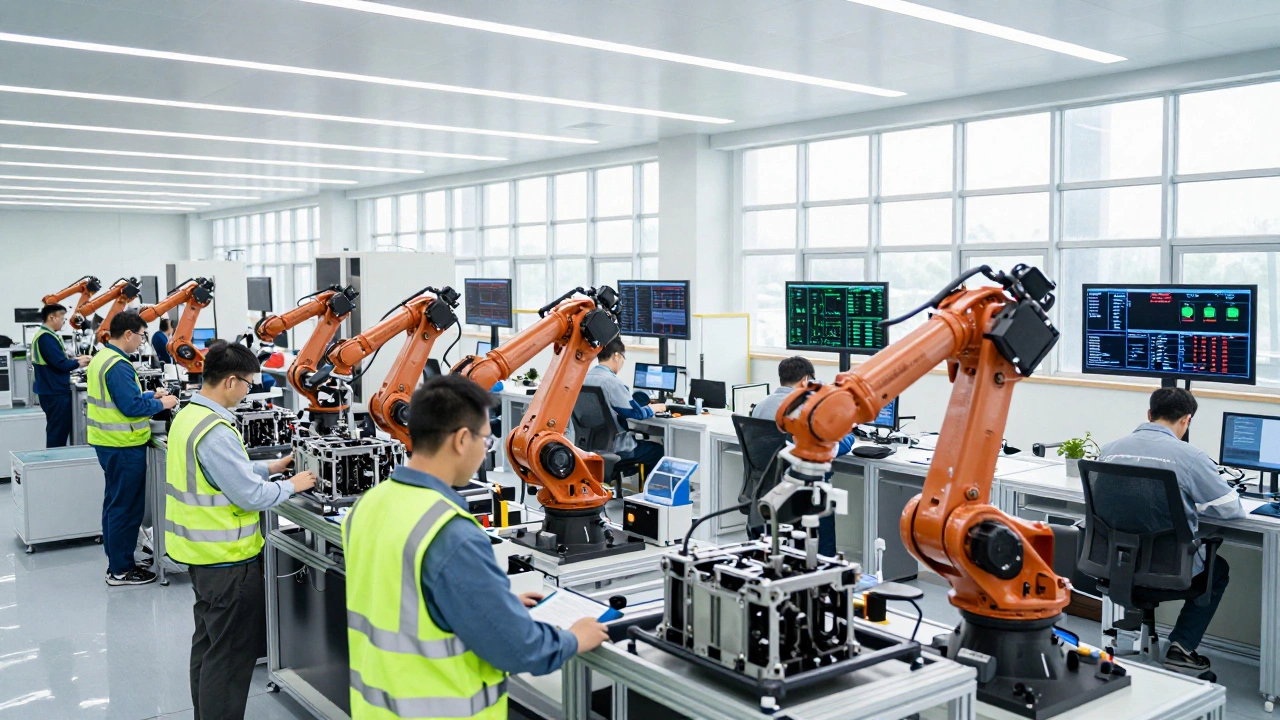
This shift doesn’t mean the jobs are gone; it means they’ve changed. The worker on the floor today is more likely to be monitoring a robotic arm or analyzing data feeds than tightening bolts by hand.

Geographic Hotspots: Where Are These Jobs Located?
If you map out where these 13 million workers are located, you won’t see an even spread across the country. Manufacturing remains heavily concentrated in specific regions, often referred to as the "Rust Belt" or the "Industrial Midwest," though the definition is expanding.
| State | Approx. Manufacturing Workers | Key Industries |
|---|---|---|
| California | ~1.1 Million | Electronics, Aerospace, Food Processing |
| Texas | ~1.0 Million | Petrochemicals, Machinery, Semiconductors |
| Ohio | ~700,000 | Automotive, Appliances, Steel |
| Michigan | ~650,000 | Automotive, Industrial Equipment |
| New York | ~600,000 | Pharmaceuticals, Electronics, Publishing |
Notice that California and Texas lead the pack, not just the traditional Midwest states. This reflects a diversification in what "manufacturing" means today. It’s not just steel and cars anymore; it’s semiconductors, medical devices, and food processing. This geographic spread is crucial for understanding local economies. In states like Michigan or Ohio, manufacturing still accounts for a much larger percentage of the local workforce-often 15-20%-making those communities more sensitive to global supply chain shifts.
Government Support and Policy Shifts
Since the title mentions government schemes, it’s worth noting how policy influences these numbers. In recent years, federal initiatives like the CHIPS and Science Act and the Inflation Reduction Act (IRA) have injected billions into domestic manufacturing. These aren’t just subsidies; they are strategic bets to bring critical supply chains home.
The goal is twofold: national security and job creation. By incentivizing companies to build semiconductor fabs and battery plants in the U.S., the government aims to reverse the long-term decline in manufacturing’s workforce share. Early signs suggest this is working. New gigafactories for electric vehicle batteries have created thousands of new jobs in states like Tennessee, Georgia, and South Carolina.
However, there is a catch. These new jobs often require different skills than the ones lost in the past. A welder from 2005 might not automatically qualify for a role operating advanced lithography machines in a chip factory. This skills gap is the biggest hurdle in converting policy promises into actual workforce growth.

The Skills Gap: Who Fills These Roles?
Here is the paradox: manufacturers are struggling to fill open positions even as the overall percentage of the workforce shrinks. Why? Because the nature of the work has evolved. The average age of a manufacturing worker is rising, nearing 50 years old. As Baby Boomers retire, there aren’t enough younger workers with the right technical training to replace them.
This creates a unique opportunity for career changers and vocational students. Community colleges and trade schools are seeing increased enrollment in programs focused on CNC machining, robotics maintenance, and industrial electrical work. These roles pay well-often exceeding $60,000 annually without requiring a four-year degree-and offer stability that many service-sector jobs cannot match.
For employers, the challenge is branding. Manufacturing has a reputation for being dirty, dangerous, and monotonous. Modern facilities look more like clean rooms or tech hubs. Changing this perception is essential to attracting the next generation of workers and potentially stabilizing or slightly increasing the workforce percentage.
Future Outlook: Will the Percentage Rise Again?
Will manufacturing ever return to being 20% or 30% of the U.S. workforce? Almost certainly not. The trend toward services and digital economy is irreversible. However, a modest rebound in the employment share is possible if reshoring efforts succeed and automation reaches a plateau in certain sectors.
Experts predict that the focus will shift from volume to value. High-tech manufacturing, biotechnology, and sustainable energy components will drive future hiring. The workforce may remain at around 7-8% of the total, but the wages and economic impact of those jobs could grow significantly. This means that while the *percentage* might stay flat, the *importance* of manufacturing to the U.S. economy will continue to rise.
For anyone considering a career in this space, or investors looking at industrial real estate, the message is clear: manufacturing isn’t dead. It’s just different. And it’s still a vital engine of the American economy.
What is the exact percentage of US workers in manufacturing in 2026?
In 2026, manufacturing accounts for approximately 7% to 8% of the total U.S. civilian labor force. This translates to roughly 13 million employees nationwide, according to Bureau of Labor Statistics data.
Has the number of manufacturing jobs increased or decreased recently?
The absolute number of manufacturing jobs has seen slight growth in recent years due to reshoring initiatives and government incentives like the CHIPS Act. However, because the total U.S. workforce has grown faster, the *percentage* of workers in manufacturing has remained relatively stable or declined slightly.
Which state has the most manufacturing jobs?
California currently leads the nation in total manufacturing employment, followed closely by Texas. Traditional industrial hubs like Ohio, Michigan, and New York also rank highly, though their dominance has diversified compared to previous decades.
Why is the manufacturing workforce shrinking as a percentage?
The primary drivers are automation and increased productivity. Machines now perform many tasks that previously required human labor, allowing factories to produce more goods with fewer workers. Additionally, the broader U.S. economy has shifted heavily toward service-based industries like healthcare, finance, and technology.
Are there good career opportunities in manufacturing today?
Yes, there is a significant demand for skilled tradespeople. Roles in robotics maintenance, CNC operation, and industrial electrical work are growing. These positions often offer competitive salaries and benefits, addressing a current shortage of qualified candidates as older workers retire.