Pharmacy Salary Calculator
Estimate your potential annual salary as a pharmacist in India based on your education level, years of experience, location, and industry sector.
Estimated Annual Salary
Pharmacists in India don’t just hand out pills at the counter-they’re the backbone of the country’s healthcare and pharmaceutical manufacturing system. But do they actually make good money? The answer isn’t simple. It depends on where they work, how much experience they have, and whether they’re in a hospital, retail chain, or a manufacturing plant. Many people assume pharmacy is a safe, steady job. It is-but the pay varies wildly across roles and regions.
What Pharmacists Actually Do in India
Most people picture pharmacists as people who count tablets behind a counter. But in India’s growing pharma sector, pharmacists wear many hats. In manufacturing units, they oversee drug formulation, quality control, and regulatory compliance. In hospitals, they manage medication safety and advise doctors. In retail chains like Apollo Pharmacy or MedPlus, they handle prescriptions and customer education. Some even work in clinical research or regulatory affairs for companies like Sun Pharma, Dr. Reddy’s, or Cipla.
Pharmacists in manufacturing don’t just check labels. They ensure every batch of medicine meets the standards set by the Central Drugs Standard Control Organization (CDSCO). That means testing raw materials, validating production processes, and documenting every step. It’s technical, detail-heavy work-and it’s critical. One mistake can lead to recalls, fines, or worse.
How Much Do Pharmacists Earn in India?
Entry-level pharmacists with a B.Pharm degree typically start at ₹2.5 lakh to ₹4 lakh per year. That’s about ₹20,000 to ₹33,000 a month. In small towns or rural pharmacies, salaries can be lower-sometimes under ₹18,000. But in cities like Mumbai, Bangalore, or Hyderabad, where big pharma companies have factories or research centers, starting salaries are higher.
With 3-5 years of experience, pharmacists in manufacturing can earn ₹6 lakh to ₹10 lakh annually. Those working in quality assurance or regulatory roles at multinational firms like Pfizer or Novartis often make ₹8 lakh to ₹12 lakh. Senior pharmacists with M.Pharm degrees and 8+ years of experience can hit ₹15 lakh to ₹25 lakh, especially if they lead teams or manage compliance for export markets.
Hospital pharmacists in private hospitals like Fortis or Apollo earn ₹5 lakh to ₹9 lakh per year. Government hospital pharmacists get lower base pay-₹4 lakh to ₹6 lakh-but they get pensions, medical benefits, and job security. Retail pharmacists in chains like 1mg or PharmEasy make ₹3.5 lakh to ₹6 lakh, depending on location and responsibility.
Where Pharmacists Make the Most Money
Not all pharmacy jobs are equal when it comes to pay. The highest salaries go to those working in:
- Pharmaceutical manufacturing-especially in export-focused units that supply the US, EU, or Australia. These companies pay more because they follow strict international standards like GMP and FDA guidelines.
- Research and development-pharmacists involved in new drug development or clinical trials earn more due to specialized skills.
- Regulatory affairs-those who handle documentation for drug approvals from CDSCO or international regulators are in high demand.
- Export and international compliance-companies that export medicines need pharmacists who understand US FDA, EU EMA, and WHO requirements. These roles pay 30-50% more than domestic roles.
For example, a pharmacist working at Sun Pharma’s Gujarat plant, which exports to over 100 countries, will earn significantly more than someone managing a small-town pharmacy in Bihar. The difference isn’t just location-it’s the complexity of the work and the scale of responsibility.
Education Matters-A Lot
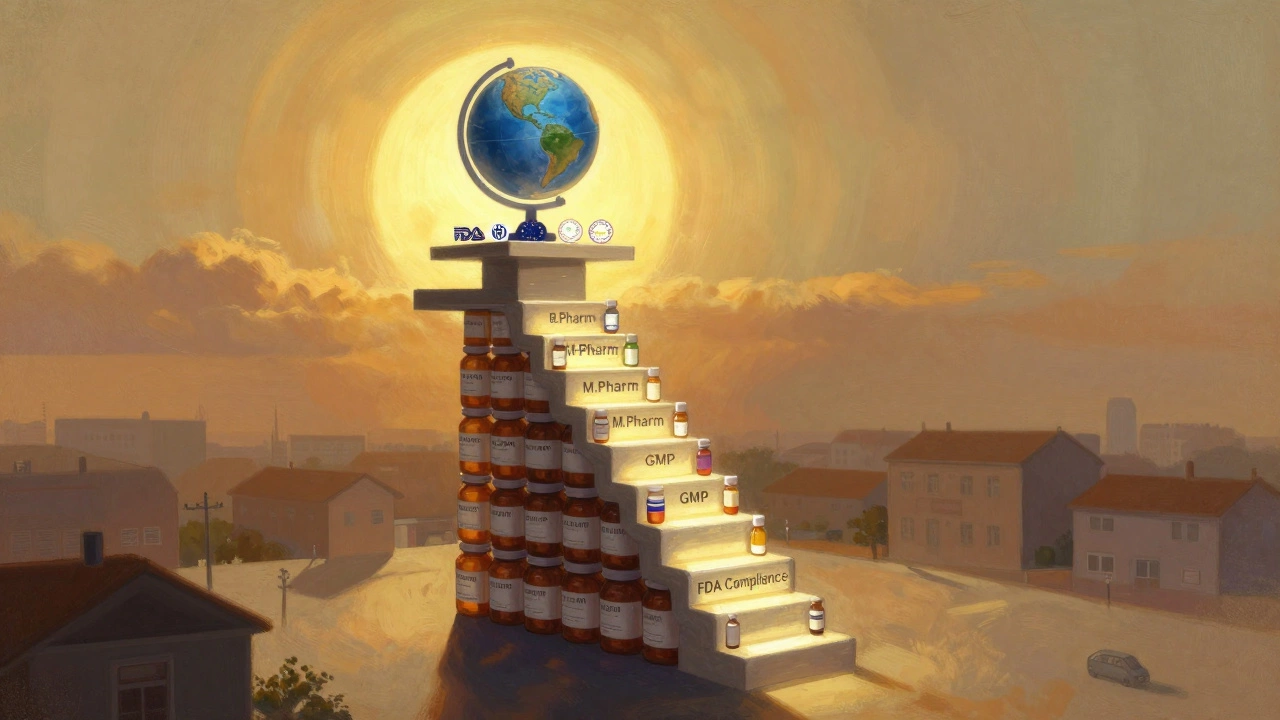
A B.Pharm degree is the minimum. But if you want to earn well, you need more. M.Pharm (Master of Pharmacy) opens doors to higher-paying roles in manufacturing, R&D, and quality control. Many top pharma companies now require M.Pharm for entry into technical teams.
Specializations matter too. An M.Pharm in Pharmaceutics or Pharmacology is more valuable than a general degree. Pharmacists with certifications in Good Manufacturing Practices (GMP), Good Laboratory Practices (GLP), or regulatory affairs are preferred. Some even take short courses from institutions like the National Institute of Pharmaceutical Education and Research (NIPER) to boost their resumes.
Pharmacists with only a diploma in pharmacy (D.Pharm) are often stuck in retail or low-level hospital roles. Their pay rarely goes above ₹3 lakh per year. The gap between D.Pharm and M.Pharm earners is stark-and growing.

Is the Job Market Growing?
Yes. India’s pharmaceutical industry is expected to reach $130 billion by 2030, up from $50 billion in 2025. The government is pushing for self-reliance in drug production through schemes like Production Linked Incentive (PLI). That means more factories, more jobs, and more demand for trained pharmacists.
Every new manufacturing plant needs pharmacists for quality control, documentation, and compliance. Even small-scale units now require at least one qualified pharmacist on staff to meet CDSCO norms. The demand isn’t just for pharmacists who can dispense medicine-it’s for those who can ensure it’s safe, effective, and legally compliant.
Export-oriented companies are hiring aggressively. If you understand international regulations, you’re in high demand. Companies are even hiring pharmacists from smaller cities and training them because qualified talent is still scarce.
Challenges and Downsides
It’s not all high salaries and growth. Many pharmacists in manufacturing work 10-12 hour shifts, especially during batch releases or audits. The pressure to meet deadlines can be intense. One missed test result or incorrect documentation can delay a shipment worth millions.
There’s also a lack of recognition. Unlike doctors, pharmacists rarely get public credit. But their work is what keeps medicines safe. In 2023, India had over 1,200 drug recalls-many due to documentation errors or testing lapses. Pharmacists are the ones who catch those mistakes before they reach patients.
Some pharmacists feel stuck in repetitive roles. In small companies, they might do everything from inventory to paperwork. Without career progression, pay stagnates. That’s why continuing education and certifications are so important.
What You Need to Earn Well
If you want to make good money as a pharmacist in India, here’s what works:
- Get an M.Pharm degree-preferably in Pharmaceutics, Pharmacology, or Quality Assurance.
- Learn GMP, GLP, and regulatory documentation. These aren’t optional anymore.
- Work for a company that exports. Pay and training are better.
- Get certified in FDA or EMA compliance if you can. Even online courses help.
- Avoid staying in small-town retail jobs unless you’re building toward something bigger.
Pharmacists who treat their career as a technical profession-not just a job-earn the most. Those who see themselves as quality guardians, not just pill counters, have the clearest path to six-figure salaries.
Real-Life Example: How One Pharmacist Doubled Their Salary
Rajesh, a B.Pharm graduate from Jaipur, started at a local pharmacy earning ₹22,000 a month. He spent two years saving, then enrolled in an M.Pharm program in Pharmacology part-time. After graduation, he applied to a small export-focused manufacturer in Ahmedabad. They hired him for quality control. His salary jumped to ₹55,000. He took a GMP certification course online and started helping with FDA documentation. Two years later, he was promoted to Senior QA Officer-earning ₹11 lakh a year. He now trains new hires and travels to audit suppliers in Tamil Nadu and Maharashtra.
His story isn’t rare. It’s repeatable-if you’re willing to learn beyond the classroom.
Final Thoughts
Do pharmacists make good money in India? Yes-if you’re willing to go beyond the basics. The highest earners aren’t the ones with the most experience alone. They’re the ones who understand regulations, speak the language of global standards, and take ownership of drug safety. The pharma industry in India is expanding fast. The jobs are there. The pay is there. But only for those who treat pharmacy as a science, not just a job.
Do pharmacists earn more in manufacturing than in hospitals?
Yes, often. Pharmacists in pharmaceutical manufacturing-especially in export-focused companies-earn more than those in hospitals. Entry-level manufacturing roles start at ₹3 lakh/year, while hospital roles start around ₹4-6 lakh. With experience, manufacturing pharmacists in quality control or regulatory roles can earn ₹15-25 lakh annually, while hospital pharmacists rarely exceed ₹12 lakh unless they move into management.
Is a B.Pharm enough to get a good salary?
A B.Pharm is the minimum, but it’s not enough for a high salary. Most well-paying jobs in manufacturing, R&D, or regulatory affairs require an M.Pharm. B.Pharm graduates can find jobs in retail or small clinics, but their earning potential caps around ₹5-6 lakh per year. To break past that, further education is necessary.
Are there jobs for pharmacists in rural India?
Yes, but the pay is lower. Rural pharmacies and primary health centers hire pharmacists, but salaries often range from ₹15,000 to ₹25,000 per month. These roles are important for public health but offer limited growth. Pharmacists looking to earn more usually move to cities or join manufacturing firms with field operations.
How important are certifications like GMP?
Extremely. GMP (Good Manufacturing Practice) certification is now a basic requirement for any pharmacist working in drug manufacturing. Companies prioritize candidates with GMP, GLP, or FDA compliance training-even if they’re fresh graduates. These certifications can increase starting salaries by 20-40% and open doors to international roles.
Can pharmacists work abroad from India?
Yes, but not as licensed pharmacists. India’s pharmacy qualifications aren’t directly recognized in the US, UK, or Canada. However, Indian pharmacists with M.Pharm and regulatory experience often get hired by global pharma companies as quality analysts, documentation specialists, or compliance officers. These roles are based in India but support international operations. Some move abroad after gaining 5+ years of experience and pursuing additional certifications.
Next Steps for Aspiring Pharmacists
If you’re considering pharmacy as a career in India, start by choosing the right path early. Don’t settle for the first job you get. Ask: Will this role teach me about regulations? Will I work with export-quality products? Will I have access to training? Look for companies that invest in their staff-not just those that pay the most upfront.
Connect with professionals on LinkedIn. Join groups like "Indian Pharmaceutical Professionals Network." Attend webinars by NIPER or CDSCO. Read the Indian Pharmacopoeia. These aren’t just extras-they’re how you build real expertise.
The pharma industry doesn’t need more people who can count tablets. It needs people who understand why those tablets matter-and who can prove they’re safe. That’s where the money is.