Indian Chemical Industry Explorer
Select a sector below to view detailed information about products, applications, and leading manufacturers in India's chemical landscape.
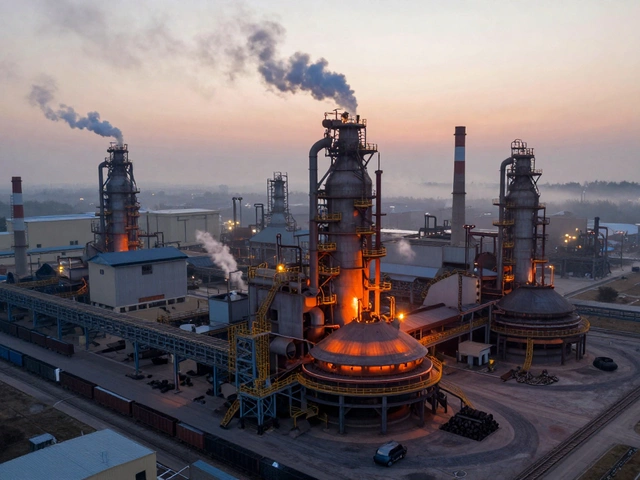
Fertilizers & Acids
Includes Nitrogenous fertilizers (Urea), Caustic Soda, and Sulfuric Acid. Critical for agriculture, paper, and aluminum production.
IFFCO, Coromandel International, Tata Chemicals, Gujarat Alkalies
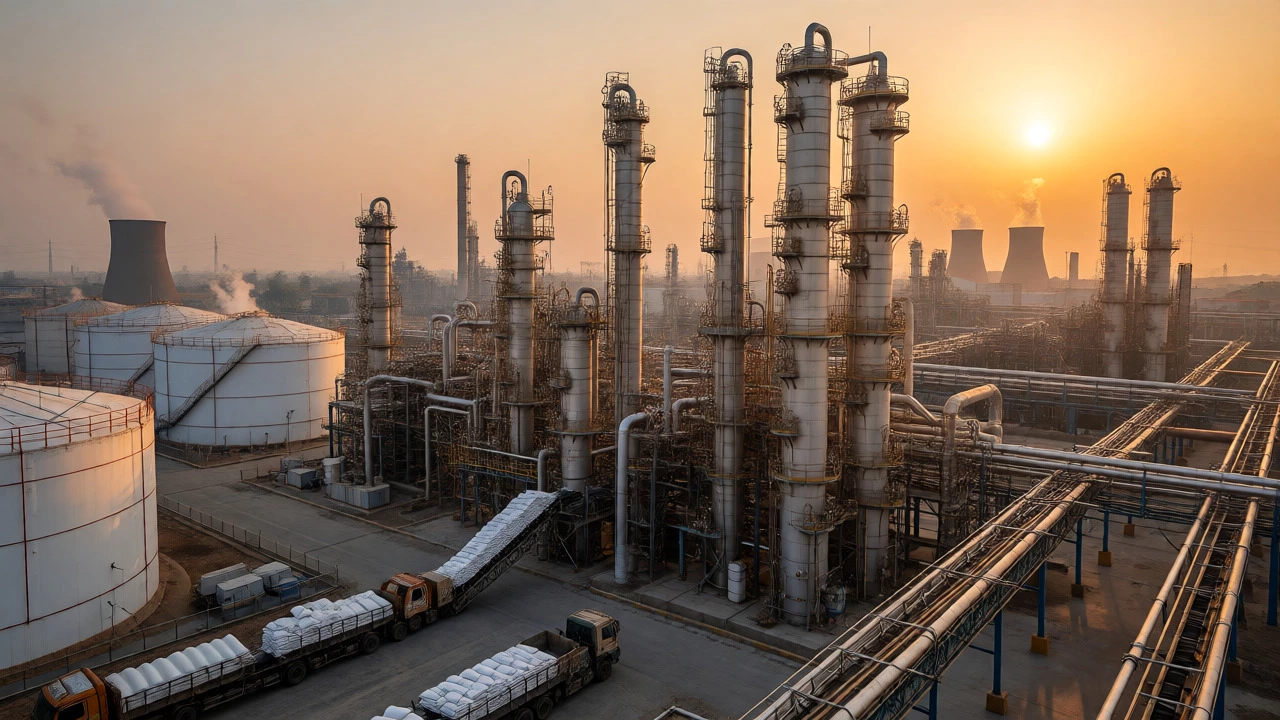
Polymers & Monomers
Converts crude oil/gas into ethylene, propylene, and PET resin. Used in plastics, synthetic fibers, and rubber.
Reliance Industries (Jamnagar Complex)
Agrochem & Electronics
High-margin custom molecules including pesticides, herbicides, dyes, pigments, and high-purity electronic gases.
UPL Limited, Syngenta India
Active Ingredients (APIs)
The "Pharmacy of the World." Produces APIs like paracetamol, ibuprofen, and amoxicillin for generic medicines globally.
Dr. Reddy’s Laboratories, Cipla
Adhesives & Detergents
Everyday essentials including surfactants for detergents, construction adhesives, sealants, and waterproofing agents.
Pidilite Industries (Fevicol)
Gujarat Dominance
Gujarat is the undisputed hub due to coastal access for imports/exports. Key clusters include Ankleshwar and Dahej.
Logistics efficiency and infrastructure support global supply chains.
You might think of India as the land of spices or textiles, but dig a little deeper and you'll find it's also one of the world's heavyweights in chemical manufacturing. It’s not just about making stuff; it’s about making the stuff that makes everything else. From the soap in your bathroom to the polymers in your car bumper, Indian factories are churning out millions of tons of complex compounds every year.
Why does this matter? Because if you're looking at supply chains, investment opportunities, or just curious about where your products come from, understanding the Indian chemical landscape is crucial. The country isn't just importing raw materials anymore; it's processing them into high-value goods for domestic use and export. Let’s break down exactly what they’re making, who’s making it, and why the map of global chemistry has shifted eastward.
The Backbone: Basic Inorganic and Organic Chemicals
Start with the basics. You can’t build an economy without acids, alkalis, and fertilizers. India has massive capacity here because agriculture demands it. The production of nitrogenous fertilizers like urea is huge, driven by companies like IFFCO (Indian Farmers Fertiliser Cooperative) and Coromandel International. These aren't small operations; they handle millions of metric tons annually.
But it’s not just fertilizer. Sulfuric acid, caustic soda, and chlorine form the core of the inorganic sector. Caustic soda, for instance, is critical for aluminum production and paper manufacturing. India produces over 4 million metric tons of caustic soda yearly. This isn't niche; it’s industrial bedrock. If you’re tracking supply chain risks, watch these commodity prices closely-they fluctuate based on energy costs, which India imports heavily.
| Chemical Type | Primary Use Cases | Major Players |
|---|---|---|
| Nitrogenous Fertilizers | Agriculture, crop yield enhancement | IFFCO, Coromandel, Chambal Fertilisers |
| Caustic Soda | Paper, aluminum, textiles | Tata Chemicals, Aditya Birla Group |
| Sulfuric Acid | Fertilizer production, mineral processing | Gujarat Alkalies, Deepak Nitrite |
Petrochemicals: The Engine of Growth
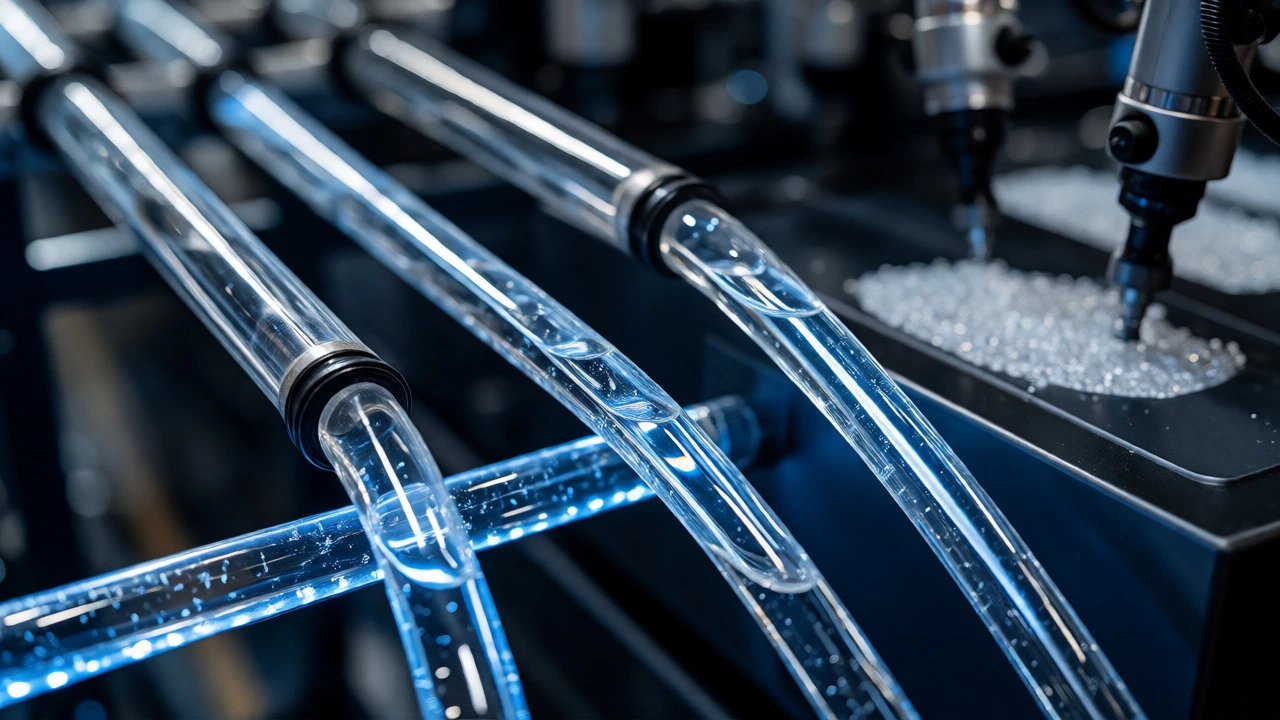
If basic chemicals are the backbone, petrochemicals are the muscle. This sector converts crude oil and natural gas into building blocks like ethylene, propylene, and benzene. These intermediates then become plastics, synthetic fibers, and rubber.
India’s petrochemical capacity has exploded in the last decade. Reliance Industries, with its Jamnagar complex, is a global giant. They don’t just refine oil; they crack it into monomers that feed downstream industries. Think about polyethylene terephthalate (PET). That’s what your water bottles are made of. India is a top producer of PET resin, exporting significantly to Europe and Africa. The logic is simple: proximity to markets plus lower labor costs equals competitive advantage.
However, there’s a catch. Energy intensity is high. Petrochemical plants need massive amounts of power and steam. While India has improved grid stability, fuel subsidies and import duties on naphtha still impact margins. If you’re analyzing profitability, look at the spread between crude prices and product prices-that’s where the money lives.
Specialty Chemicals: The High-Margin Game
This is where things get interesting for investors and tech-savvy buyers. Unlike commodities, specialty chemicals are custom-made molecules with specific functions. We’re talking about agrochemicals, dyes, pigments, and electronic chemicals.
Take agrochemicals. India is the second-largest producer globally after China. Companies like UPL Limited and Syngenta India manufacture pesticides and herbicides that protect crops worldwide. But it’s not just farming. Electronic chemicals-high-purity solvents and gases used in semiconductor manufacturing-are growing fast as India tries to boost its electronics assembly sector.
Why shift to specialty? Margins. A ton of urea sells for a few hundred dollars. A ton of specialized polymer additive can sell for thousands. As environmental regulations tighten globally, demand for "green" specialty chemicals-like biodegradable surfactants-has spiked. Indian manufacturers have adapted quickly, leveraging their R&D capabilities to meet EU REACH standards.
Pharmaceutical Ingredients: API Dominance
You’ve heard of India as the "pharmacy of the world." That title rests on Active Pharmaceutical Ingredients (APIs). APIs are the actual medicinal components in drugs, stripped of fillers and coatings. India produces nearly 60% of the world’s generic medicine volume, but critically, it manufactures a vast array of APIs domestically.
Common APIs include paracetamol, ibuprofen, and amoxicillin. During the pandemic, supply chain shocks highlighted India’s role. When China slowed production, India stepped up. Companies like Dr. Reddy’s Laboratories and Cipla run massive synthesis plants. However, India still imports some key intermediates from China, creating a dependency loop. Recent government initiatives aim to localize these upstream inputs, reducing reliance on single-source suppliers.
Consumer and Industrial Chemicals
Beyond the big industrial players, there’s a vibrant sector producing everyday items. Detergents, personal care ingredients, and construction chemicals fall here. Surfactants, essential for cleaning products, are produced in large volumes. India is a major exporter of linear alkylbenzene sulfonate (LAB), a key ingredient in laundry detergents.
Construction chemicals are another boom area. With urbanization accelerating, demand for adhesives, sealants, and waterproofing agents has surged. Pidilite Industries, famous for its Fevicol brand, dominates this space. Their products bind tiles, fix laminates, and seal roofs. It’s a less glamorous sector than petrochemicals, but it’s incredibly resilient. People always need to clean clothes and fix houses.
Regional Hubs and Infrastructure
Where is all this happening? Gujarat is the undisputed hub. Its coastline allows easy import of crude oil and export of finished goods. Dahej and Ankleshwar are industrial clusters packed with chemical plants. Maharashtra follows, particularly around Mumbai-Pune belt for pharmaceuticals and auto chemicals. Tamil Nadu hosts significant dye and pigment units due to historical textile ties.
Infrastructure matters here. Chemical logistics require specialized handling-flammable liquids, corrosive acids. India has invested in dedicated pipelines and tank farms, but bottlenecks remain. Port congestion can delay exports by days. If you’re sourcing from India, factor in lead times and customs clearance variability. The government’s National Logistics Policy aims to cut these delays, but implementation takes time.
Challenges and Future Outlook
It’s not all smooth sailing. Environmental compliance is getting stricter. The National Green Tribunal has fined polluters heavily. Factories must invest in effluent treatment plants, raising operational costs. Water scarcity in western India also poses risks for water-intensive processes like cooling towers.
Yet, the outlook remains bullish. The "China Plus One" strategy sees global brands diversifying away from Chinese dependence. India benefits directly. Plus, digital adoption in manufacturing-Industry 4.0-is improving efficiency. Smart sensors monitor reaction temperatures in real-time, reducing waste and boosting yield.
For buyers, the takeaway is clear: India offers scale, diversity, and increasingly, sophistication. Whether you need bulk fertilizers or high-purity electronic gases, the supply exists. Just do your due diligence on supplier certifications and sustainability practices.
Which state leads chemical manufacturing in India?
Gujarat is the leading state, hosting major hubs like Ankleshwar and Dahej. Its coastal location facilitates easy import of raw materials and export of finished products, supported by robust infrastructure.
Is India self-sufficient in chemical production?
India is largely self-sufficient in basic inorganic chemicals and fertilizers. However, it still imports certain specialty intermediates and high-end electronic chemicals, though localization efforts are rapidly closing this gap.
What are the main exports from India's chemical sector?
Key exports include active pharmaceutical ingredients (APIs), agrochemicals, dyes, pigments, and petrochemical derivatives like polyesters and polymers. These products reach markets across Europe, North America, and Southeast Asia.
How does regulation affect chemical manufacturing in India?
Strict environmental laws enforced by bodies like the National Green Tribunal compel manufacturers to invest in pollution control technologies. Compliance increases operational costs but ensures long-term sustainability and market access.
Who are the largest chemical companies in India?
Reliance Industries, Tata Chemicals, IFFCO, UPL Limited, and Pidilite Industries are among the largest. Each dominates specific segments, from petrochemicals and fertilizers to agrochemicals and consumer adhesives.