Manufacturing Pillar Assessment Tool
Assess your manufacturing operation's strength across the three foundational pillars. Rate your current situation on a scale of 1-5 for each pillar, then click "Calculate" to see your overall score and targeted recommendations.
When you hear the word "manufacturing," you might picture factories, robots, or assembly lines. But behind every successful manufacturing operation-whether it’s a small workshop in Birmingham or a global plant in Shanghai-are three core pillars that hold everything together. These aren’t just buzzwords. They’re the non-negotiable foundations that determine if a factory survives, grows, or shuts down. And in today’s world, where government schemes are pushing for smarter, greener, and more resilient production, understanding these pillars isn’t optional-it’s essential.
People: The Human Engine of Production
Technology gets the headlines, but people make manufacturing work. No machine runs itself. No quality check happens without a trained eye. No safety protocol is followed unless someone remembers to do it. In manufacturing, your workforce isn’t a cost center-it’s your most valuable asset.
Think about a small metal fabrication shop in the West Midlands. They’ve got a CNC machine that costs £80,000. But if the operator doesn’t know how to calibrate it, or if they’re rushed because of poor shift planning, that machine becomes a paperweight. Government schemes like the UK’s Manufacturing Growth Programme and the Advanced Manufacturing Supply Chain Initiative don’t just give grants for new equipment-they fund training, apprenticeships, and upskilling programs. Why? Because the best machine in the world is useless without skilled hands to run it.
People also drive innovation. The worker on the line often spots inefficiencies that managers miss. A simple tweak in how parts are loaded, suggested by a veteran assembler, can cut cycle time by 12%. That’s why top manufacturers invest in culture-open communication, feedback loops, and recognition. It’s not about being nice. It’s about survival.
Process: The Blueprint That Turns Ideas Into Products
Processes are the repeatable steps that turn raw materials into finished goods. Without clear, consistent, and optimized processes, manufacturing becomes chaos. One batch is good. The next is scrap. Delivery dates slip. Customers leave.
Modern manufacturing doesn’t rely on memory or guesswork. It uses documented workflows-like Standard Operating Procedures (SOPs)-and lean techniques such as 5S, Kaizen, and Six Sigma. These aren’t just Japanese fads. They’re tools that reduce waste, cut errors, and boost throughput.
Take a mid-sized food packaging plant in the East Midlands. Before they mapped their process, they had 17 different ways to seal a pouch. That led to inconsistent quality and frequent recalls. After implementing a single, validated process with digital checklists and real-time monitoring, their defect rate dropped by 68%. The UK government’s Made Smarter initiative helped fund their digital tools. But the real change came from standardizing the process itself.
Process also means predictability. When you know exactly how long a job takes, what materials you need, and where bottlenecks happen, you can plan better. That’s why government schemes tie funding to process improvements. They want manufacturers who can deliver on time, every time.
Technology: The Force Multiplier
Technology is the third pillar-and it’s changing faster than ever. But it’s not about buying the shiniest robot. It’s about using the right tech to solve real problems.
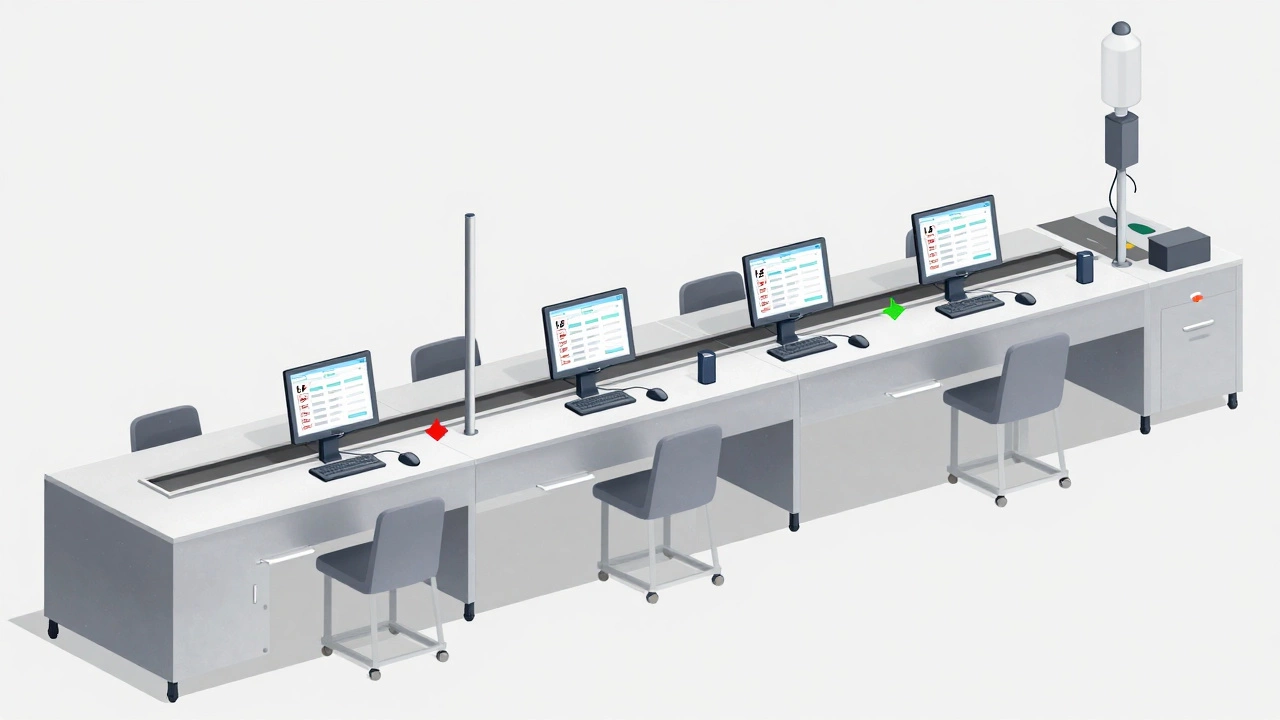
Some factories still run on paper logs and manual inspections. Others use IoT sensors to track machine health, AI to predict failures, and cloud-based ERP systems to manage inventory across multiple sites. The difference? Downtime. Waste. Profit.
For example, a tooling company in Coventry installed vibration sensors on their milling machines. The system flagged a bearing wearing out 11 days before it failed. They fixed it during a planned shutdown instead of an emergency halt. That saved them £18,000 in lost production and overtime. That’s not sci-fi-it’s today’s reality.
Government schemes are pushing this hard. The Manufacturing Technology Centre and Smart Factory Challenge offer grants for digital upgrades, automation, and data integration. But here’s the catch: tech only works if the people know how to use it and the processes are ready for it. You can’t slap a robot into a broken workflow and expect miracles.
The best manufacturers don’t chase tech for tech’s sake. They ask: "What problem are we solving?" Then they pick the tool that fits. A small batch producer might not need a fully automated line-but they might benefit from a simple barcode scanner to track parts. That’s the sweet spot.
How the Three Pillars Work Together
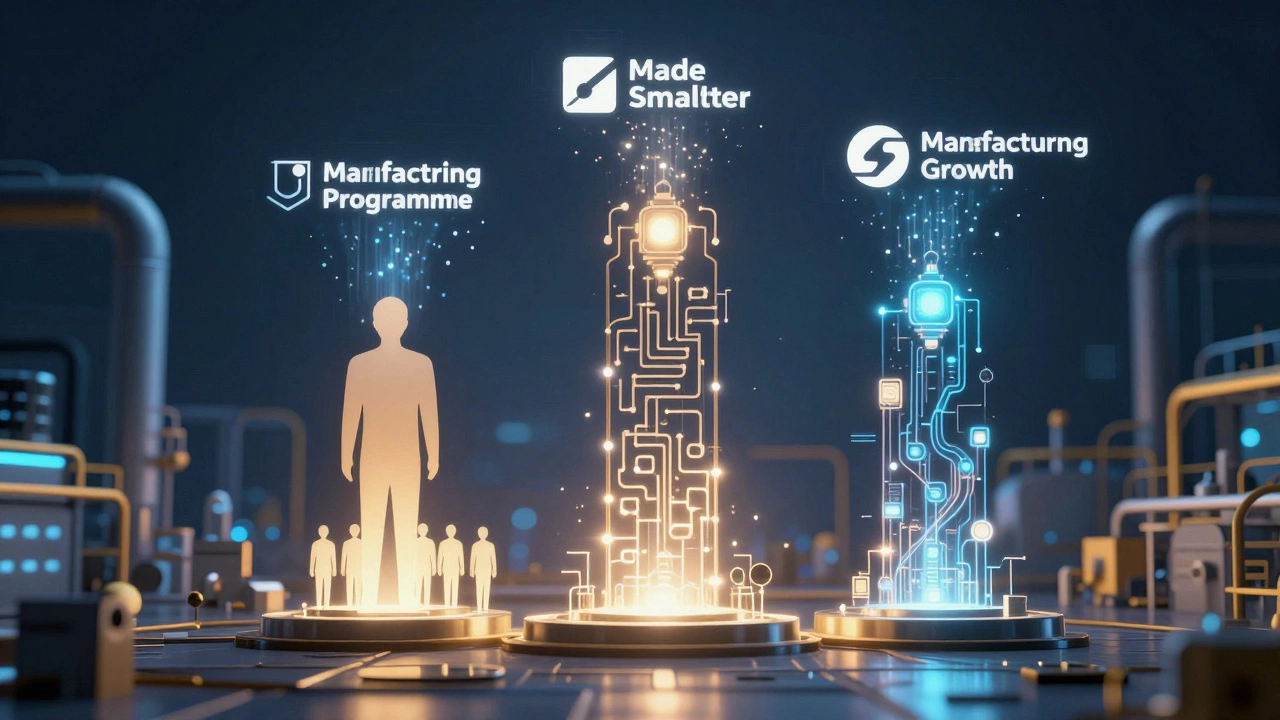
These pillars don’t exist in isolation. They feed each other. Good processes let technology shine. Skilled people make processes better. Technology gives people more power to innovate.
Imagine a company applying for a government grant to upgrade production. If they only ask for a new machine (technology), they’ll get rejected. But if they show a plan that includes:
- Training 12 staff on the new equipment (people)
- Redesigning the workflow to integrate the machine (process)
- Using data from the machine to monitor output (technology)
-they’re far more likely to win funding. That’s because they’re addressing all three pillars together.
Government schemes aren’t just handing out money. They’re teaching manufacturers how to think holistically. The most successful recipients don’t just install tech-they build systems. They don’t just hire workers-they develop talent. They don’t just follow procedures-they improve them.
What Happens When One Pillar Fails?
Let’s say you’ve got the best people in the industry and cutting-edge machines. But your processes are a mess. You’ll still have delays, errors, and frustrated customers. That’s what happened to a UK-based electronics manufacturer in 2023. They had skilled engineers and top-tier assembly robots. But their inventory system was still on Excel. Orders got mixed up. Deliveries were late. They lost three major clients in six months.
Or picture a factory with perfect processes and modern tech-but no trained staff. Machines sit idle because no one knows how to run them. Or worse, someone gets hurt because safety steps were skipped. That’s not just a cost. It’s a crisis.
And then there’s the tech-only approach. A company buys a £500,000 automated inspection system but doesn’t train anyone or change their workflow. The system sits in a corner collecting dust. The investment vanishes. That’s not innovation. That’s waste.
One pillar broken? The whole structure wobbles. All three must be strong.
Where to Start: A Simple Checklist
If you’re running a manufacturing business and wondering where to focus, use this quick checklist:
- People: Are your staff trained? Do they understand their role in quality and safety? Is there a plan to bring in new talent?
- Process: Are your workflows documented? Are you measuring cycle times and defect rates? Are you regularly asking workers for improvement ideas?
- Technology: Are you using data to make decisions? Are your machines connected? Are you tracking uptime and maintenance schedules?
Answer "no" to any of these? That’s your starting point. Don’t try to fix everything at once. Pick one pillar. Make it better. Then move to the next.
Final Thought: It’s Not About Size
You don’t need a billion-pound factory to build strong manufacturing. A small family-run business in Stoke-on-Trent making ceramic tiles uses the same three pillars as a global automotive supplier. They train their staff daily. They track every kiln cycle. They use a simple tablet app to log defects.
That’s the real lesson. Manufacturing success isn’t about scale. It’s about discipline. It’s about building a system where people, process, and technology work as one. And when you do that, government schemes become tools to accelerate your progress-not handouts to fix your mistakes.
What are the three pillars of manufacturing?
The three pillars of manufacturing are people, process, and technology. People refer to the skilled workforce that operates, maintains, and improves production. Process means the documented, repeatable workflows that ensure consistency and quality. Technology includes the tools, machines, and digital systems that enhance efficiency and data-driven decision-making. All three must work together for sustainable manufacturing success.
Why are government schemes focused on these three pillars?
Government schemes focus on these pillars because they’re the proven drivers of productivity, quality, and resilience. Grants for training (people), lean manufacturing support (process), and digital upgrades (technology) help manufacturers become more competitive, reduce waste, and create jobs. The UK’s Made Smarter and Manufacturing Growth Programme, for example, only fund projects that address all three pillars-not just equipment purchases.
Can a small manufacturer benefit from these pillars?
Absolutely. Small manufacturers benefit even more because they’re more agile. A small team can train faster, adjust processes quickly, and adopt simple tech like barcode scanners or cloud-based inventory tools. Many government grants are specifically designed for SMEs with funding caps under £50,000 to help them upgrade without overwhelming debt.
Is technology the most important pillar?
No. Technology is powerful, but it’s the least reliable pillar on its own. A factory can have the latest robots and still fail if the staff aren’t trained or the processes are chaotic. The best results come when technology supports people and process-not the other way around. The most successful manufacturers use tech to amplify their human and operational strengths.
How do I know if my manufacturing operation is strong on all three pillars?
Check these signs: Do your employees know how to fix minor issues without waiting for a technician? Are your production times consistent from week to week? Do you use data from machines or systems to make decisions, not just gut feeling? If you answer yes to all three, you’re doing well. If not, pick one area to improve first-training, documentation, or data tracking-and build from there.
Manufacturing isn’t about machines. It’s about people solving problems with smart systems. That’s the real foundation. And if you’re building on these three pillars, you’re not just making products-you’re building a future.