Gujarat Textile Policy Incentive Estimator
Enter your project details below to estimate potential benefits under the New Textile Policy 2024-2029. Note: This is an estimation tool; actual approvals depend on specific government notifications and compliance checks.
Fill in the form to see estimated incentives.
Estimated Annual Benefits
Total Estimated First-Year Benefit:
You’ve probably heard the buzz around Gujarat Textile Policy 2024 and wondered if it’s actually worth your time. Is it just another government document that gathers dust, or does it hold real cash value for your factory floor? If you run a spinning mill in Ahmedabad, a weaving unit in Surat, or a garment export business in Rajkot, this policy is likely to change your bottom line. It’s not just about subsidies; it’s about survival and scaling in a global market that’s getting tougher by the day.
The truth is, most manufacturers ignore these policies until their accountant points out they’re leaving money on the table. Or worse, they try to claim benefits and get stuck in bureaucratic quicksand because they didn’t read the fine print. This guide cuts through the noise. We’ll look at exactly what the policy offers, who qualifies, and how you can actually tap into the funds without losing your mind. No fluff, just the mechanics of how this works for your business.
Why Gujarat Is Betting Big on Textiles Again
Gujarat has always been the engine room of India’s textile industry. Think about it: the state produces a massive chunk of the country’s cotton and hosts key hubs like Surat for man-made fibers (MMF) and Bhavnagar for cotton yarn. But the landscape shifted. Vietnam and Bangladesh started stealing share with lower labor costs, and domestic demand fluctuated. The government realized that letting the sector drift was risky.
So, they rolled out the New Textile Policy 2024-2029. Unlike previous versions that focused heavily on raw material support, this one targets high-value segments. They want technical textiles, synthetic fabrics, and ready-to-wear garments. Why? Because margins are better there. A kilogram of raw cotton might fetch pennies, but a finished medical-grade fabric fetches dollars. The policy aims to shift Gujarat from being a volume player to a value player.
This isn’t charity. It’s strategic positioning. By subsidizing machinery and power costs, Gujarat hopes to attract foreign direct investment (FDI) and keep local units competitive against Asian rivals. For you, this means the playing field is being leveled, but only if you play by the new rules.
Key Financial Incentives You Can Claim
Let’s talk numbers. Money talks, and this policy speaks loudly. The incentives are structured to reduce your capital expenditure (CapEx) and operational expenditure (OpEx). Here is where the actual cash comes from:
- Capital Subsidy: New units setting up in designated zones get a subsidy on plant and machinery. This isn’t a loan; it’s a grant that reduces your initial burden. Rates vary based on whether you are in a backward area or an industrial hub, but it typically covers a significant percentage of eligible fixed capital.
- Interest Subvention: If you take a term loan for expansion, the government pays part of the interest rate. This directly lowers your EMI burden. For a mid-sized manufacturer, this could mean saving lakhs annually on debt servicing.
- Power Tariff Concessions: Textile processing is energy-intensive. Dyeing and finishing consume massive amounts of electricity. The policy offers concessional rates for industries meeting specific efficiency standards. If you invest in energy-saving tech, you pay less per kilowatt-hour.
- Stamp Duty Waivers: Setting up a new plant involves legal fees. The policy waives stamp duty on land leases and purchases for new projects, cutting down upfront administrative costs.
Wait, there’s more. Export-linked incentives are tied to performance. If you hit certain export turnover thresholds, you unlock additional bonuses. This rewards those who don’t just manufacture but also sell globally.
Who Qualifies? Eligibility Criteria Decoded
Not every textile shop gets a check. The policy is selective. You need to fit specific profiles to be eligible. First, the scale matters. Micro-enterprises have different caps compared to large conglomerates. The definition of "new" vs. "expansion" is critical here.
A "new unit" usually means a project that wasn’t operational before a specific cut-off date. If you’re upgrading existing machinery, that falls under "modernization." These categories have different subsidy ceilings. For instance, modernization might offer lower percentages than greenfield projects because the risk profile is different.
Location plays a huge role too. Units in Special Economic Zones (SEZs) or Industrial Parks often get faster approvals and higher incentives compared to standalone units in urban areas. Surat and Ahmedabad are saturated, so the government pushes new investments toward emerging clusters like Vadodara or rural industrial parks. Check your pin code against the notified industrial zones.
Also, compliance is non-negotiable. You must be registered under the Factories Act, have valid GST registrations, and maintain proper environmental clearances. If your effluent treatment plant (ETP) isn’t up to scratch, you won’t touch the incentive pool, no matter how big your order book is.

How to Apply: The Step-by-Step Process
Applying sounds simple, but execution kills many claims. The process is digital now, which helps, but documentation remains heavy. Here’s the realistic workflow:
- Project Registration: Log in to the Gujarat Industries Portal. Register your project as either "New," "Expansion," or "Modernization." You’ll need detailed project reports (DPR) outlining CapEx estimates.
- Document Upload: Gather your KYC documents, land ownership papers, quotation for machinery, and bank sanction letters. Missing one quote can delay approval by weeks.
- Verification: An officer from the Directorate of Industries will review your file. They might visit your site. Be ready to show progress. If you haven’t bought machinery yet, you might get provisional approval, but final payout waits for proof of purchase.
- Sanction Order: Once approved, you get a sanction letter detailing the amount and conditions. Read it carefully. Conditions often include maintaining employment levels for a set period.
- Claim Submission: After completing the project phase, submit utilization certificates and invoices. The audit team checks if the spending matches the DPR.
- Disbursement: Funds are transferred to your bank account. Note: This can take 3-6 months after final verification. Plan your cash flow accordingly.
Pro tip: Hire a consultant who specializes in industrial subsidies. They know which officers sign off on what and can spot errors in your DPR before submission. It’s cheaper than waiting six months for a rejection.
Common Pitfalls That Kill Applications
I’ve seen manufacturers lose incentives over silly mistakes. Don’t let paperwork sink your ship. Here are the usual suspects:
| Pitfall | Why It Happens | How to Fix It |
|---|---|---|
| Mismatched Invoices | Invoices don't match the Project Report estimates. | Update DPR immediately if costs rise; seek amendment approval. |
| Late Environmental Clearance | ETP approval delayed beyond project start date. | Start GPCB applications parallel to machinery procurement. |
| Incorrect Classification | Claiming "New Unit" for a minor upgrade. | Consult experts to classify correctly as Modernization. |
| Missing Employment Proof | No PF/ESI records submitted for claimed jobs. | Maintain monthly payroll registers linked to PF returns. |
Another trap is double-benefiting. You can’t claim the same machine cost under both the State Textile Policy and the Central Government’s PLI (Production Linked Incentive) scheme unless explicitly allowed. Overlapping claims lead to audits and clawbacks. Always cross-check central and state schemes.
Beyond Cash: Infrastructure and Skill Development
Cash is great, but infrastructure keeps you running. The policy allocates funds for common facility centers (CFCs). These are shared facilities for testing, dyeing, and finishing. Instead of buying a ₹5 crore testing lab, you pay per use. This is a game-changer for small and medium enterprises (SMEs) that can’t afford high-end equipment.
Then there’s skill development. The government partners with institutes like NIDM (National Institute of Fashion Technology) and local polytechnics to train workers. As a manufacturer, you can sponsor apprenticeships and get reimbursement for training costs. Skilled labor reduces wastage and improves quality, which indirectly boosts your profit margin more than any subsidy ever could.
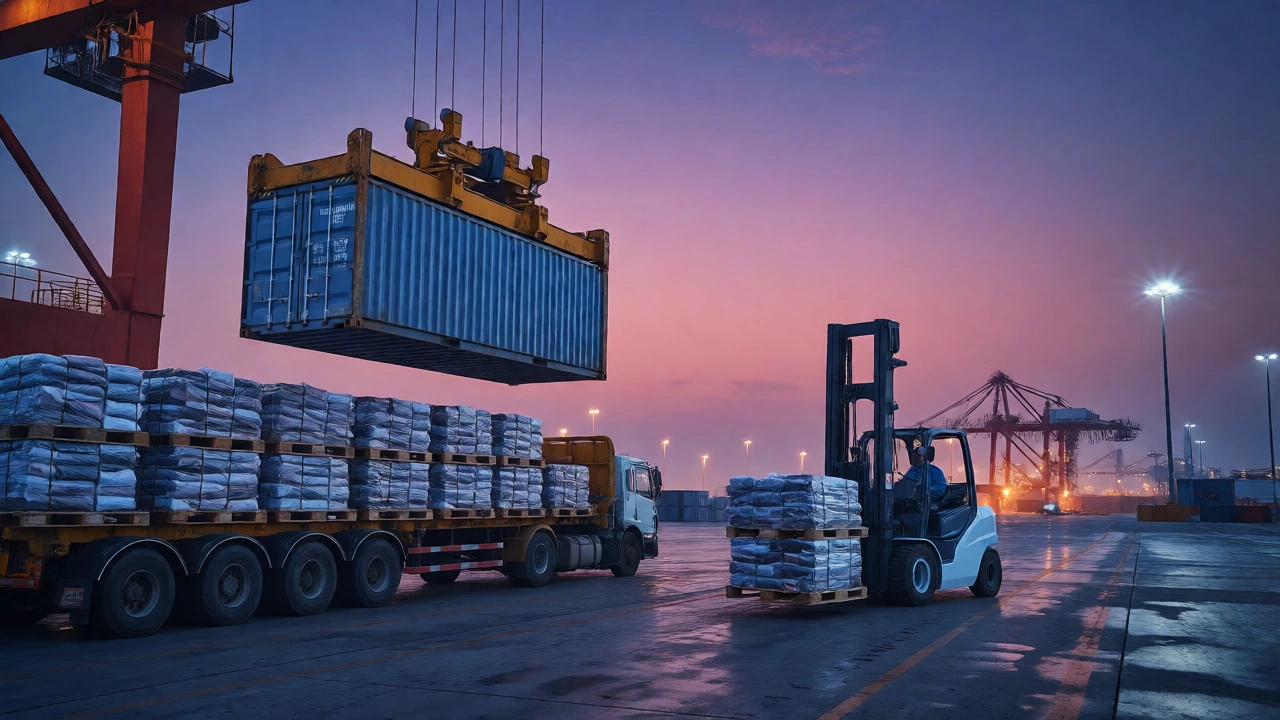
Connectivity is also improved. Upgrades to logistics corridors near textile hubs reduce transit times to ports like Mundra and Pipavav. Faster exports mean better working capital cycles. You get paid sooner, which eases cash crunches during peak seasons.
Future Outlook: What’s Next for Gujarat Textiles?
The policy runs until 2029, but the focus will shift yearly. Early years emphasize capacity building; later years focus on sustainability and branding. Expect stricter norms on water usage and carbon footprint as we move closer to 2027. Green certifications will become prerequisites for premium incentives.
If you’re planning long-term, align your roadmap with these trends. Invest in renewable energy sources now to qualify for future green subsidies. Adopt automation early to meet productivity benchmarks. The policy is a springboard, but you still need to jump.
Don’t wait for the perfect moment. The application window opens when the annual budget is released, usually early in the fiscal year. Start gathering documents today. Talk to your CA, update your project report, and register online. Every month you delay is money left on the table.
Is the Gujarat Textile Policy 2024 applicable to all types of textile businesses?
No, it primarily targets organized sectors like spinning, weaving, processing, and garment manufacturing. Handloom and handicraft sectors often fall under separate welfare schemes. Additionally, very small micro-units may have capped eligibility compared to larger entities. Always check the specific annexures for your sub-sector.
Can existing factories claim benefits under this policy?
Yes, existing factories can claim benefits under the "Modernization" category. This includes replacing old machinery with energy-efficient models or expanding production lines. However, the subsidy rates for modernization are generally lower than for new greenfield projects.
What is the maximum subsidy limit per company?
The limits vary by category. For capital subsidy, it might range from ₹10 lakh to ₹5 crore depending on the size of the enterprise (MSME vs. Large). Interest subvention is usually capped at a specific percentage of the loan amount. Check the latest notification for exact figures as they are revised periodically.
Do I need to hire a minimum number of employees to qualify?
Most incentive schemes require job creation commitments. For new units, you typically need to create a specified number of permanent jobs within two years of commissioning. Failure to maintain these jobs can lead to partial recovery of the subsidy.
How long does it take to receive the subsidy money?
Realistically, expect 3 to 6 months from the final claim submission. This includes verification by the Directorate of Industries and financial processing. Delays often occur due to incomplete documentation or queries regarding invoice validity.