Adjust the parameters on the left and click "Analyze Opportunity" to find your future-proof niche.
Quick Takeaways
- Additive Manufacturing: Shifting from prototyping to full-scale industrial production.
- Circular Economy: Transforming waste streams into high-value raw materials.
- Personalized Healthcare: Manufacturing bespoke medical devices and pharmaceuticals.
- Green Energy Infrastructure: Producing components for a fully electrified world.
- Automation: The rise of 'Lights-Out' factories managed by AI.
The Shift to Hyper-Local Production
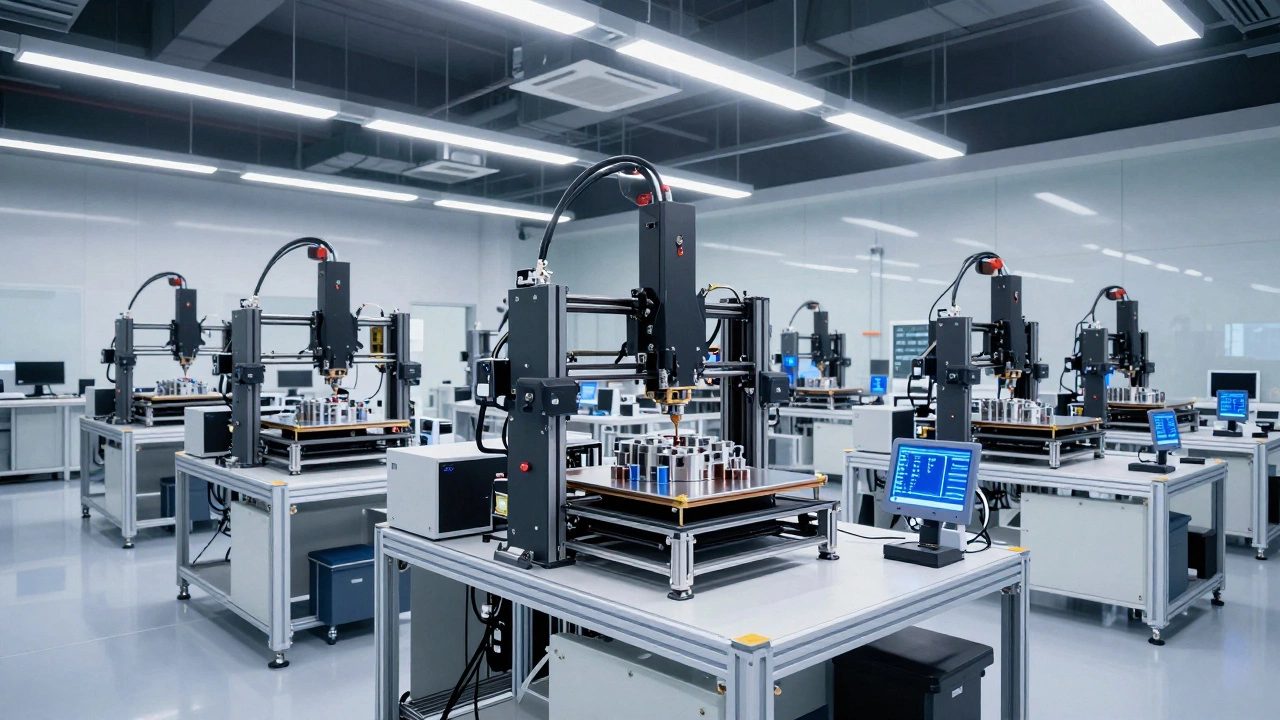
For decades, the goal of manufacturing was scale: build one massive factory in a low-cost region and ship products globally. That model is breaking. Between skyrocketing shipping costs and the demand for instant delivery, the future is "micro-factories." Additive Manufacturing is the industrial process of creating three-dimensional objects by layering materials based on a digital model, commonly known as 3D printing. Unlike old-school subtractive manufacturing, which carves a part out of a block of metal (wasting 70% of the material), additive manufacturing only uses what it needs. Why does this matter for a business owner? Because it allows for manufacturing business ideas that don't require a 50,000-square-foot warehouse. You can now produce complex, customized parts for aerospace or medical implants in a small urban hub, closer to your customer. This reduces the carbon footprint and eliminates the risk of global supply chain collapses.
Turning Waste into Gold: The Circular Economy
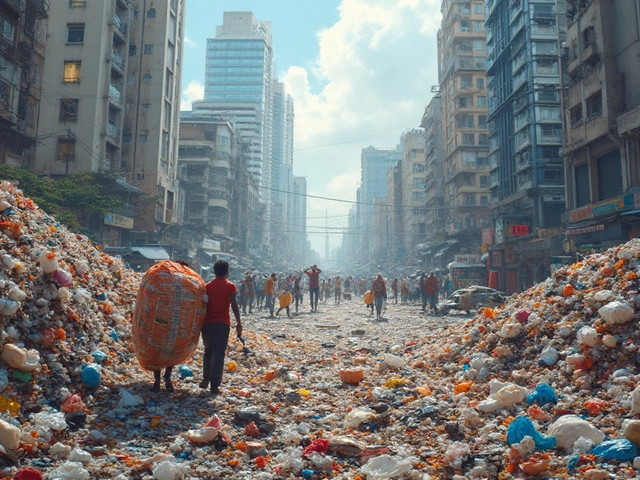
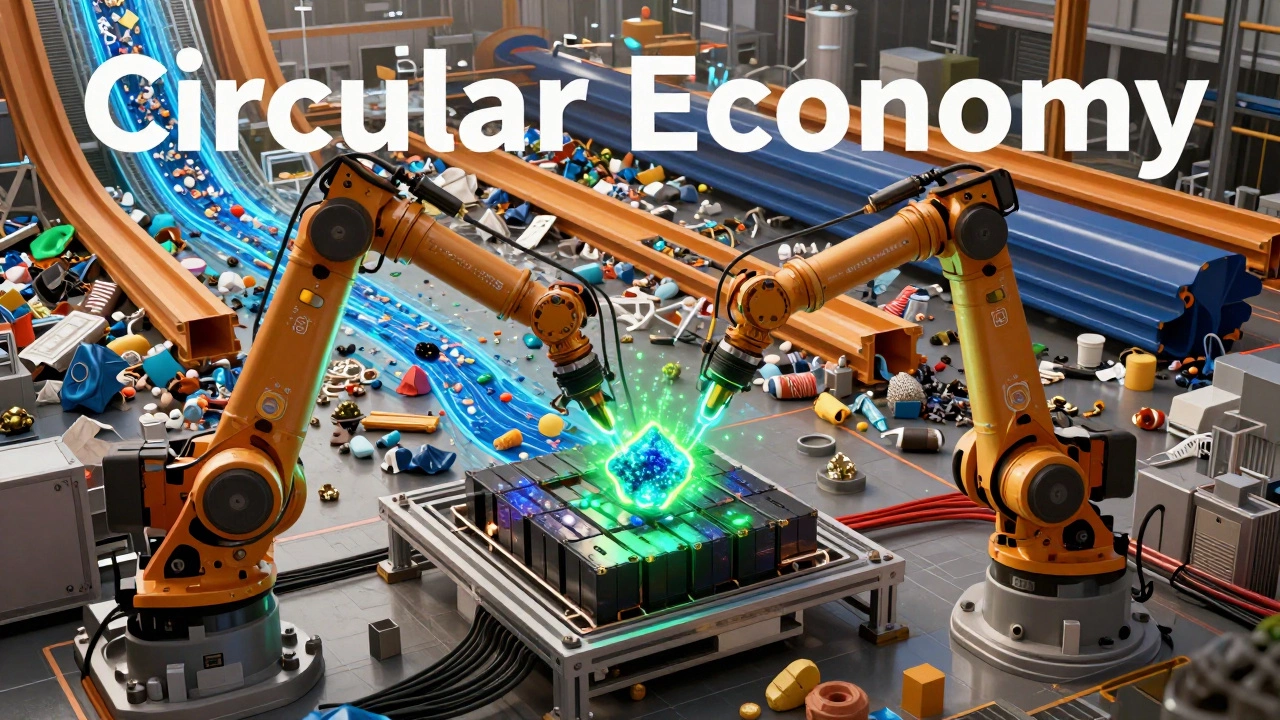
We are running out of easy-to-reach minerals. The next gold rush isn't in the ground; it's in our landfills. The industry that will absolutely explode is the one that specializes in "urban mining" and material recovery. Circular Economy is an economic system aimed at eliminating waste and the continual use of resources by replacing the traditional linear "take-make-dispose" model. Think about the millions of electric vehicle (EV) batteries that will hit their end-of-life in the next ten years. A business that can efficiently extract cobalt, lithium, and nickel from these batteries and refine them back into industrial-grade materials will be a powerhouse. We aren't just talking about recycling; we're talking about "upcycling." For example, turning ocean plastic into high-strength construction beams or converting agricultural waste into biodegradable packaging that replaces single-use plastics entirely.
| Feature | Traditional (Linear) | Future (Circular/Additive) |
|---|---|---|
| Supply Chain | Global/Long | Local/Short |
| Material Use | Subtractive (Wasteful) | Additive (Efficient) |
| Product Life | Planned Obsolescence | Modular/Repairable |
| Labor | Manual Assembly | AI-Driven Robotics |
Precision Medicine and Bio-Manufacturing
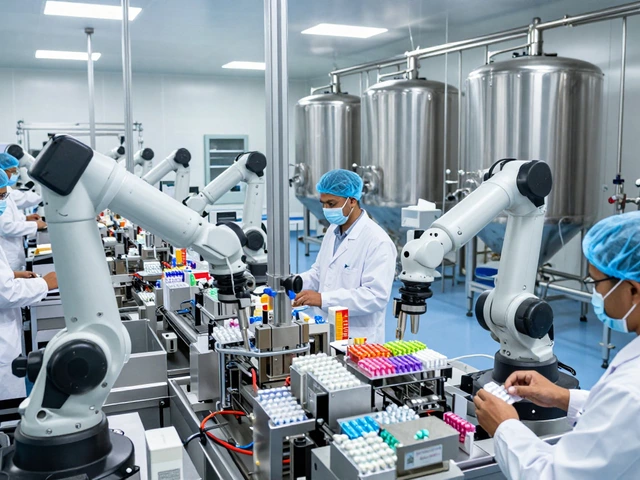
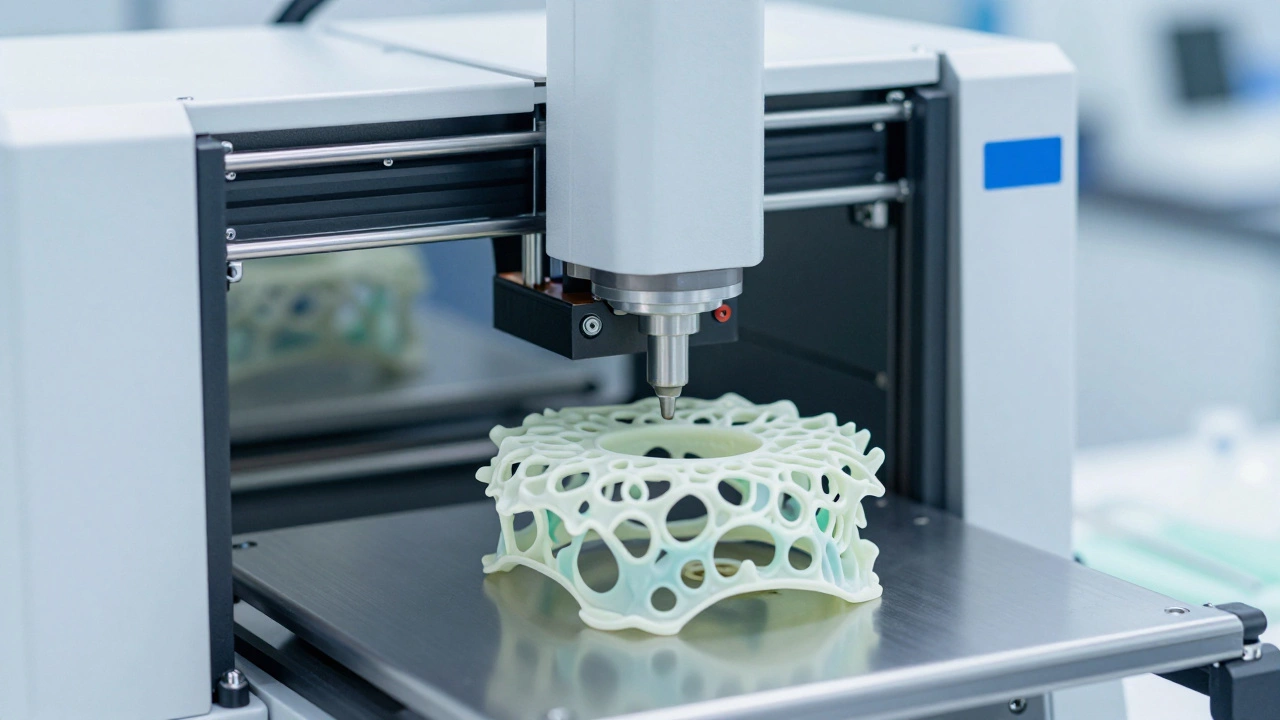
The healthcare industry is moving away from "one size fits all." In ten years, the most profitable manufacturing won't be mass-producing a single drug for millions, but mass-customizing a drug for one person. Bio-manufacturing is the use of biological systems-such as living cells or enzymes-to produce commercially useful bio-based products. Imagine the growth in manufacturing biocompatible scaffolds for organ regrowth or 3D-printed skin for burn victims. If you can build a facility that integrates CRISPR technology with automated production lines, you are entering a market with almost no ceiling. This also extends to "nutraceuticals"-manufacturing personalized supplements based on a person's real-time biometric data from their wearable device.
The Robotization of Everything
We've had robots on assembly lines for years, but they were basically blind and dumb. They did the same movement a thousand times. The next boom is in Collaborative Robots (or Cobots), robots intended for direct human-robot interaction within a shared space. As AI improves, the demand for specialized hardware to house that AI will skyrocket. We'll need millions of more sensors, actuators, and precision gears. But the real opportunity is in the *maintenance* of these systems. A business that manufactures modular, easy-to-swap robotic components-like LEGOs for factories-will solve the biggest headache for plant managers: downtime. When a robot breaks, you don't want to wait three weeks for a part from Germany; you want to snap in a new module produced three blocks away.
Green Energy Hardware: Beyond the Solar Panel
Everyone talks about solar and wind, but the real manufacturing bottleneck is storage and transmission. The world is desperate for better batteries and a smarter grid. Solid-State Batteries are a battery technology that uses solid electrodes and a solid electrolyte, offering higher energy density and safety than liquid lithium-ion batteries. Manufacturing these at scale is the "Holy Grail" of the 2030s. If you can create a business that produces the specialized ceramic separators or high-purity solid electrolytes required for these batteries, you're positioning yourself at the center of the energy transition. Additionally, there is a massive gap in manufacturing high-voltage DC (HVDC) components that allow electricity to travel thousands of miles without losing power-essential for connecting remote wind farms to cities.
How to Spot the Next Big Thing
If you're trying to decide where to put your money today, stop looking at what is selling and start looking at what is *breaking*.
- Look for Regulatory Pressure: When governments ban a material (like PFAS "forever chemicals"), a vacuum is created. The person who manufactures the viable alternative wins.
- Watch Demographic Shifts: An aging population in the West and East Asia means a massive boom in manufacturing for home-care robotics and mobility aids.
- Follow the Energy Pivot: Every piece of infrastructure built in the last 50 years was for oil and gas. Every piece of infrastructure for the next 50 will be for electrons and hydrogen. Manufacturing the tools for that transition is a sure bet.
Which manufacturing business is easiest to start for a beginner?
Small-scale additive manufacturing (3D printing) is the lowest barrier to entry. You can start with a few high-quality printers and focus on a niche, such as custom drone parts or specialized organizational tools for hobbyists, before scaling into industrial materials like carbon fiber or metal.
Is traditional manufacturing dead?
Not dead, but evolving. Mass production of simple, identical items will still exist, but the profit margins are shrinking. The money is moving toward "mass customization," where you use automated lines to create products tailored to individual needs.
What skills do I need to enter these future industries?
You need a blend of digital and physical skills. Proficiency in CAD (Computer-Aided Design) is non-negotiable. Understanding AI integration, materials science (especially polymers and composites), and basic robotics programming will give you a massive competitive edge.
How does the circular economy affect manufacturing costs?
Initially, it can be more expensive to set up recovery systems than to buy virgin materials. However, as resource scarcity drives up the price of raw minerals, circular manufacturing becomes a cost-saving measure and a hedge against volatile global commodity prices.
Will AI replace the need for human workers in these factories?
AI will replace repetitive tasks, but it creates a need for "human-in-the-loop" roles. We will need more people to design the AI workflows, maintain the cobots, and handle the complex quality control that requires human intuition and sensory judgment.
Next Steps for Aspiring Entrepreneurs
If you're ready to move, don't try to build a giant factory on day one. Start with a "minimum viable product" (MVP). If you're interested in the circular economy, start by sourcing a single waste stream-like discarded fishing nets-and find a way to turn them into a high-value product. If you're leaning toward bio-manufacturing, partner with a local university lab to test a specific application. The goal is to find the intersection of what the world *needs* and what you can *actually build*.