India Electronics Hub Comparator
Select a city to analyze its strengths in the 2026 electronics landscape.
Bangalore
The Design & Assembly Brain
Hyderabad
The Semiconductor Capital
City Analysis
OverviewSummary goes here.
When you ask which city is number one for technology in India, the answer depends entirely on whether you mean software code or physical hardware. For decades, Bangalore was the undisputed king of Indian tech. But if we are talking about electronics manufacturing and semiconductor production, the landscape has shifted dramatically by 2026.
The title of "number one" for electronics manufacturing is currently contested between Bengaluru and Hyderabad. While Bangalore remains the headquarters for design and R&D, Hyderabad has emerged as the leading hub for actual fabrication and assembly due to massive government incentives and new infrastructure. Here is the breakdown of who wins where, and why it matters for the industry.
The Shift from Software to Hardware
To understand the current hierarchy, you have to look at what changed over the last five years. Until recently, India’s tech reputation was built on IT services. Companies like Infosys and Wipro were headquartered in Bangalore, but they didn’t build chips; they wrote code. The physical manufacturing of electronics-phones, laptops, and semiconductors-was largely outsourced to China.
This changed with the introduction of the Production Linked Incentive (PLI) schemes. These government programs offered cash rewards to companies that manufactured specific goods domestically. Suddenly, building factories became profitable again. This policy shift created a race among Indian cities to offer the best land, power, and logistics for these new factories. That is why the "number one" spot is no longer just about talent; it is about industrial capacity.
Bangalore: The Design and Assembly Hub
Bangalore still holds a strong claim to being the top tech city, but its strength lies in the upper end of the supply chain. It is the center for product design, testing, and final assembly for consumer electronics.
Major players like Apple, Samsung, and Xiaomi have significant operations here. However, most of their high-volume manufacturing has moved out of the city limits to avoid traffic congestion and high real estate costs. Instead, Bangalore serves as the brain. Engineers here design the circuit boards and manage the quality control protocols. If you are looking for R&D centers or corporate headquarters for global tech giants, Bangalore is still number one.
For electronics manufacturing specifically, Bangalore excels in:
- Final assembly of smartphones and laptops.
- Research and development for semiconductor architectures.
- Testing facilities for complex electronic components.
However, the city struggles with water scarcity and traffic, which makes large-scale heavy manufacturing less attractive compared to newer hubs.
Hyderabad: The Semiconductor Capital
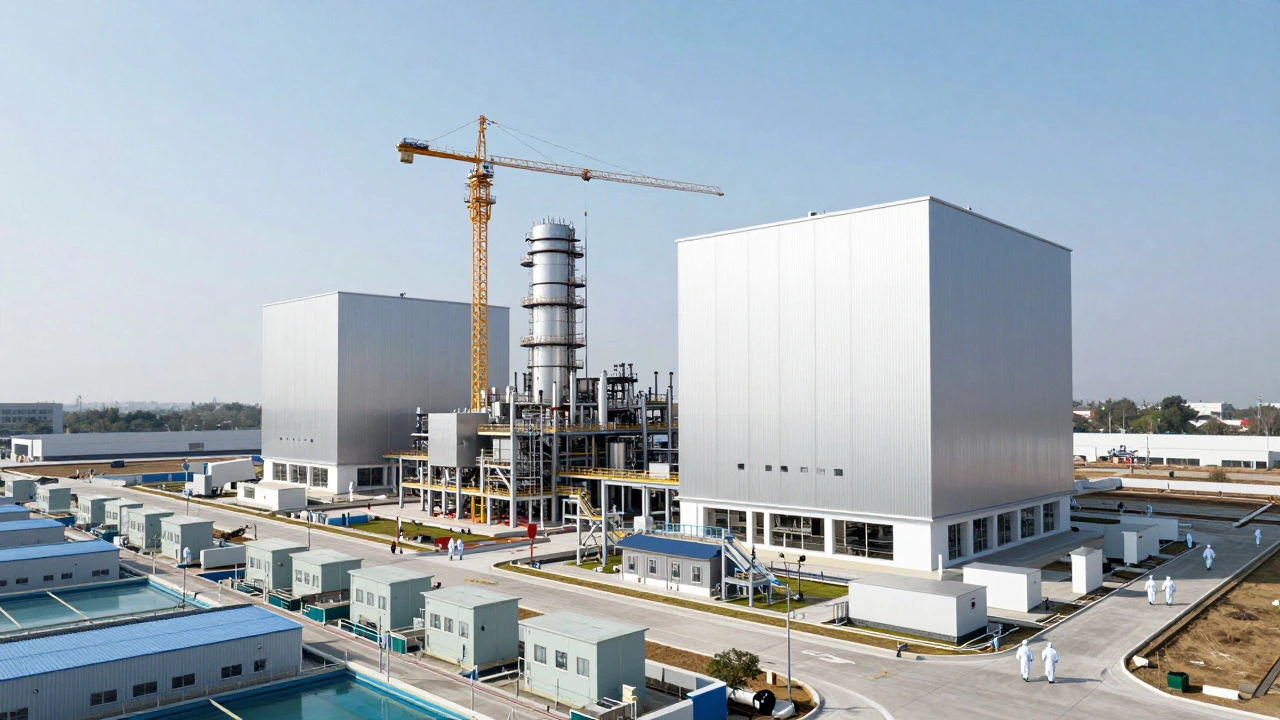
If your definition of "technology leadership" involves the actual creation of silicon chips, then Hyderabad is the clear winner in 2026. The city has positioned itself as India’s first true semiconductor hub, attracting billions of dollars in investment.
The key driver here is the Microelectronics Park project. With support from the central government and the state of Telangana, Hyderabad is hosting some of the largest fab (fabrication plant) projects in the country. Companies like Micron Technology and Tata Electronics have chosen this region for their advanced manufacturing facilities. This isn't just assembling parts; it is creating the core components that go into every modern device.
Hyderabad offers several advantages that make it superior for heavy electronics manufacturing:
- Dedicated industrial zones with reliable power supply.
- Proximity to ports for importing raw materials and exporting finished chips.
- A growing pool of specialized engineers trained in semiconductor physics.
The presence of the International Institute of Information Technology (IIIT-Hyderabad) ensures a steady stream of talent focused on hardware engineering rather than just software coding. This ecosystem makes Hyderabad the most critical city for India’s goal of self-reliance in electronics.
The Role of Government Schemes
You cannot discuss electronics manufacturing in India without mentioning the Production Linked Incentive (PLI) scheme. Launched to boost domestic production, this program provides financial incentives based on the sales value of products manufactured in India.
For mobile phones, the PLI scheme has been a massive success. It helped India become the second-largest smartphone manufacturer in the world after China. Most of this volume comes from states like Tamil Nadu and Karnataka, but the high-value semiconductor segment is concentrated in Hyderabad and Gujarat.
The government also introduced a separate incentive scheme for semiconductor fabs. This required companies to invest heavily in cutting-edge technology. Only cities with robust infrastructure could meet these requirements. Hyderabad won this bid because it offered a complete package: land, tax breaks, and a skilled workforce. This strategic move has solidified its position as the leader in high-tech manufacturing.
Comparison of Top Tech Cities
| City | Primary Strength | Key Industries | Manufacturing Focus |
|---|---|---|---|
| Bangalore | R&D and Design | Software, Consumer Electronics Assembly | High-end assembly, Testing |
| Hyderabad | Semiconductor Fabrication | Chips, Memory Storage, Advanced Electronics | Fab plants, Component Manufacturing |
| Tamil Nadu (Sri City) | Mass Production | Mobile Phones, Batteries | High-volume Assembly |
| Noida/Delhi NCR | Consumer Electronics | Laptops, TVs, Home Appliances | Assembly and Packaging |
Why Infrastructure Matters More Than Talent
In the past, people assumed that the city with the most engineers would be the best for tech. That logic works for software, but not for manufacturing. Building an electronics factory requires more than smart people; it needs stable electricity, clean water, and efficient logistics.
Bangalore has faced severe water crises and traffic jams that delay shipments. Hyderabad, on the other hand, planned its industrial corridors with these challenges in mind. The state government invested in dedicated highways connecting the industrial areas to the port in Chennai and Vizag. This reduces transportation time and costs, which is crucial for competitive manufacturing.
Additionally, semiconductor manufacturing requires ultra-pure water and consistent power. Any interruption can ruin millions of dollars worth of wafers. Hyderabad’s industrial parks are equipped with backup systems and water treatment plants that Bangalore’s older infrastructure lacks. This reliability is why major global players are choosing Hyderabad for their long-term investments.

The Future of Electronics Manufacturing in India
Looking ahead to the next decade, the distinction between "software" and "hardware" cities will blur. As India moves up the value chain, we will see more integrated ecosystems where design and manufacturing happen closer together. However, for now, the division of labor is clear.
If you are a startup looking to design the next big gadget, Bangalore is still the place to be. You will find investors, mentors, and co-founders there. But if you want to build the factory that produces the chip inside that gadget, Hyderabad is the number one choice. The government’s continued support for semiconductor independence ensures that this trend will only strengthen.
Other regions like Gujarat and Tamil Nadu are also growing rapidly, particularly in battery manufacturing and solar panels. But when it comes to the core of modern electronics-the microchip-Hyderabad has taken the lead. This shift marks a new era for Indian technology, moving from service exports to tangible industrial power.
Challenges Remaining
Despite the progress, challenges remain. The cost of setting up a semiconductor fab is incredibly high, often exceeding $10 billion. India needs to ensure that these investments yield returns through export markets, not just domestic consumption. Additionally, the shortage of specialized technicians who can operate advanced machinery is a bottleneck. Universities are adjusting their curricula, but it takes time to train a workforce capable of handling nanometer-level precision.
Environmental concerns also play a role. Electronics manufacturing generates hazardous waste that must be managed carefully. Cities like Hyderabad are implementing strict environmental regulations to ensure sustainable growth. This adds to the operational costs but is necessary for long-term viability.
Conclusion on City Rankings
So, which city is number one? If you define technology by innovation and design, Bangalore retains the crown. But if you define it by the physical creation of electronic components, Hyderabad is the leader. For the specific context of electronics manufacturing, Hyderabad’s strategic investments in semiconductor infrastructure give it the edge in 2026. The future of Indian tech is not just about writing code; it is about building the devices that run on it.
Is Bangalore still the best city for tech jobs in India?
Yes, Bangalore remains the top destination for software engineering, product management, and R&D roles. However, for jobs in semiconductor fabrication and heavy electronics manufacturing, Hyderabad and Gujarat are offering more opportunities due to new factory setups.
Which city has the most electronics manufacturing units?
Tamil Nadu, particularly the Sri City area, currently hosts the highest volume of electronics assembly units, especially for mobile phones. However, Hyderabad leads in high-value semiconductor manufacturing facilities.
What is the impact of the PLI scheme on electronics manufacturing?
The Production Linked Incentive (PLI) scheme has significantly boosted domestic production by providing financial rewards to manufacturers. It has attracted global brands like Apple and Samsung to set up factories in India, reducing reliance on imports.
Why is Hyderabad considered the semiconductor capital of India?
Hyderabad has been designated as the semiconductor capital due to the establishment of the Microelectronics Park and the presence of major fab projects by companies like Micron and Tata Electronics. The state government provided extensive infrastructure support and incentives to attract these investments.
How does infrastructure affect electronics manufacturing location choices?
Infrastructure is critical because semiconductor manufacturing requires stable power, clean water, and efficient logistics. Cities with dedicated industrial corridors and reliable utilities, like Hyderabad, are preferred over those with traffic and resource constraints, such as Bangalore.
What are the main challenges facing India's electronics sector?
Key challenges include the high cost of setting up fabrication plants, a shortage of specialized technical talent, and the need for effective waste management. Additionally, competing with established global supply chains in Southeast Asia remains a significant hurdle.