Electronics Manufacturing Cost Calculator
Cost Breakdown
Based on 2024 Industry DataKey Insight: China still controls 90% of smartphone components and 85% of laptops despite assembly shifting to India. True manufacturing requires the complete ecosystem - not just assembly.
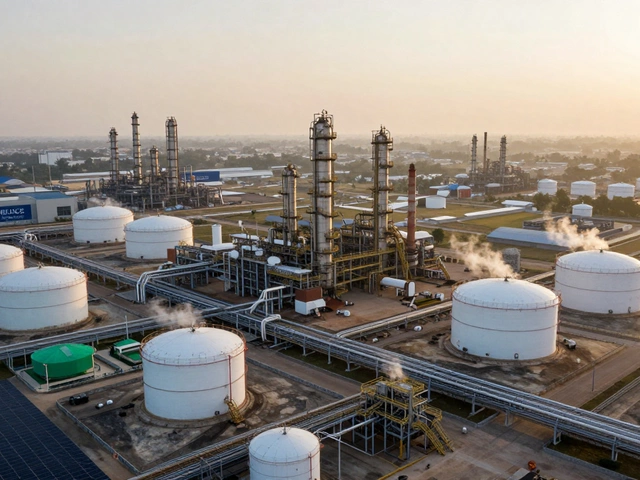
When you buy a smartphone, a laptop, or even a smart fridge, chances are it was made in China. Not because it’s the only option, but because no other country comes close to matching its scale, speed, and precision in electronics manufacturing. Since the early 2000s, China has built the most complex, integrated, and efficient electronics production system the world has ever seen. It’s not just about cheap labor anymore-it’s about infrastructure, supply chains, and ecosystem depth that no other nation has replicated.
China’s Dominance in Electronics Manufacturing
China produces over 70% of the world’s consumer electronics. That includes 90% of all smartphones, 85% of laptops, and nearly all major components like circuit boards, batteries, and displays. Foxconn, based in China, assembles more than half of the world’s iPhones. Pegatron and Quanta, also Chinese-based, handle most of the world’s laptops and tablets. These aren’t small players-they’re the backbone of global tech.
What makes China different isn’t just factories. It’s the fact that if you need a custom circuit board, you can walk into a market in Shenzhen and get 50 prototypes made in 48 hours. Need 10,000 capacitors? There’s a warehouse five minutes away that ships them overnight. This kind of supply chain density doesn’t exist anywhere else. In the U.S. or Germany, sourcing a single component might take weeks. In Shenzhen, it takes hours.
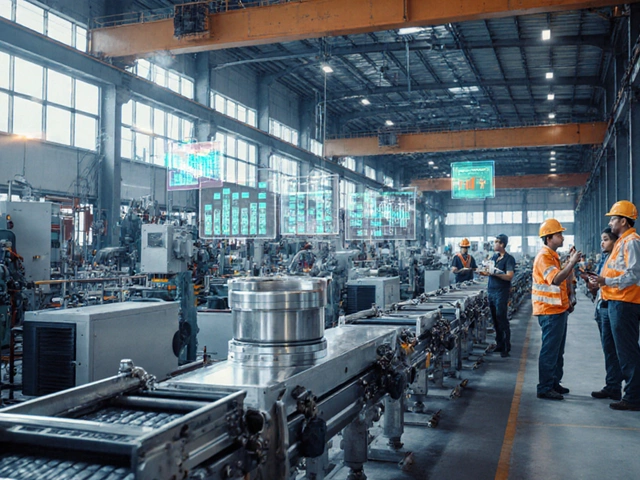
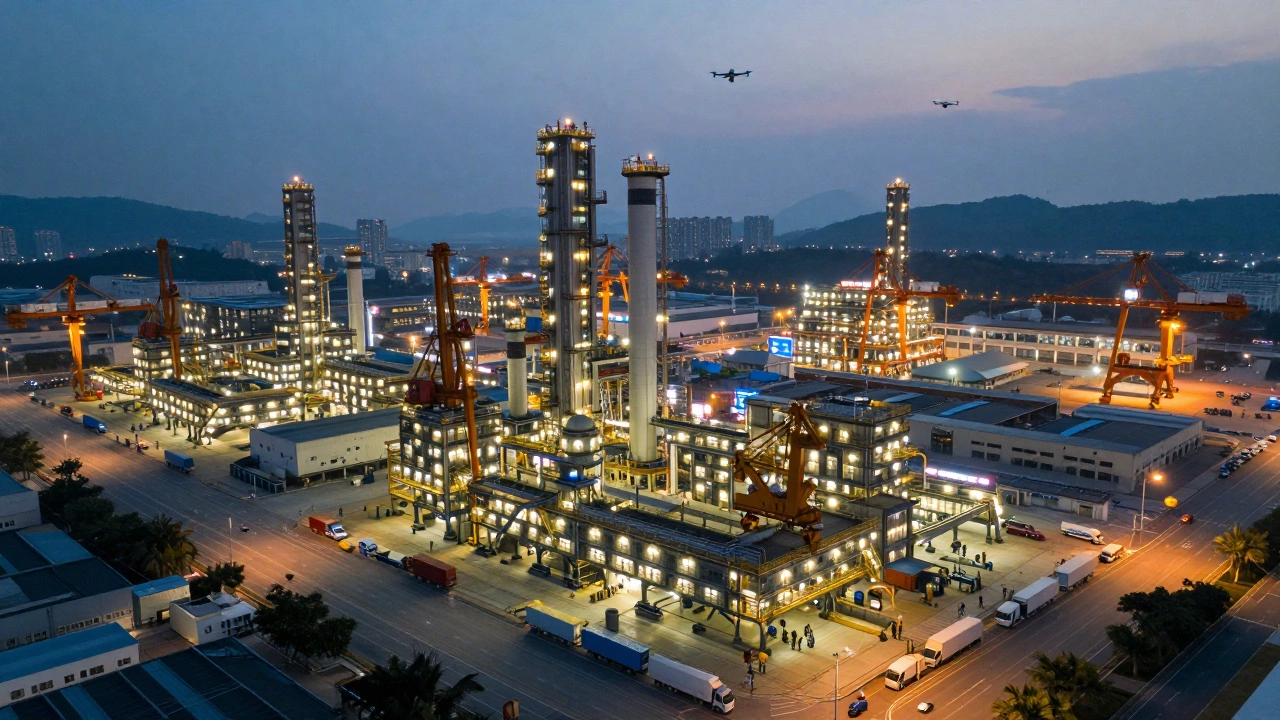
The Chinese government invested heavily in this ecosystem for decades-building industrial zones, subsidizing R&D, and training millions of engineers. Today, China has more electronics factories than the rest of the world combined. It’s not just manufacturing-it’s a fully integrated production network.
Why Other Countries Struggle to Catch Up
India, Vietnam, Mexico, and even the U.S. have tried to build their own electronics manufacturing bases. India, for example, has seen rapid growth in recent years. The government’s Production Linked Incentive (PLI) scheme has attracted companies like Apple, Samsung, and Foxconn to set up assembly lines in Tamil Nadu and Uttar Pradesh. In 2025, India exported over $12 billion in electronics, up from $2 billion in 2019.
But here’s the catch: most of what’s made in India is still basic assembly. Phones are put together from parts imported from China. The circuit boards, chips, screens, and batteries? Almost all come from China. India hasn’t yet built the deep supply chain needed to make components from scratch. Without that, it’s assembly, not manufacturing.
Same goes for Vietnam. It’s become a major hub for footwear and some electronics, but it lacks the scale and supplier density to handle complex products like high-end laptops or 5G base stations. Mexico does well with automotive electronics and some consumer goods, but its workforce isn’t trained for the precision required in microchip assembly.
Even the U.S., despite spending billions on the CHIPS Act, still imports over 80% of its semiconductors. Building a single advanced chip factory costs $20 billion and takes five years. China has over 100 such facilities-many of them already producing 5nm and 3nm chips.

India’s Real Potential and Current Limits
India has the right ingredients: a young population, growing domestic demand, and strong political will. The country now produces over 200 million smartphones a year-more than any country except China. Samsung’s largest phone factory is in Noida. Apple now makes over 10% of its iPhones in India.
But here’s what most people miss: India still imports over 90% of the electronic components used in those phones. The PCBs, memory chips, sensors, and even the tiny screws? Most come from China, Taiwan, or South Korea. Without local component manufacturing, India remains a low-value assembly hub.
There are signs of change. Companies like Dixon Technologies and Texmaco are starting to make circuit boards and power supplies domestically. The Indian government has set a target to make 50% of electronics components locally by 2030. But that’s a 15-year plan. China spent 30 years building its ecosystem.
India’s biggest advantage isn’t cost-it’s scale of demand. With over 1.4 billion people, and rising middle-class income, India is becoming a massive market for electronics. That gives it leverage. But leverage doesn’t replace expertise. You can’t out-negotiate a supply chain that’s been perfected over decades.
What ‘Leading’ Really Means in Electronics
Leading in electronics isn’t just about how many devices you assemble. It’s about control over the entire value chain:
- Design: Who creates the chips and software? (China and Taiwan lead here)
- Components: Who makes the displays, batteries, sensors, and memory? (China, South Korea, Japan)
- Assembly: Who puts it all together? (China, India, Vietnam)
- Logistics: Who moves parts and finished goods globally? (China controls the ports, shipping lanes, and warehousing)
China leads in all four. Even when production moves elsewhere, the parts still come from China. That’s why Apple, despite making phones in India, still relies on Chinese suppliers for 70% of its bill of materials.
Other countries focus on one piece. South Korea dominates memory chips. Taiwan makes the world’s most advanced semiconductors. Japan supplies precision materials. But none of them can match China’s ability to combine all these pieces into finished products at scale, speed, and low cost.

Can Anyone Challenge China’s Lead?
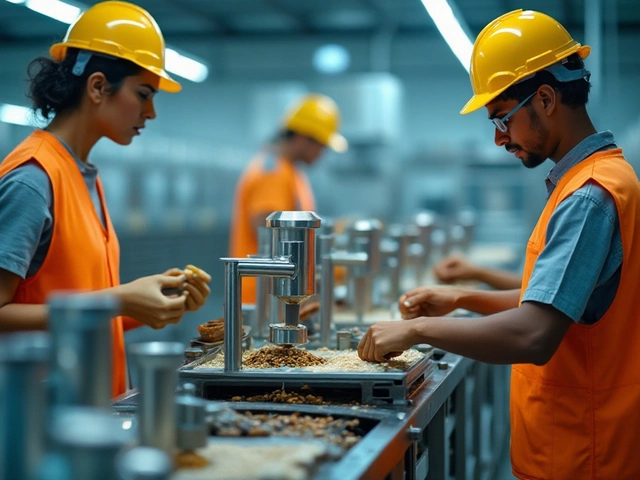
Not in the short term. China’s lead isn’t just about factories-it’s about institutional knowledge. Engineers know how to fix a production line in minutes. Workers have trained for years on specific assembly tasks. Suppliers have spent decades refining their processes. That kind of expertise doesn’t get transferred with a factory lease.
Some experts predict that by 2035, India might produce 25% of global electronics. But even then, China will still make 50% or more. The gap won’t close-it will just widen in different directions.
What’s more likely is a multi-polar system: China for high-volume, complex electronics; India for mid-range phones and consumer gadgets; Vietnam for wearables and smart home devices; and the U.S. and EU for defense-grade and high-security electronics.
But for now, when you ask which country leads in electronics, the answer is clear: China. Not because it’s the most innovative, or the most ethical, or even the most efficient in every way. But because it’s the only country that can deliver millions of high-quality devices on time, every single day.
What This Means for Businesses and Consumers
If you’re a startup trying to launch a new gadget, you’ll still need to work with Chinese suppliers. Even if you assemble in India, you’ll order your components from Shenzhen. Trying to avoid China entirely means longer lead times, higher costs, and lower quality.
For consumers, this means lower prices and faster access to new tech. But it also means less control over supply chains. When a flood hits Guangdong, or a trade dispute breaks out, prices rise everywhere.
That’s why companies like Apple and Dell are diversifying. But diversification doesn’t mean replacement. It means backup. China remains the center of gravity-and will for the foreseeable future.
Is India becoming the next electronics manufacturing hub?
India is growing fast in electronics assembly, especially for smartphones, but it still relies heavily on China for components like chips, batteries, and circuit boards. True manufacturing means making the parts, not just putting them together. India is years away from matching China’s supply chain depth.
Why can’t the U.S. or Europe compete with China in electronics?
The U.S. and Europe have advanced technology and skilled workers, but they lack the scale, speed, and integrated supply chain that China has built over 30 years. Building a single chip factory costs $20 billion and takes five years. China has over 100 such facilities already running.
Does China make all the electronics in the world?
No, but China makes over 70% of global consumer electronics. Other countries like India, Vietnam, and Mexico are growing, but they mostly assemble products using parts made in China. Very few countries can produce the full range of components needed.
What’s the biggest challenge for India in electronics manufacturing?
India’s biggest challenge is building a domestic supply chain for electronic components. Right now, over 90% of parts like chips, sensors, and PCBs are imported. Without local component production, India will remain an assembly hub, not a manufacturing leader.
Will China lose its lead in electronics manufacturing?
Not soon. Even if production shifts to India or Vietnam, China still controls the supply of critical components, tools, and engineering expertise. It will take decades, if not longer, for another country to replicate its ecosystem. The gap is too deep.