Plastic Feedstock & Carbon Footprint Calculator
Impact Analysis
Fossil Fuel Input
Carbon Footprint
Potential Savings
Production Breakdown
Look at a standard water bottle or a grocery bag. It feels light, durable, and cheap. But that convenience hides a complex industrial history rooted deep underground. When you ask where the raw materials for making most plastics come from, the answer isn't just "oil." It is a specific fraction of crude oil and natural gas, processed through intense heat and chemistry to create the building blocks of modern life.
In 2026, over 99% of all plastics are still produced from fossil fuels. Understanding this supply chain is crucial for anyone involved in plastic manufacturing companies, sustainability initiatives, or material science. The story involves extraction, refining, cracking, and polymerization-a journey from black sludge to clear polymers.
The Dominance of Fossil Fuels: Crude Oil and Natural Gas
To understand plastic origins, we have to look at the two main sources: crude oil and natural gas. These aren't just energy sources; they are chemical reservoirs. Plastics are made from hydrocarbons-molecules consisting of hydrogen and carbon atoms. Fossil fuels are essentially giant stores of ancient organic matter that has been compressed into these exact molecular structures over millions of years.
| Source | Key Components Extracted | Common Plastic Types Produced | Global Share (Approx.) |
|---|---|---|---|
| Crude Oil | Naphtha | PET, Polystyrene, PVC | ~50-60% |
| Natural Gas | Ethane, Propane, Butane | PE (Polyethylene), PP (Polypropylene) | ~40-50% |
| Biomass (Bio-based) | Glucose, Plant Oils | Bio-PET, PLA, PHA | <1% |
Crude oil is refined in petroleum refineries. During this process, it is separated into different fractions based on boiling points. The fraction most critical for plastics is naphtha. Naphtha is a colorless liquid obtained during the distillation of petroleum. It serves as the primary feedstock for steam crackers, especially in regions like Europe and Asia where natural gas liquids are less abundant.
Natural gas plays an equally vital role, particularly in North America. Here, the abundance of shale gas has shifted production towards using ethane, a component of natural gas. Ethane is cheaper and more efficient to crack than naphtha, which is why polyethylene production has boomed in the US Gulf Coast. This geographic disparity explains why plastic resin prices can fluctuate wildly depending on regional energy markets.
From Feedstock to Monomer: The Steam Cracking Process
You cannot make plastic directly from crude oil or natural gas. You need to break down large hydrocarbon chains into smaller, reactive molecules called monomers. This happens in a unit called a steam cracker.
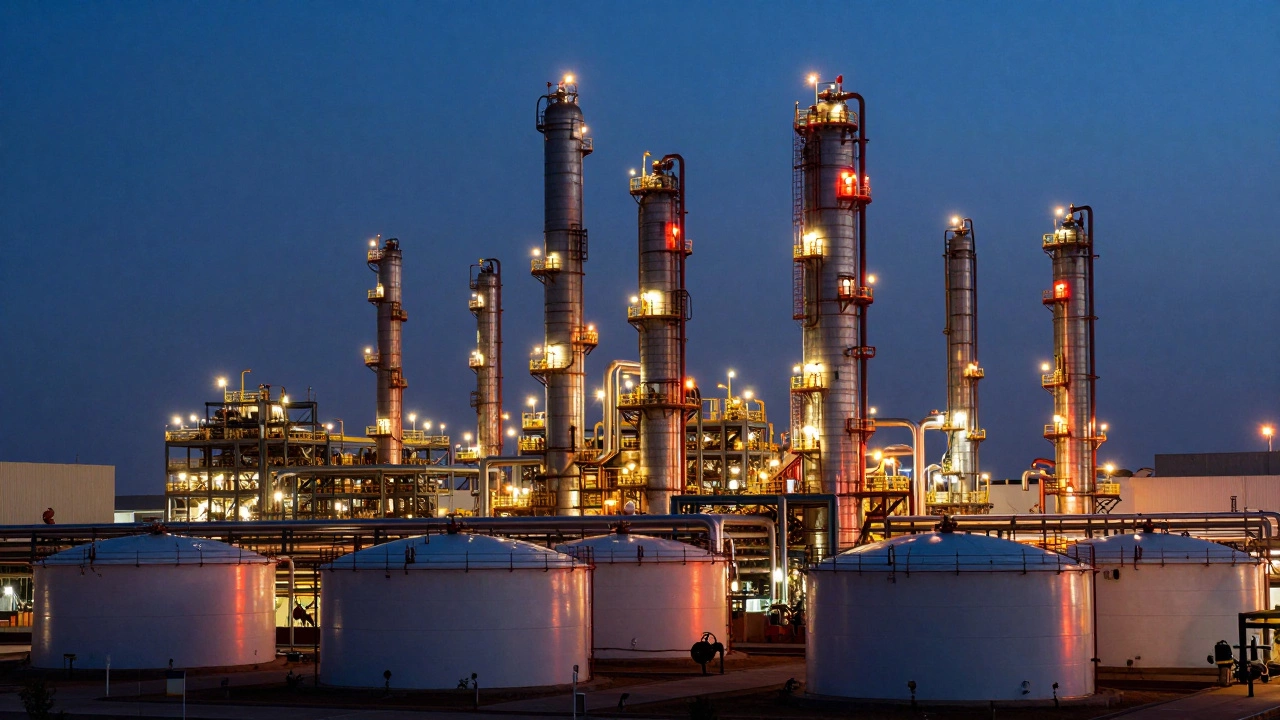
The process is brutal and precise. Feedstocks like naphtha or ethane are mixed with superheated steam and heated to temperatures between 750°C and 950°C (1,380°F to 1,740°F) for just a fraction of a second. This extreme heat breaks the chemical bonds-a process known as thermal cracking.
Once cracked, the mixture is rapidly cooled to stop further reactions. The resulting output is a soup of chemicals, including:
- Ethylene: The most widely produced organic compound globally. It is the precursor to polyethylene (PE), used in everything from milk jugs to plastic bags.
- Propylene: Used to make polypropylene (PP), found in automotive parts, textiles, and food containers.
- Butadiene: Essential for synthetic rubber and certain types of plasticizers.
- Benzene: A key ingredient for polystyrene (PS) and PET bottles.
This stage is the bottleneck of the entire industry. Steam crackers are massive, capital-intensive facilities. They require constant maintenance and operate under strict safety regulations due to the high pressures and temperatures involved. For plastic manufacturing companies, securing a reliable supply of these monomers is often more critical than managing labor costs.
Polymerization: Building the Chains
Once you have your monomers, the next step is polymerization. This is where small molecules link together to form long chains, creating polymers. There are two main methods: addition polymerization and condensation polymerization.
In addition polymerization, monomers like ethylene simply snap together. Catalysts are used to control the speed and structure of the chain. For example, Ziegler-Natta catalysts allow manufacturers to create high-density polyethylene (HDPE) by keeping the chains straight and packed tightly, making the plastic rigid and strong.
Condensation polymerization involves two different monomers reacting and releasing a byproduct, usually water or methanol. This is how Polyethylene Terephthalate (PET) is made. One monomer comes from ethylene glycol (derived from ethylene), and the other from terephthalic acid (derived from benzene). When they combine, they form the polyester chains used in clothing fibers and beverage bottles.
The choice of catalyst and reaction conditions determines the physical properties of the final plastic. Is it flexible or rigid? Transparent or opaque? Heat-resistant or brittle? These characteristics are engineered at this molecular level before the plastic ever sees a mold.
Additives: The Hidden Ingredients
A polymer resin alone is rarely useful in its pure form. To make it functional, manufacturers add various chemicals during the compounding stage. These additives can make up 5% to 50% of the final product's weight.
- Plasticizers: Added to PVC to make it flexible. Without them, PVC would be hard and brittle, suitable only for pipes. With them, it becomes the soft tubing used in medical devices or flooring.
- Stabilizers: Protect plastics from UV light and heat degradation. Without stabilizers, outdoor furniture would become chalky and crack within months.
- Flame Retardants: Crucial for electronics housings and construction materials to prevent fires.
- Pigments: Provide color. Masterbatches are concentrated mixtures of pigment and carrier resin, allowing for consistent coloring without contaminating the entire production line.
These additives are often derived from other chemical processes, sometimes involving heavy metals or halogens. This complexity makes recycling difficult, as separating these additives from the base polymer is technically challenging and economically unviable for many waste streams.
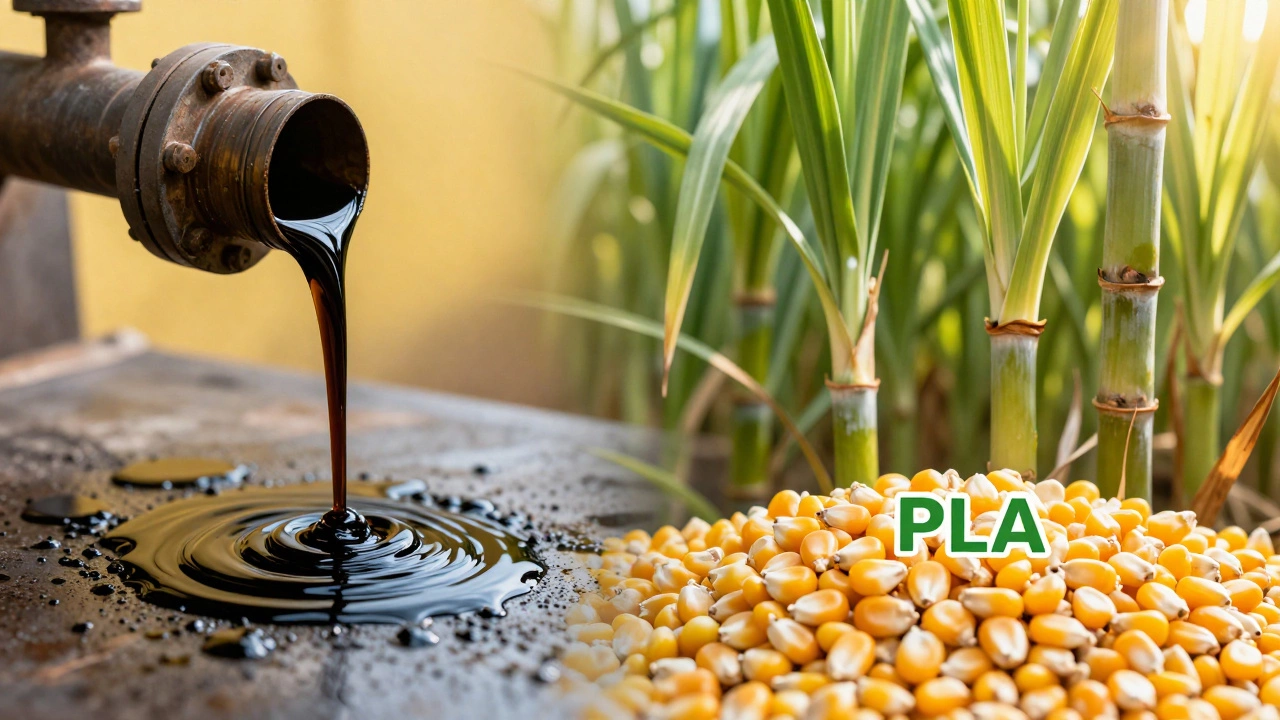
The Rise of Bio-Based and Recycled Alternatives
While fossil fuels dominate, the landscape is shifting. Pressure from environmental regulations and consumer demand is driving innovation in alternative feedstocks. However, it is important to distinguish between "bio-based" and "biodegradable." They are not the same thing.
Bio-based plastics are derived from renewable biomass, such as vegetable fats and oils, corn starch, straw, wood chips, sawdust, and food waste. The most common example is Bio-PET. In this case, the ethylene glycol component is derived from sugarcane ethanol rather than naphtha. The terephthalic acid component, however, often still comes from fossil fuels. So, while it reduces carbon footprint, it doesn't eliminate fossil fuel dependence entirely.
Polylactic Acid (PLA) is another major bio-based plastic. It is made from fermenting plant starches (like corn or cassava) into lactic acid, which is then polymerized. PLA is used in compostable cutlery and some packaging. It requires industrial composting facilities to break down effectively; throwing it in a home compost bin or regular recycling stream causes contamination.
Recycling also plays a growing role. Mechanical recycling melts down existing plastic waste to create new products. Chemical recycling, or advanced recycling, breaks plastics back down into their monomers or other basic chemicals, which can then be repolymerized. This technology promises to handle mixed or contaminated waste streams that mechanical recycling cannot process, but it remains energy-intensive and expensive compared to virgin production.
Supply Chain Vulnerabilities and Geopolitics
The global supply of plastic raw materials is deeply intertwined with geopolitics. Major producers include China, the United States, India, and countries in the Middle East and Europe. Disruptions in any of these regions can ripple through the global economy.
For instance, fluctuations in oil prices directly impact the cost of naphtha-based plastics. Similarly, changes in natural gas extraction policies affect ethane prices. Trade tariffs and export restrictions on petrochemicals can suddenly shift market dynamics, forcing plastic manufacturing companies to seek local suppliers or hedge their contracts aggressively.
Furthermore, environmental regulations are tightening. The European Union's Carbon Border Adjustment Mechanism (CBAM) and extended producer responsibility (EPR) laws are pushing manufacturers to consider the carbon intensity of their feedstocks. This is accelerating the transition towards circular economy models, where recycled content is mandated in new products.
Is all plastic made from oil?
No, but the vast majority is. Approximately 99% of plastics are derived from fossil fuels, specifically crude oil and natural gas. However, a small but growing percentage comes from bio-based sources like corn starch, sugarcane, and cellulose. Additionally, recycled plastics are becoming a significant secondary source.
What is the difference between naphtha and ethane in plastic production?
Naphtha is a liquid fraction of crude oil, while ethane is a gas found in natural gas. Both are feedstocks for steam crackers. Naphtha produces a wider variety of monomers, including those needed for styrenics and aromatics. Ethane primarily yields ethylene, making it ideal for polyethylene production. Ethane is generally cheaper and more energy-efficient to process, which is why it dominates in regions with abundant natural gas like the US.
Can plants replace oil as a source for plastics?
Partially. Bio-based plastics like PLA and Bio-PET use plant-derived sugars and oils. However, scaling up bio-based production faces challenges related to land use, food security, and cost. Currently, bio-based plastics represent less than 1% of total production. They are viable for specific applications but cannot yet fully replace fossil-fuel-based plastics for all uses.
What are monomers and polymers?
Monomers are small, single molecules that act as building blocks. Polymers are large molecules composed of many repeating monomer units linked together. In plastic production, monomers like ethylene are chemically bonded to form polymer chains like polyethylene. The length and structure of these chains determine the plastic's properties.
Why is recycling plastic so difficult if we know what it's made of?
Recycling is difficult due to contamination, additive mixtures, and the degradation of polymer chains during reprocessing. Different types of plastics (e.g., PET vs. HDPE) cannot be easily melted together without compromising quality. Additives like dyes, flame retardants, and plasticizers complicate separation. Furthermore, each cycle of mechanical recycling shortens the polymer chains, reducing the material's strength and utility.