
India Car Import Cost Calculator
Enter your vehicle details below to estimate the final cost in Indian Rupees (INR). Note: This is an estimation tool. Actual costs may vary based on specific HS codes, state road taxes, and current government notifications.
Enter your vehicle details on the left and click Calculate to see the breakdown.
You’re standing in a showroom in Birmingham or maybe looking at a spec sheet for a Porsche Cayenne or a Toyota Alphard. The price tag looks reasonable compared to what you see on Indian classifieds sites like OLX or Cars24. But then reality hits: the sticker price is just the beginning. If you’ve ever wondered, "Is it cheaper to import a car to India?", the short answer is usually no-unless you know exactly which loopholes exist and how the tax structure works.
Here’s the brutal truth: India imposes some of the highest import duties in the world on completely built-up (CBU) vehicles. For most people, importing a standard sedan or hatchback from Japan, Germany, or the US results in a final cost that is 100% to 150% higher than the international market price. Why? Because the government wants to protect domestic manufacturing giants like Maruti Suzuki, Tata Motors, and Hyundai. But there are exceptions. Ultra-luxury cars, electric vehicles (EVs), and specific scenarios involving Non-Resident Indians (NRIs) can shift the math. Let’s break down the actual numbers so you don’t get burned by hidden costs.
The Tax Wall: Understanding Import Duties
To understand why importing is expensive, you have to look at the three-layer tax cake that every imported car must swallow before it touches Indian roads. This isn't just one fee; it's a cascade of charges applied sequentially.
Once BCD is added to the CIF value (Cost, Insurance, and Freight), two more taxes kick in:
- Social Welfare Surcharge (SWS): This is calculated as 10% of the Basic Customs Duty. So if your BCD is $10,000, you owe another $1,000 here.
- Integrated Goods and Services Tax (IGST): Currently set at 28% for most passenger vehicles. Crucially, IGST is levied on the sum of the CIF value plus the BCD plus the SWS. This compounding effect is where budgets explode.
There’s also a Cess for certain high-end vehicles, adding another layer depending on the emission norms and engine size. When you stack these up, a car that costs ₹15 Lakhs ($18,000) in Europe can easily land in Mumbai for ₹45-50 Lakhs ($54,000-$60,000) after taxes and logistics.
When Does Importing Actually Make Sense?
If the math looks so bad, why do people do it? There are three specific scenarios where importing beats buying locally.
1. The NRI Privilege
Non-Resident Indians have a unique advantage. Under the Transfer of Residence rules, NRIs returning to India permanently can import one used or new car without paying the full Basic Customs Duty, provided they meet strict residency criteria (usually having lived abroad for at least two years). You’ll still pay IGST and registration fees, but skipping the 100% BCD makes a massive difference. However, the car must be registered in your name for at least six months prior to shipping, and you cannot sell it for three years.
2. Electric Vehicles (The Current Exception)
This is the hottest topic in Indian Automobile Manufacturing right now. The government is trying to boost EV adoption while protecting local battery makers. While fully built EVs still face high duties, the landscape is shifting. Tesla and other premium brands are navigating complex tariff structures. Sometimes, importing a high-end EV like a BMW i7 or Mercedes EQS can be competitive because the local variants might not offer the same top-tier specs or availability. Always check the latest notification from the Ministry of Finance, as EV duties are subject to frequent policy tweaks.
3. Rare or Discontinued Models
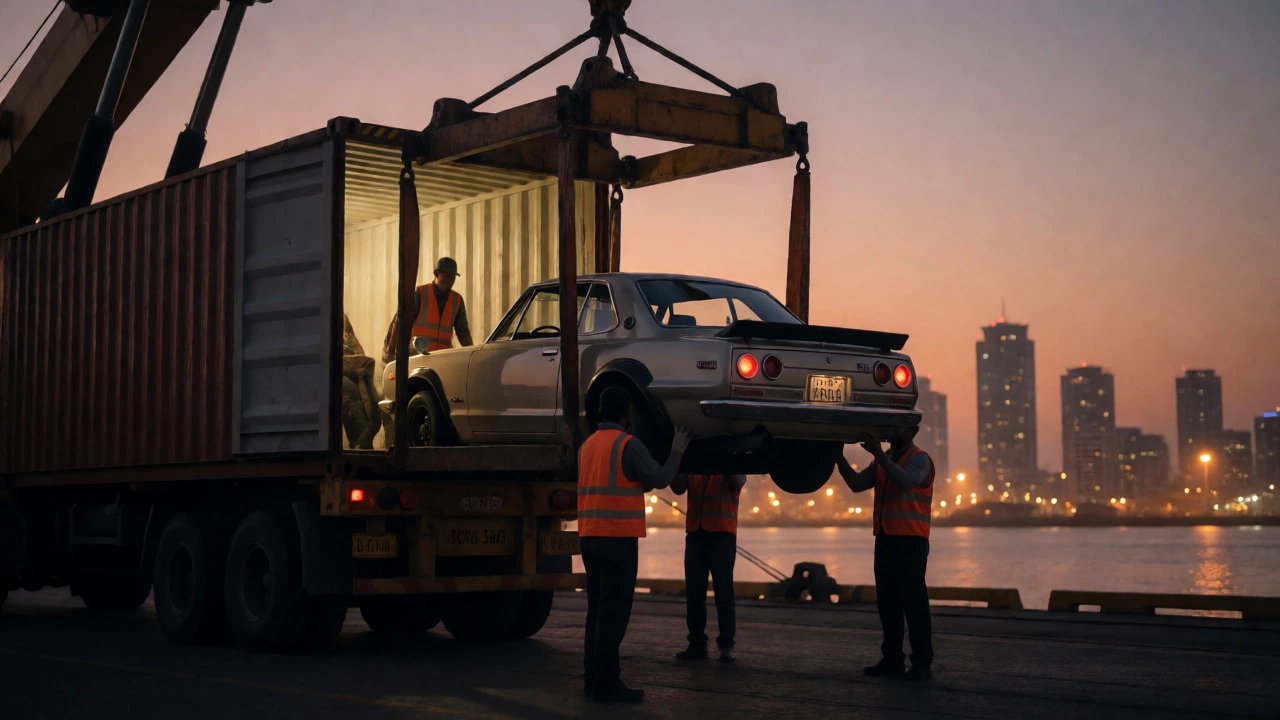
Want a JDM legend like a Nissan Skyline GT-R or a specific vintage Land Rover Defender? These simply aren’t sold in India anymore. Here, you aren’t comparing prices; you’re comparing existence vs. non-existence. For collectors, paying double is worth it for exclusivity. But remember, getting homologation (approval to drive legally) for older models can be a bureaucratic nightmare involving multiple visits to the Automotive Research Association of India (ARAI).
Hidden Costs Beyond Taxes
Taxes are predictable. Logistics and compliance are where things get messy. Don’t forget these line items when calculating your total landed cost:
| Cost Component | Typical Range (USD) | Notes |
|---|---|---|
| Shipping (RoRo or Container) | $1,500 - $4,000 | Depends on origin port and method. RoRo is cheaper but riskier for high-value cars. |
| Customs Brokerage Fees | $200 - $500 | Essential for handling paperwork and clearing goods. |
| Port Handling & Storage | $300 - $1,000+ | Can skyrocket if clearance delays occur. Demurrage charges apply daily. |
| Homologation & Testing | $1,000 - $3,000 | Mandatory for ARAI certification if the model isn't already type-approved. |
| RTO Registration & Road Tax | Varies by State | Karnataka and Delhi charge significantly higher road taxes than others. |
A critical pitfall is demurrage. If your car sits at the Nhava Sheva or Chennai port waiting for documents, you pay daily penalties. One week of delay can wipe out any savings you thought you had. Also, insurance during transit is mandatory and often overlooked in initial quotes.
CKD vs. CBU: The Manufacturer’s Game
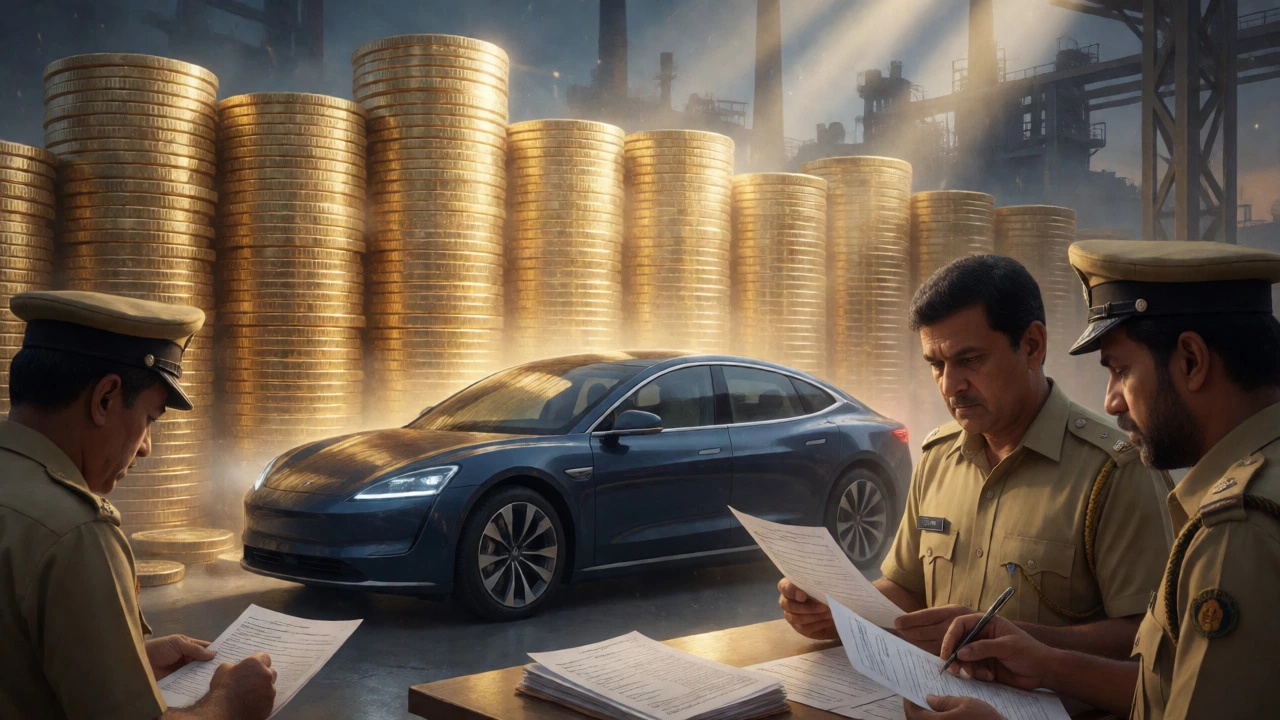
Most mainstream imports you see on Indian roads aren’t actually "imported" by individuals. They are brought in by manufacturers as Completely Knocked Down (CKD) kits. This means the car arrives in pieces and is assembled locally. This strategy allows companies like Audi, BMW, and Mercedes-Benz to pay significantly lower duties (often around 10-15%) compared to the 100% CBU rate.
As a private importer, you almost always deal with CBU units. You cannot easily import a car in parts and assemble it yourself unless you have a factory setup. This structural disadvantage means individual importers are competing against manufacturers who have optimized their supply chains for tax efficiency. If a car is available locally via CKD assembly, buying it there is virtually always cheaper than importing a CBU version yourself.
Step-by-Step Process for Private Importers
If you’re still determined to go ahead, here’s the realistic workflow. It’s not for the faint-hearted.
- Source the Vehicle: Ensure the car meets Indian emission norms (BS-VI). Older diesel cars are practically banned from import due to pollution controls.
- Hire a Customs Broker: Do not try to DIY this. Find a broker experienced with automotive imports. They will classify the HS Code correctly, which dictates your exact duty percentage.
- Arrange Shipping: Book RoRo (Roll-on/Roll-off) for standard cars or container shipping for classics. Insure the car for its full value.
- Clear Customs: Your broker submits the Bill of Entry. Pay the assessed duties online. Expect scrutiny on the invoice value; if they think you under-declared, they will re-assess based on global databases.
- ARAI Certification: If your specific variant hasn’t been tested in India, you need a certificate from ARAI. This involves physical inspection and testing. Lead times can be 4-8 weeks.
- RTO Registration: Take your cleared car, insurance, and ARAI certificate to the Regional Transport Office. Pay state-specific road tax. Get your license plates.
Alternatives to Consider
Before wiring money overseas, look at the grey market. Dealers in Mumbai and Delhi often import small batches of luxury cars. They absorb the tax pain into a single price. While you won’t save money compared to the base export price, you avoid the logistical headache. Alternatively, consider leasing programs offered by banks for high-end cars, which sometimes include maintenance and insurance, smoothing out cash flow.
Another angle is the secondary market for imported cars. Many expats leave India and sell their imported vehicles. These cars have already paid the heavy taxes. Buying one saves you the upfront tax hit, though you might pay a premium for the convenience. Check platforms like Spinny or dedicated luxury car dealerships for inventory.
Frequently Asked Questions
What is the maximum age limit for importing a used car to India?
Generally, used cars cannot be imported unless you qualify under specific schemes like the NRI transfer of residence. Even then, the car typically needs to be less than 5 years old to pass emission and safety standards easily. For general public imports, used cars are effectively prohibited due to BS-VI emission norms and high duties making them uncompetitive.
Do I need to pay GST on top of customs duty?
Yes. In India, the Integrated Goods and Services Tax (IGST) applies to imports. For passenger cars, this is currently 28%. It is calculated on the assessable value, which includes the Cost, Insurance, Freight (CIF), Basic Customs Duty, and Social Welfare Surcharge. This compounding effect significantly increases the final cost.
Can I import a right-hand drive car to India?
No, generally speaking. India drives on the left side of the road using left-hand drive (LHD) vehicles. Right-hand drive (RHD) cars, common in the UK, Japan, and Australia, are difficult to register and insure. While some classic RHD cars exist, getting new RHD imports approved is rare and requires special permission, often reserved for diplomatic missions or specific commercial uses.
How long does it take to clear a car from Indian customs?
If all documentation is perfect and duties are paid promptly, clearance can take 3-7 days. However, if the customs officer questions the invoice value or if ARAI certification is pending, it can drag on for 4-8 weeks. Delays incur storage charges at the port, known as demurrage, which can add thousands of dollars to your bill.
Are electric vehicles exempt from import duty in India?
Not entirely. Fully built electric vehicles (CBU EVs) still attract Basic Customs Duty, though rates vary based on trade agreements and specific government incentives. Some components for local assembly enjoy lower duties. As of recent policies, the government is balancing protection for local battery manufacturing with encouraging EV adoption, so check the latest notifications from the Directorate General of Foreign Trade (DGFT) for current rates.
Ultimately, importing a car to India is a luxury exercise in patience and capital. Unless you are an NRI leveraging specific privileges or hunting for a car that literally doesn’t exist in the Indian market, the math rarely favors the importer. The combination of 100% customs duty, IGST, and logistical friction creates a barrier designed to keep the domestic auto industry thriving. Do your calculations twice, hire a good broker, and ensure you have a buffer for unexpected delays.