Saree Fabrics: Types, Uses, and How They’re Made in India
When you think of a saree fabric, a woven textile used in traditional Indian attire, often made from silk, cotton, or synthetic blends. Also known as ethnic wear material, it’s not just cloth—it’s culture, craftsmanship, and now, modern manufacturing at work. From the shimmer of Banarasi silk to the comfort of Chanderi cotton, saree fabrics carry centuries of history. But today, they’re also shaped by polymer science, automated looms, and export-driven demand.
Most traditional saree fabrics like silk, a natural protein fiber produced by silkworms, prized for its luster and drape and cotton, a breathable, plant-based fiber that dominates India’s rural and urban markets still rule the market. But increasingly, you’ll find blends with polyester—a synthetic polymer made from petroleum-based chemicals. These blends reduce cost, improve wrinkle resistance, and make sarees easier to care for. In fact, over 60% of sarees sold today contain some form of synthetic fiber, according to industry estimates. This shift isn’t just about convenience; it’s tied to India’s growing polymer production, especially in Gujarat, where companies like Tirupati Polymers supply the raw materials used in textile mills across the country.
What’s driving this change? Exports. Countries like the US, UAE, and UK are buying more Indian sarees than ever, and they want consistency, colorfastness, and durability. That’s where polymer-enhanced fabrics shine. They hold dye better, resist fading in sunlight, and last longer through washing. Meanwhile, government schemes like PLI (Production Linked Incentive) are pushing textile manufacturers to upgrade machinery and adopt synthetic blends. It’s not about replacing tradition—it’s about making it scalable. You’ll find these innovations in everything from wedding Banarasis to everyday cotton prints.
Behind every saree fabric is a chain: farmers grow cotton, silkworms spin silk, chemical plants produce polymers, and factories weave it all together. And in India, that chain is getting smarter. Factories in Tamil Nadu, Maharashtra, and West Bengal now use computerized looms to produce intricate patterns faster than ever. The result? More variety, lower prices, and better quality for buyers across the country and beyond.
So whether you’re buying a saree for a wedding, a gift, or just because you love the way it feels, you’re holding a product shaped by ancient art and modern science. Below, you’ll find real insights into how these fabrics are made, who produces them, and what’s changing in India’s textile industry right now—no fluff, just facts from the floor of the mill to the store shelf.
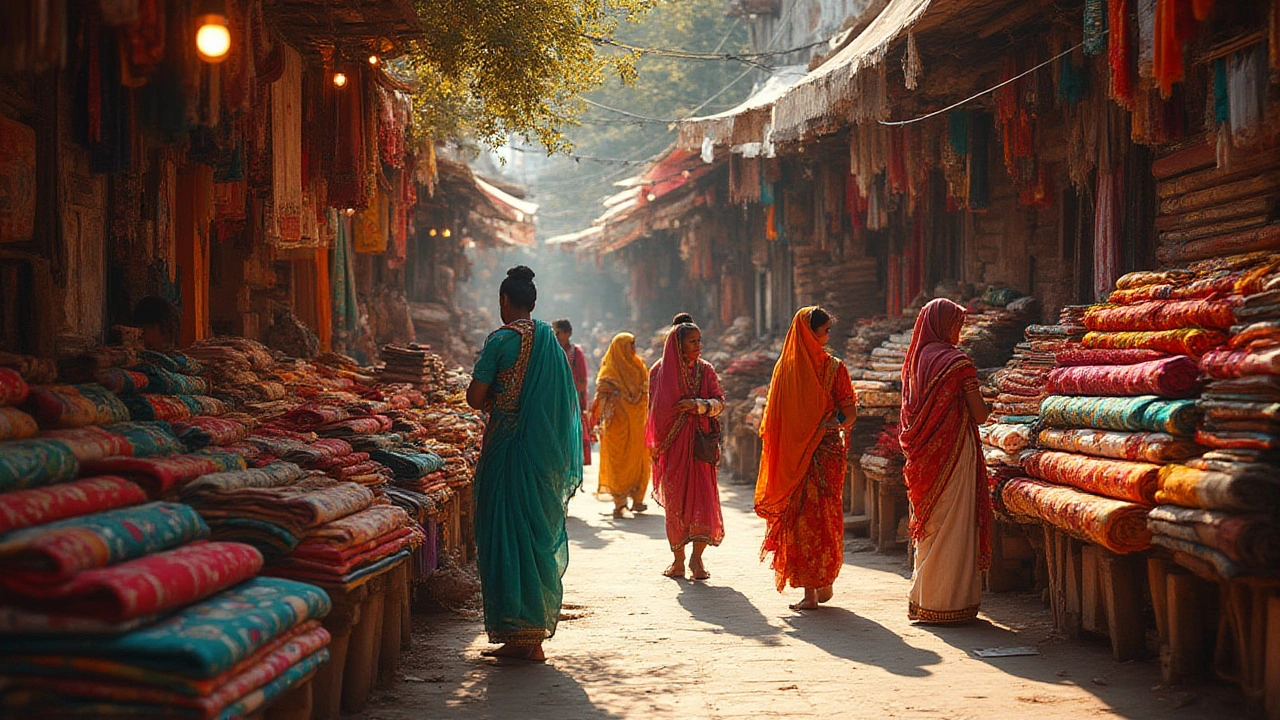
Uncover the top fabrics shaping India's massive textile market, from cotton and polyester to trendy blends. Get useful facts for businesses and curious buyers.