Indian Textile Manufacturing: Key Players, Regions, and Trends in 2025
When you think of Indian textile manufacturing, the massive, centuries-old industry that produces everything from cotton fabrics to high-tech technical textiles for global brands. Also known as Indian apparel and fabric production, it employs over 45 million people and contributes nearly 11% to the country’s industrial output. This isn’t just about saris and shirting—this is a complex ecosystem of spinning mills, dye houses, weaving units, and export-ready factories that supply major retailers worldwide.
At the heart of it all is Arvind Ltd, India’s top textile company in 2025, leading in revenue, export volume, and vertical integration. Also known as Arvind Limited, it controls everything from raw cotton sourcing to finished denim and branded apparel, making it a benchmark for efficiency and scale. But Arvind doesn’t operate in a vacuum. The real engine is Gujarat, the state that produces over 30% of India’s textiles, home to major clusters in Surat, Ahmedabad, and Vadodara. Also known as the textile hub of western India, Gujarat’s advantage? Access to ports, reliable power, and a deep pool of skilled labor trained in high-speed weaving and finishing. Meanwhile, Tamil Nadu and Maharashtra follow closely, each with their own specialties—Tamil Nadu in home textiles and Maharashtra in technical fabrics for automotive and medical use.
What’s driving growth isn’t just tradition—it’s innovation. Indian textile manufacturers are now investing in waterless dyeing, solar-powered looms, and digital printing to meet global sustainability standards. Export markets like the U.S., Germany, and Bangladesh are buying more than ever, with denim, cotton shirts, and home linens leading the charge. The government’s PLI scheme is pushing companies to upgrade machinery and boost exports, turning small units into export-ready players.
Behind every yard of fabric is a story—of a weaver in Surat, a quality inspector in Tiruppur, a logistics manager in Mundra port. This industry doesn’t just make clothes; it fuels livelihoods, drives regional economies, and puts India on the global manufacturing map. Below, you’ll find real insights into who’s winning, where the opportunities are, and how policy, technology, and demand are reshaping the future of Indian textile manufacturing.
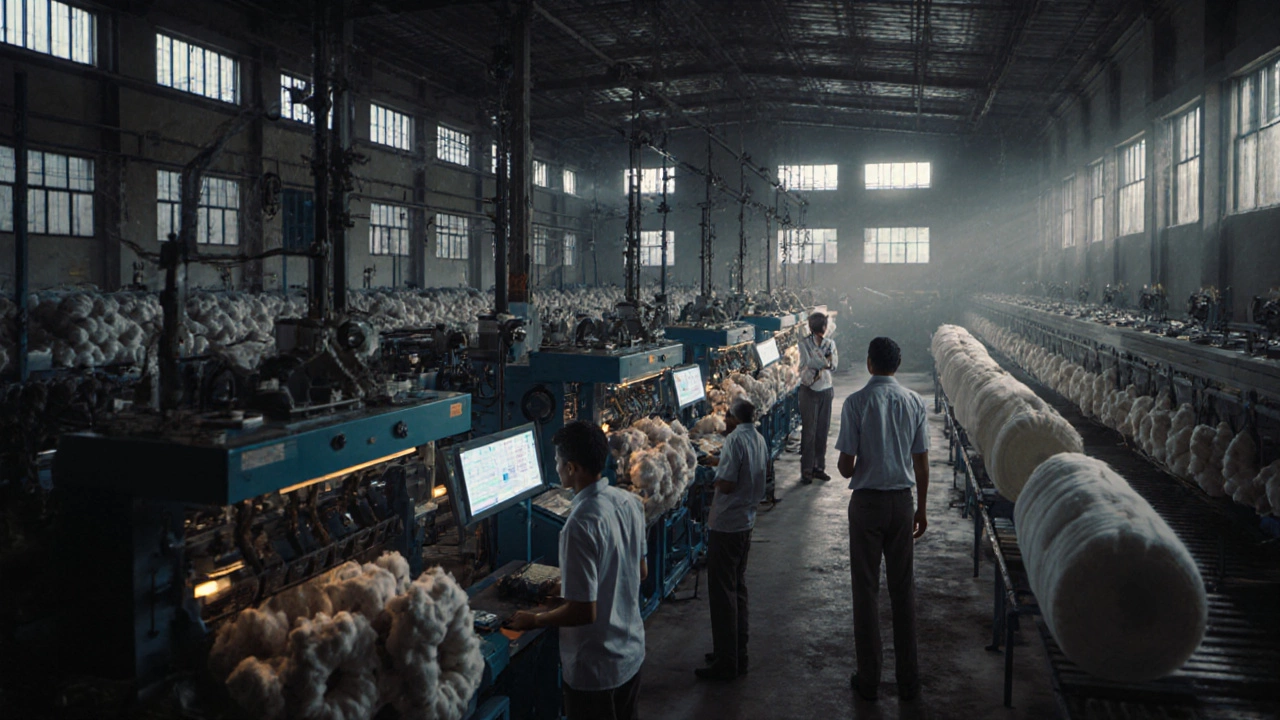
India's textile industry is booming in 2024, driven by exports, automation, and government support. Learn how technical textiles, PLI schemes, and sustainability are reshaping the sector.