India Chemical Industry: Key Hubs, Players, and Growth Drivers
When we talk about the India chemical industry, the backbone of India’s manufacturing sector that produces everything from polymers and dyes to fertilizers and pharmaceutical intermediates. Also known as Indian chemical manufacturing, it’s not just about factories—it’s about supply chains, exports, and the companies that make global industries possible. This isn’t a quiet sector. It’s growing fast, driven by government schemes like PLI, rising global demand for Indian-made chemicals, and a wave of new investments in Gujarat and Tamil Nadu.
The real story? Gujarat, the state that produces nearly half of India’s chemicals and hosts over 80% of its petrochemical output. Also known as India’s chemical heartland, it’s home to Dahej and Jamnagar—two cities that together form the largest chemical cluster in Asia. Companies like Reliance and Tata operate massive plants here, turning crude oil into plastics, solvents, and intermediates used in everything from medicine to packaging. This isn’t just local production—it’s global supply. Meanwhile, polymer manufacturing, a critical sub-sector that turns chemicals into everyday materials like PVC, HDPE, and nylon. Also known as plastic production, it’s booming because of demand from packaging, construction, and automotive industries. Tirupati Polymers Manufacturing is one of many players building capacity here, focusing on durable, cost-effective solutions for Indian factories. The India chemical industry doesn’t just supply local markets—it competes with China, the Middle East, and Europe on price, quality, and scale.
What makes this sector tick? It’s not just raw materials. It’s infrastructure—dedicated ports, pipelines, and industrial parks built for heavy industry. It’s policy—tax breaks, export incentives, and streamlined approvals. And it’s talent—engineers, chemists, and plant operators who keep complex systems running 24/7. The posts below dig into the cities where this happens, the companies that dominate, the government schemes that help small players survive, and even the environmental realities behind the growth. You’ll find out why Dahej beats Mumbai, how small manufacturers access funding, and what’s really driving the shift toward sustainable production. No fluff. Just facts, locations, and real-world insights that matter if you’re in manufacturing, investing, or just trying to understand where your plastic bottle came from.
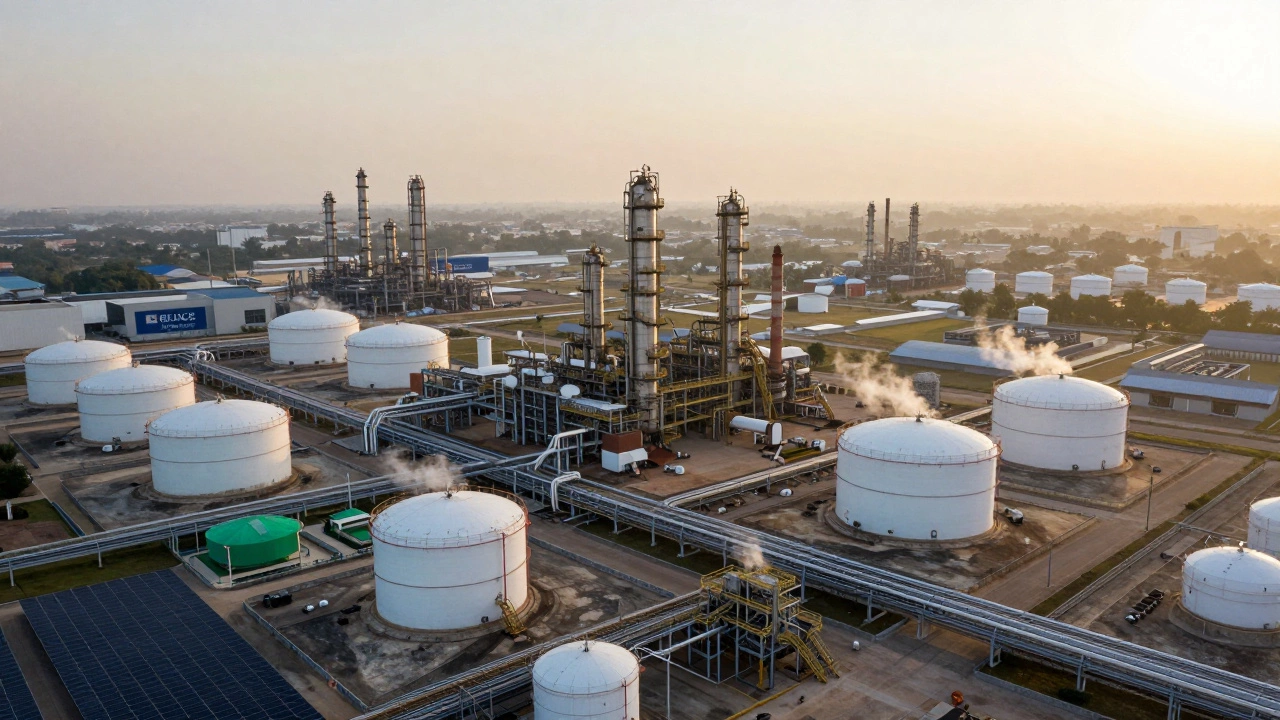
Reliance Industries is the largest chemical company in Asia, with over $100 billion in annual revenue. Its integrated refining and petrochemical operations dominate the region, outpacing giants like Sinopec and LG Chem.

India ranks as the sixth-largest chemical producer globally, with a $200 billion industry driven by pharmaceuticals, dyes, and low-cost bulk chemicals. Key states like Gujarat and Maharashtra lead production, while exports hit $65 billion in 2024.