Corporate Responsibility in Manufacturing: What It Really Means for Indian Industry
When we talk about corporate responsibility, a company’s obligation to act ethically and contribute positively to society and the environment. Also known as corporate social responsibility, it’s not about donating to charity and calling it a day—it’s about how you make your product, treat your workers, and handle waste every single day. In manufacturing, this isn’t optional. If you’re making plastics, chemicals, or textiles in India, your choices ripple through rivers, villages, and supply chains.
Take sustainable manufacturing, producing goods with minimal environmental harm while conserving resources. Look at Gujarat’s chemical hubs. Factories there don’t just pump out polymers—they’re under pressure to cut emissions, recycle water, and stop dumping toxins. Companies that ignore this face fines, protests, and lost customers. Meanwhile, those investing in clean tech—like closed-loop water systems or bio-based plastics—are winning government incentives and export contracts.
ESG practices, Environmental, Social, and Governance standards used to measure a company’s ethical impact are now part of every investor’s checklist. It’s not just big firms either. Small manufacturers who track their energy use, pay fair wages, and train workers in safety are seeing better retention, fewer accidents, and faster loan approvals. The manufacturing ethics, moral principles guiding production decisions, especially around labor and environmental impact you follow today shape your brand five years from now. Customers don’t just buy products—they buy values. If your factory pollutes a river, no amount of advertising will fix that. But if you clean up your process, workers, and community ties? That becomes your biggest advantage.
India’s manufacturing growth isn’t just about scale—it’s about how you grow. The PLI schemes, chemical hubs, and textile exports you read about? They’re all tied to how responsibly companies operate. You can’t claim to be a leader in exports if your supply chain uses child labor or unsafe chemicals. And you can’t claim sustainability if your plant burns coal just to save a few rupees.
What you’ll find below isn’t theory. It’s real examples from Indian factories—how they cut waste, trained women workers, switched to solar, and turned compliance into profit. These aren’t stories from Europe or the US. These are decisions made right here, in Tamil Nadu, Gujarat, and Maharashtra. And they’re changing what manufacturing means in India.
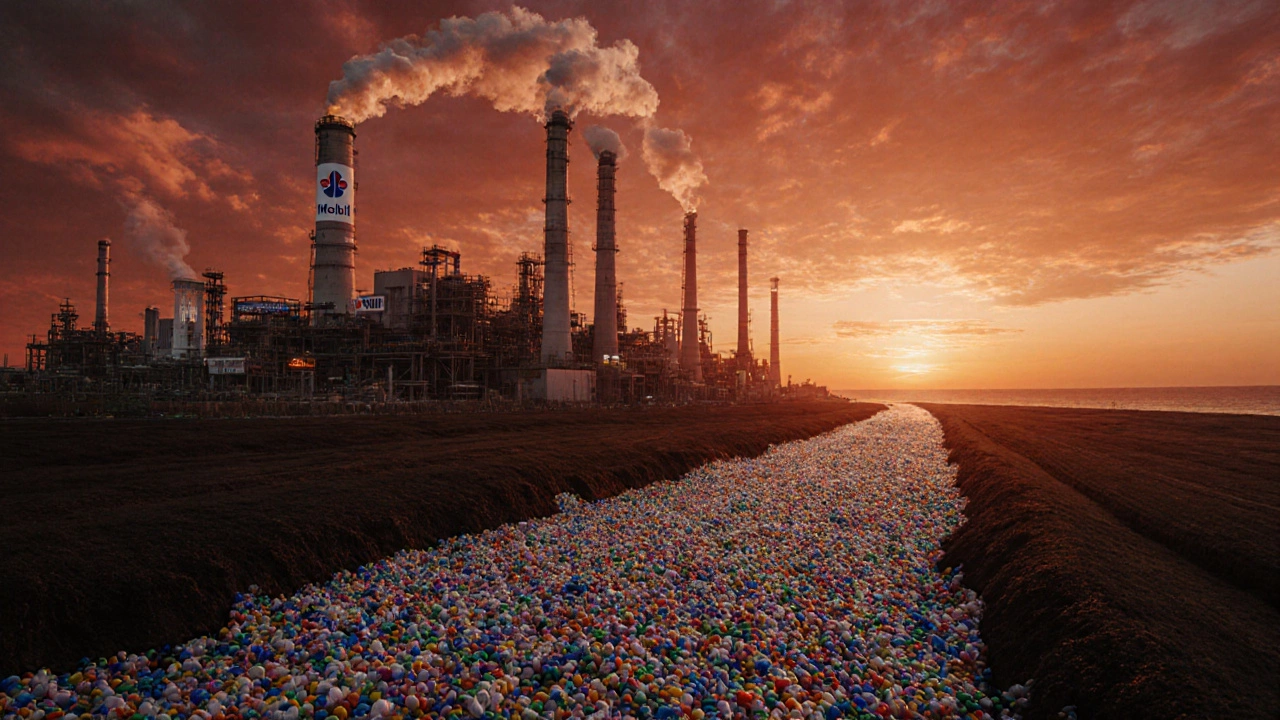
Plastic pollution isn't caused by consumers - it's designed by corporations. Learn who really produces the plastic waste choking our planet and why recycling alone won't fix it.