Unit Operation in Manufacturing: What It Is and Why It Matters
When you think about how plastics, chemicals, or even food get made, you’re really thinking about unit operation, a fundamental, physical step in manufacturing that changes a material’s form, state, or composition without altering its chemical identity. Also known as unit process, it’s the building block behind every factory line—from polymer extrusion to distillation tanks. You won’t find it on a product label, but you’ll find it in every step that turns raw materials into something useful.
Think of unit operation like cooking. Chopping vegetables? That’s size reduction. Boiling water? That’s heat transfer. Filtering coffee? That’s solid-liquid separation. In manufacturing, these same actions happen on a much larger scale, but the logic is identical. A process manufacturer, a type of factory that produces goods through continuous or batch chemical or physical changes, like polymer or pharmaceutical plants relies on unit operations to control consistency, safety, and output. Without them, you’d have chaos—uneven plastic thickness, impure chemicals, or inconsistent drug doses.
These operations aren’t random. They follow proven principles: mixing, heating, cooling, drying, filtering, separating, and compressing. Each one is designed to handle specific materials under specific conditions. In chemical engineering, the discipline that designs and optimizes these physical steps for industrial use, unit operations are taught as core science—not just tricks, but math-driven systems. That’s why companies like Tirupati Polymers don’t guess how to make plastic pellets. They calculate flow rates, heat exchange efficiency, and residence times using these exact steps.
And it’s not just chemicals. The same unit operations you see in a polymer plant show up in food processing, pharmaceuticals, and even textile manufacturing. Whether it’s drying cotton fibers or concentrating dye solutions, the underlying mechanics are the same. That’s why understanding unit operations helps you see connections between industries—and spot where one sector’s innovation can solve another’s problem.
What you’ll find below isn’t just a list of articles. It’s a collection of real-world examples showing how unit operations drive growth, cost savings, and quality in Indian manufacturing. From how Gujarat’s chemical hubs optimize distillation to why small-scale producers skip expensive equipment by mastering basic separation techniques—you’ll see the hidden mechanics behind the products you use every day.
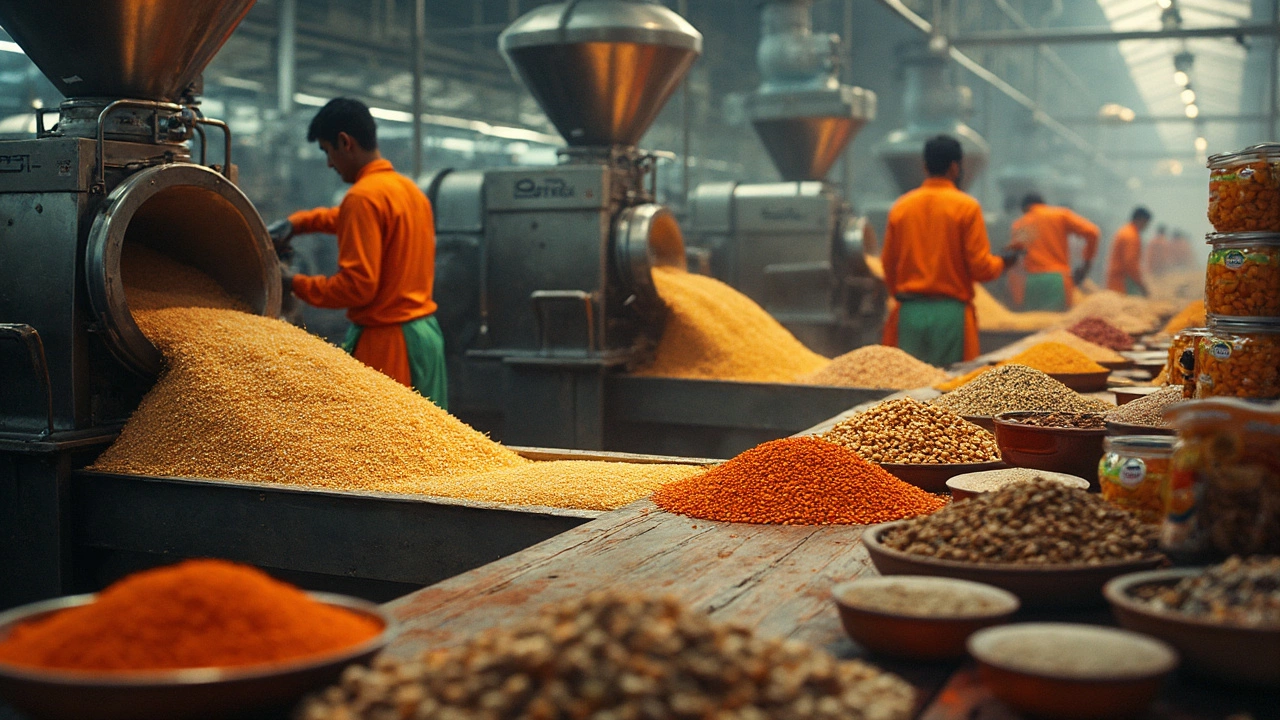
Not sure how unit operation and unit processing differ in food processing? This article cuts through the jargon, showing you where each fits in food factories. We’ll break down what these terms actually mean, where you spot them in real life, and why they matter so much for your wallet and the food you buy. You’ll pick up some smart tips that even people working in the industry sometimes miss. By the end, you’ll never mix these two up again.