Start Textile Business India: How to Launch a Profitable Textile Venture in 2025
When you start a textile business in India, a low-cost, high-demand manufacturing opportunity fueled by domestic demand, global exports, and government incentives. Also known as garment manufacturing, it’s one of the few industries where small players can compete with giants by focusing on niche products, speed, and quality. India isn’t just a big market—it’s the world’s second-largest producer of cotton textiles and a top exporter of fabrics, garments, and technical textiles. You don’t need millions to begin. Many successful textile startups in Gujarat, Tamil Nadu, and Uttar Pradesh started with just a few sewing machines and a clear idea of who they were selling to.
What makes this timing perfect? India’s textile industry, a $150 billion sector growing at 8% yearly, driven by export demand and automation. Also known as Indian textile manufacturing, it’s seeing a surge in orders from the US, EU, and Middle East as buyers look for reliable alternatives to China. The government’s Production Linked Incentive (PLI) scheme, a key financial support program for textile manufacturers that offers cash rewards based on production volume. Also known as PLI for textiles, it gives up to 15% back on sales for eligible units—money you can reinvest in better machines, training, or marketing. And it’s not just about cotton. Technical textiles—used in healthcare, agriculture, and automotive—are booming. Companies are now making UV-resistant fabrics for tents, antibacterial hospital linens, and even textile-based solar panels. These aren’t niche ideas—they’re high-margin products with real demand.
Where you set up matters. Gujarat leads in chemical inputs and dyeing, while Tamil Nadu and Karnataka dominate weaving and export-ready garment production. If you’re starting small, look at clusters like Erode for towels, Surat for synthetic fabrics, or Tirupur for knitwear. These places have skilled labor, ready-to-use infrastructure, and suppliers within 10 kilometers. You don’t need to build everything from scratch—just connect to the ecosystem.
What’s working right now? Fast-turnaround orders for private labels, eco-friendly fabrics, and small-batch custom designs. Big brands need flexible partners. That’s your edge. You don’t need to compete with Arvind Ltd. You just need to deliver quality on time, at a fair price, and with clear communication. The biggest mistake new entrepreneurs make? Trying to do everything. Focus on one product. Master one market. Build one relationship. Then scale.
Below, you’ll find real guides on how to use government schemes, which states offer the best support, what products actually sell, and how top Indian textile companies are winning in 2025. No fluff. Just what you need to get started—whether you’re working from a home workshop or planning your first factory.
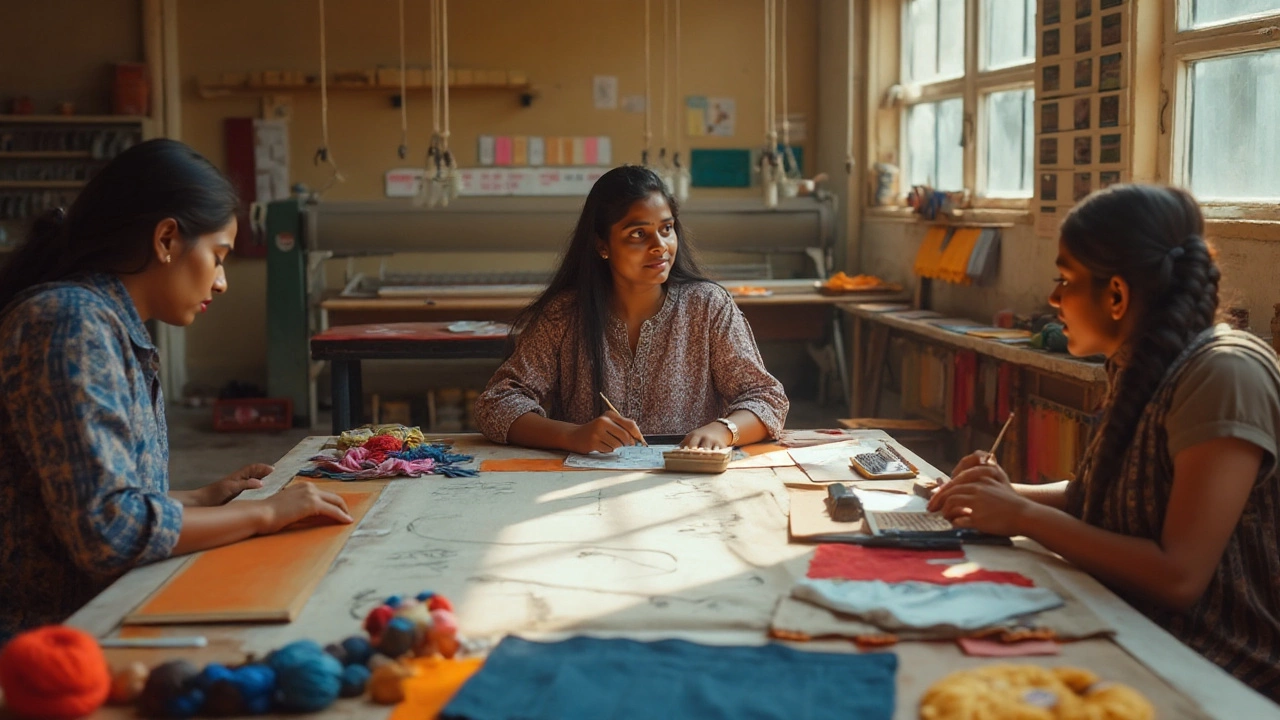
A clear 2025 guide to start a textile business in India: business models, licenses, costs, funding, profit math, location picks, and practical steps you can follow.