Production Management: What It Is and How It Powers Indian Manufacturing
When you think of a factory making plastic parts, textiles, or steel, what’s really keeping it running? It’s not just machines—it’s production management, the system that plans, organizes, and controls how goods are made efficiently and on time. Also known as manufacturing operations, it’s the invisible backbone of every factory in Gujarat, Tamil Nadu, or Maharashtra that turns raw materials into products you use every day. Without it, even the best equipment sits idle, orders pile up, and costs spiral. In India’s growing manufacturing sector, where small businesses and big plants compete for global markets, smart production management isn’t optional—it’s survival.
Production management doesn’t work alone. It ties directly to production planning, the process of scheduling materials, labor, and machines to meet demand without waste. You see this in the 5 Ps of manufacturing—Product, Process, Plant, People, Planning—where planning is one of the five pillars. It also links to manufacturing process, the step-by-step method used to turn inputs into finished goods, whether it’s extruding polymers, weaving textiles, or assembling auto parts. And it’s deeply connected to production control, the real-time monitoring and adjustment of output to meet quality and timing goals. These aren’t theoretical ideas—they’re daily tasks in factories using PLI schemes, tracking BOMs, or managing central production units for food and textiles.
Look at the posts here. You’ll find real examples: how Gujarat’s chemical plants rely on tight production control to meet export deadlines, how textile mills use production planning to handle sudden export surges, and how small manufacturers cut costs by optimizing their manufacturing process. Some posts break down the 5 Ps. Others show how government schemes like PLI and PMEGP are designed to improve production management for MSMEs. You’ll even see how plastic pollution ties back to poor production planning—when factories overproduce or use non-recyclable materials because they’re not tracking demand. This isn’t theory. It’s what’s happening in factories across India right now.
What you’ll find below isn’t a list of articles—it’s a map. A map of how production management actually works on the ground: who’s doing it well, where it’s failing, and how you can apply these lessons whether you run a small workshop or manage a polymer plant. No fluff. No jargon. Just what works, what doesn’t, and how to make it better.
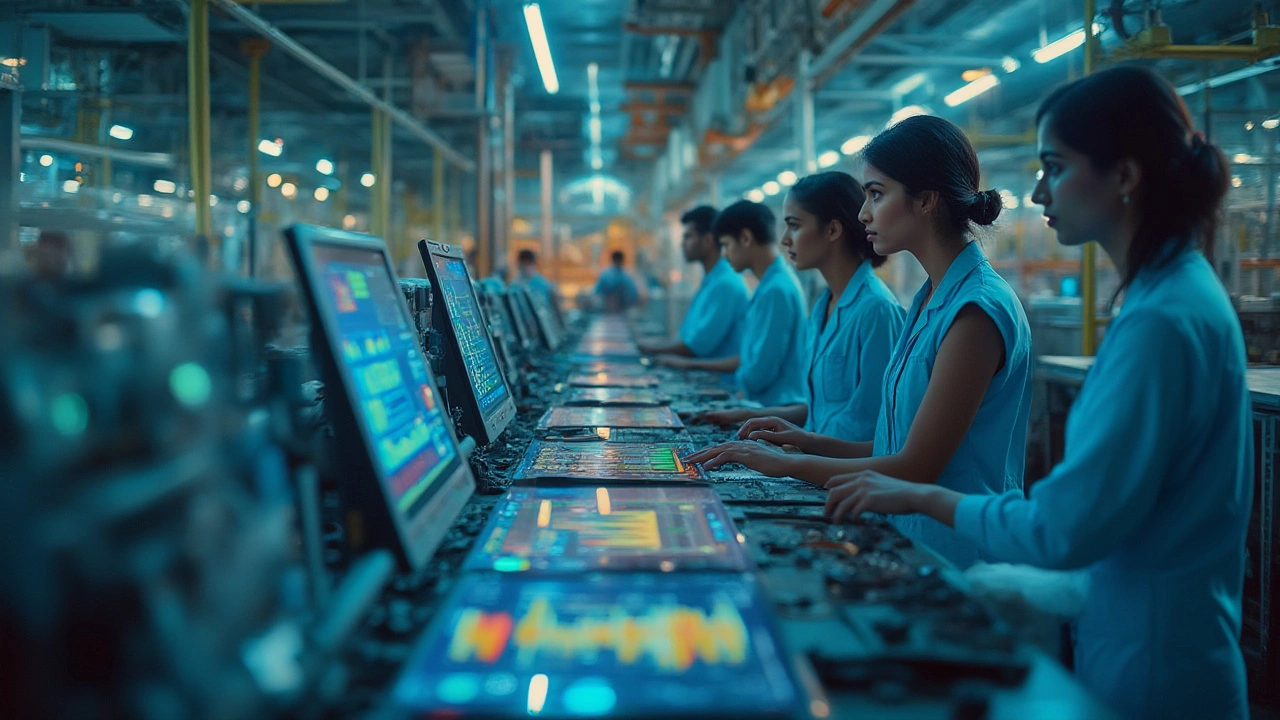
Find out what sets MES (Manufacturing Execution Systems) apart from MOM (Manufacturing Operations Management), with real-world insights and tips for your factory.