Precision in Manufacturing: What It Means and Why It Matters
When we talk about precision, the consistent ability to produce parts or products within exact specifications. Also known as tight tolerance manufacturing, it's the invisible backbone of everything from polymer extrusion to steel rolling. Without it, a plastic bottle cap leaks, a gear grinds to a halt, or a medical device fails. This isn’t theory—it’s daily reality in factories across Gujarat, Tamil Nadu, and beyond.
Manufacturing precision isn’t just about machines. It’s the combo of calibrated tools, trained people, and stable processes. In polymer production, a 0.1mm deviation in thickness can ruin an entire roll of film used in packaging or automotive parts. In chemical plants in Dahej, precision controls reaction temperatures down to the degree—too hot, and you get waste; too cold, and the product won’t form. It’s not about being fancy. It’s about being reliable. And that reliability? It’s what lets Tirupati Polymers deliver consistent materials to industries that can’t afford failures.
Related concepts like quality control, the systematic process of ensuring products meet defined standards and production efficiency, maximizing output while minimizing waste and error don’t exist without precision. You can’t have lean manufacturing if your measurements drift. You can’t scale if every batch is different. That’s why the top steel makers like ArcelorMittal and chemical giants in Gujarat track every variable—time, temperature, pressure—down to the smallest unit. It’s not magic. It’s measurement. It’s repetition. It’s discipline.
Look at the posts below. You’ll see how precision shows up in unexpected places. In the 5 Ps of manufacturing, Planning and Process depend on it. In small-scale manufacturing, it’s what lets a startup sell engraved pet tags with perfect lettering—no returns, no complaints. In plastic pollution discussions, it’s the lack of precision in thin-film production that leads to overproduction and waste. Even government schemes like PLI and PMEGP reward companies that can prove consistent output and low defect rates. This isn’t just about machines. It’s about trust. Trust that your supplier delivers the same thing every time. Trust that your product won’t break under stress. Trust that what you’re buying actually works.
What you’ll find here isn’t a list of definitions. It’s proof—real examples from Indian manufacturing—of how precision isn’t a luxury. It’s the baseline. Whether you’re running a small workshop or managing a polymer plant, if you don’t get this right, nothing else matters. Let’s see how others are doing it.
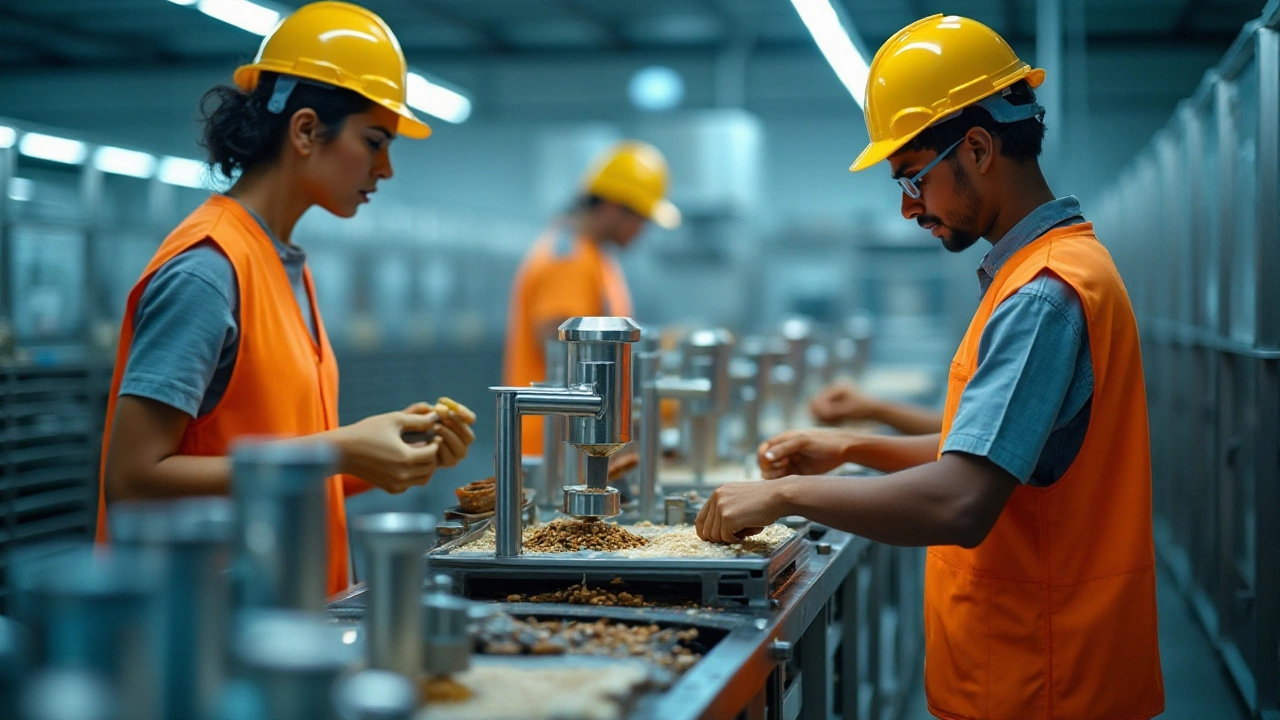
Understanding the numerical value .0005 in the context of food processing can lead to significant improvements in both quality control and efficiency within the industry. This article explores its relevance, diving into how precise measurements contribute to consistency and safety in food production. We'll discuss why .0005 is pivotal in ensuring high standards and meeting regulatory requirements. You'll learn about practical applications and essential insights for leveraging precision in food processing.