MES in Manufacturing: What It Is and How It Powers Factories
When you hear MES, Manufacturing Execution System—a digital backbone that connects shop floor operations with enterprise planning systems. Also known as manufacturing execution software, it’s the system that tells machines when to run, tracks every part as it moves through production, and flags delays before they become costly mistakes. This isn’t fancy tech for big corporations—it’s the quiet engine behind every factory that ships on time, cuts waste, and keeps quality steady.
MES doesn’t replace ERP or machines. It sits right in the middle. While ERP says, "Make 10,000 plastic parts," MES answers: "Which machine is free? Who’s running it? Is the resin batch good? Did the last 500 pass inspection?" It’s the real-time heartbeat of production. In places like Gujarat’s chemical hubs or textile mills in Tamil Nadu, MES helps track raw material use, machine uptime, and operator performance—all in one place. Without it, factories guess. With it, they know.
Related systems like BOM, Bill of Materials—a list of all components needed to build a product and MOM, Manufacturing Operations Management—a broader category that includes MES, quality control, and maintenance often get mixed up. But MES is the action layer. It doesn’t just list what you need—it shows what’s actually happening right now. If a machine breaks, MES alerts supervisors. If a batch fails, it isolates the problem. If workers are falling behind, it helps managers reassign tasks before the shift ends.
And it’s not just about big plants. Even small-scale manufacturers in India are starting to use lightweight MES tools to compete. Whether you’re making custom pet tags, injection-molded parts, or textile rolls, knowing exactly where your product is in the process cuts scrap, speeds up delivery, and builds trust with buyers. That’s why companies using MES see 15–30% fewer delays and up to 20% less material waste.
Below, you’ll find real-world breakdowns of how MES fits into government schemes like PLI, how it connects to factory automation trends, and why it’s becoming non-negotiable for any manufacturer serious about growth. No fluff. Just what works on the floor.
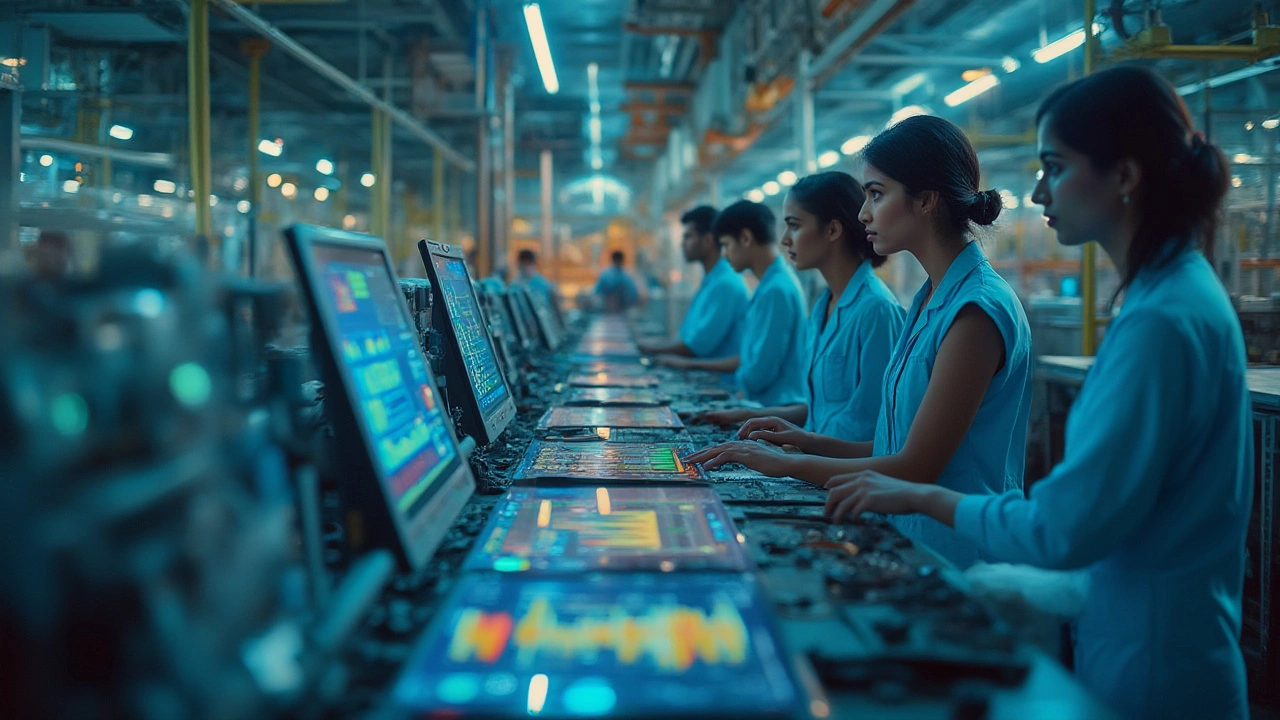
Find out what sets MES (Manufacturing Execution Systems) apart from MOM (Manufacturing Operations Management), with real-world insights and tips for your factory.