Manufacturing Types: Key Methods, Tools, and Industries Explained
When you think of manufacturing types, the different ways products are made at scale, from small workshops to giant factories. Also known as production methods, it's not just about machines—it's about choosing the right system for the product, cost, and demand. Not every factory works the same. Some make thousands of identical phone cases in hours. Others handcraft custom metal tags one at a time. The difference? The manufacturing type they use.
There are five main ways things get made: mass production, making huge volumes of the same item with assembly lines, like cars or bottled water; batch manufacturing, producing items in groups or lots, common in food processing or pharmaceuticals; continuous manufacturing, a non-stop flow, like refining oil or making plastic pellets, which dominates chemical plants in Gujarat; small-scale manufacturing, low-volume, often local production with minimal equipment, think engraved pet tags or handwoven textiles; and custom manufacturing, one-off or highly personalized items built to order, like specialized machinery parts. Each has its own cost structure, speed, and skill needs.
Why does this matter? Because the type you pick affects everything—your profit margin, your supply chain, even your environmental footprint. For example, Gujarat’s chemical hubs rely on continuous manufacturing because it’s the only way to handle millions of liters safely and efficiently. Meanwhile, India’s textile industry uses batch and small-scale methods to mix traditional weaving with modern automation. And if you’re starting a business with under ₹5 lakh, you’re likely using small-scale manufacturing—no giant robots, just smart choices. The 5 Ps of manufacturing—Product, Process, Plant, People, Planning—aren’t just buzzwords. They’re the checklist you need to match your product to the right type of manufacturing.
What you’ll find below are real examples of how these types play out in India’s industrial landscape. From the PLI schemes pushing mass production of electronics, to the hidden world of micro-manufacturers making high-margin engraved goods, to why some factories still run on manual labor while others are fully automated. You’ll see how plastic pollution ties back to mass production models, and how the fastest-growing states in the U.S. are betting big on the right manufacturing type for their workforce. This isn’t theory. It’s what’s happening right now—in factories, workshops, and export yards across the country.
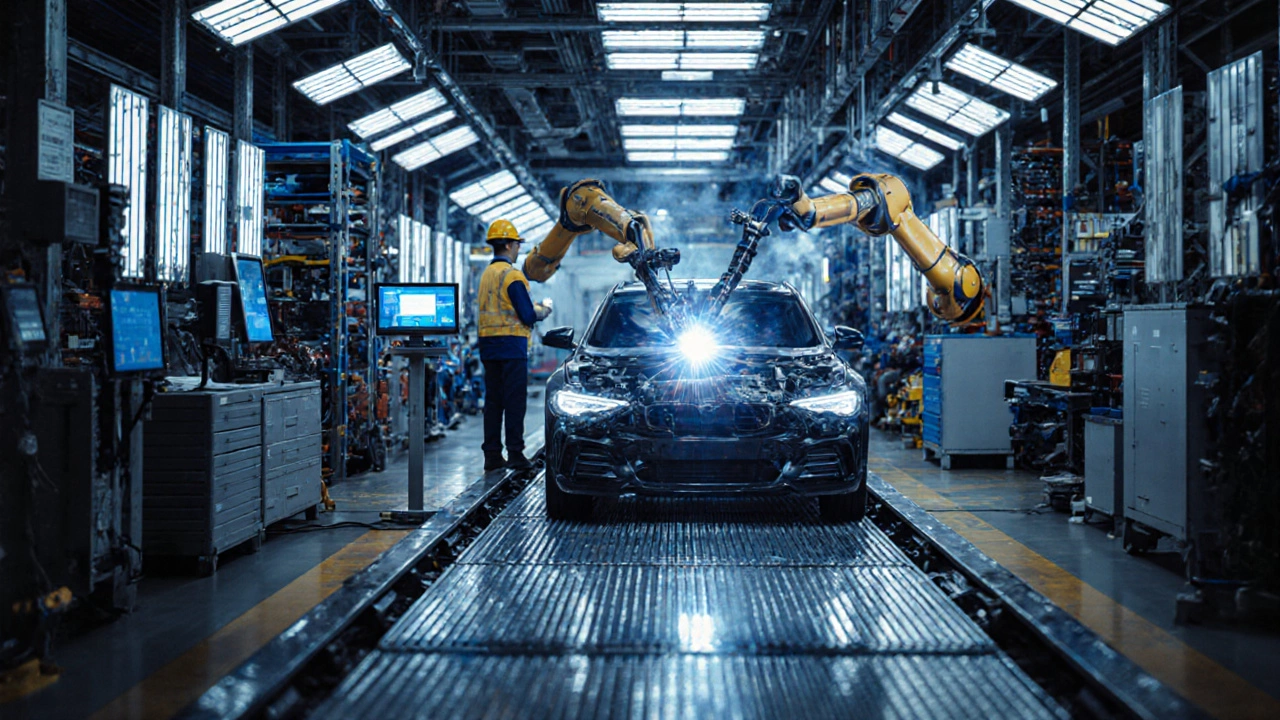
Learn the three main types of manufacturers - discrete, process, and job shop - and how each one operates, scales, and serves different markets. Essential reading for business owners and industry professionals.