Manufacturing Fundamentals: Core Principles Behind Industrial Production
At its heart, manufacturing fundamentals, the essential practices and systems that turn raw materials into finished goods. Also known as industrial production basics, it’s what keeps factories running, supply chains moving, and products landing on store shelves. Whether you’re making plastic parts in Gujarat or assembling steel beams in Texas, these fundamentals don’t change—only the scale and tools do.
Manufacturing isn’t one thing. It breaks into clear types: discrete manufacturing, building distinct items like cars or electronics, one unit at a time; process manufacturing, mixing or transforming materials like chemicals, plastics, or food in bulk; and job shop manufacturing, custom work for specific orders, often in small batches. These aren’t just labels—they dictate how you plan, staff, and measure success. If you’re running a small plastic molding shop in India, you’re likely using discrete or job shop methods. If you’re producing polymer pellets at scale, you’re deep in process manufacturing. Understanding which type you’re in changes everything—from equipment choices to how you track waste.
And it’s not just about machines. manufacturing fundamentals include how government schemes like PLI or PMEGP give financial pushes to small players, how locations like Jamnagar dominate because of infrastructure and clusters, and how sustainability pressures are reshaping what gets made. You can’t ignore the human side either: training, safety, and workflow design make or break efficiency. Even plastic pollution debates tie back here—corporations design products for single use because manufacturing systems are built for volume, not reuse. The system shapes the product, and the product shapes the planet.
What you’ll find below isn’t a list of random articles. It’s a practical map. You’ll see how the fastest-growing U.S. states leverage incentives, how India’s top textile firms scale using automation, and why a small business can make more profit selling engraved pet tags than bulk plastic parts. You’ll learn who controls the chemical supply chain, what BOM and MOM really mean on the factory floor, and how to spot a truly profitable product before you invest a rupee. This isn’t theory. It’s what works right now—in Gujarat, in Tennessee, in your garage workshop. These are the real building blocks of industrial success.
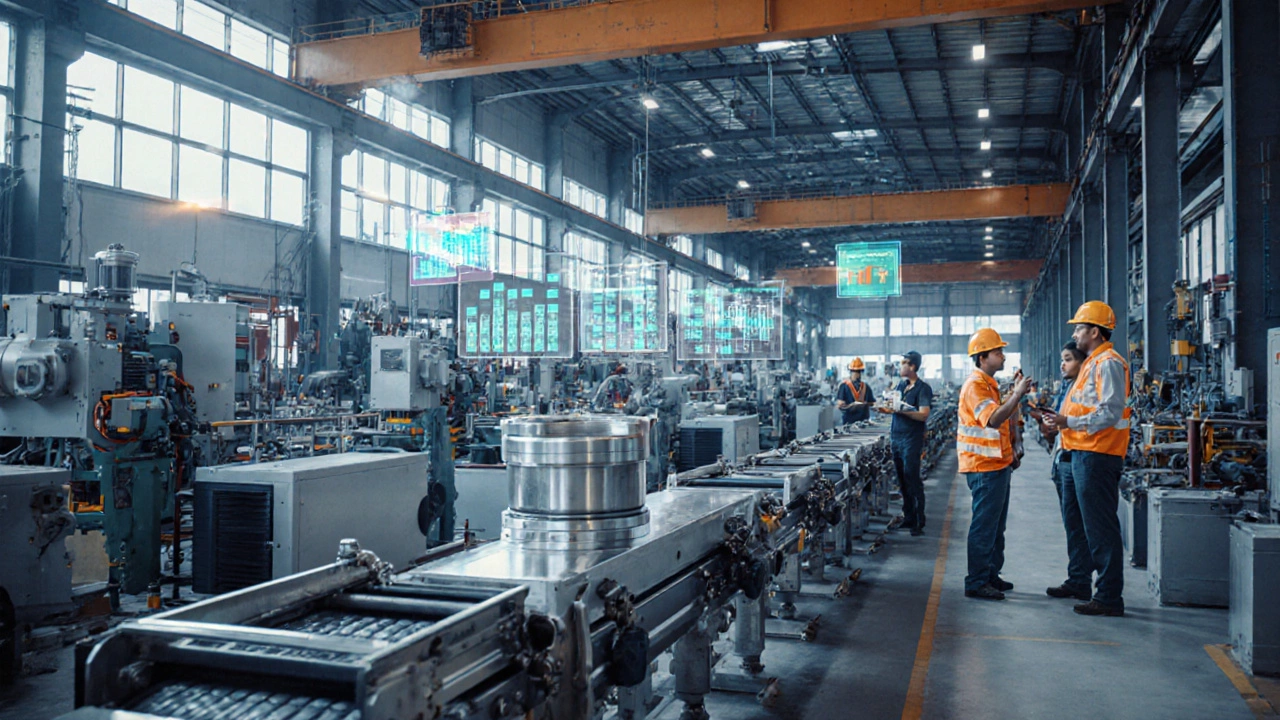
Learn the 5 Ps of manufacturing-Product, Process, Plant, People, Planning-and how to apply each pillar to boost quality, efficiency, and on‑time delivery.