Food Regulation India: Rules, Compliance, and What Manufacturers Need to Know
When you make food in India, you’re not just cooking—you’re operating under food regulation India, a system of laws and standards enforced by the Food Safety and Standards Authority of India (FSSAI) to ensure safe, labeled, and traceable food products. This isn’t optional. It’s the law. Whether you’re producing snacks, packaged meals, or polymer-based food containers, you need to know what’s required. The FSSAI doesn’t just inspect factories; it sets the rules for ingredients, packaging, storage, and even how you label your product. Skip this, and you risk fines, shutdowns, or worse—putting people at risk.
One key thing most manufacturers miss: FSSAI, the primary regulatory body for food safety and standards in India, responsible for licensing, inspections, and setting science-based food safety norms isn’t just about big brands. Even small-scale food producers, including those using polymer packaging, must register. There’s no loophole for being "too small." You need a license or registration based on your annual turnover. And if your product touches plastic or polymer materials—like those made by Tirupati Polymers Manufacturing—you’re also bound by food-grade material standards. Not all polymers are safe for food contact. The FSSAI has specific migration limits for chemicals like BPA and phthalates. Using the wrong material? That’s a violation, even if your food itself is perfect.
Then there’s food manufacturing India, the sector that includes everything from local spice grinders to multinational snack producers, all required to follow uniform safety and hygiene practices under FSSAI guidelines. It’s not just about cleanliness. It’s about documentation. Batch records, supplier certificates, testing reports, recall plans—you need them all. The FSSAI doesn’t just show up for surprise checks. They audit your paperwork first. If your records are messy or missing, you’re already in trouble. And with more states tightening enforcement, especially around imported raw materials and export-bound products, compliance isn’t a one-time task. It’s ongoing.
What about labeling? It’s not just "Made in India" and a barcode. The FSSAI mandates exact details: ingredient list in descending order, nutritional info, FSSAI logo and license number, best-before date, storage instructions, and allergen warnings. Miss one thing? Your product gets pulled from shelves. No warnings. No second chances. And if you’re selling online? The rules apply even harder. Amazon, Flipkart, and other platforms now require FSSAI proof before listing food products.
There’s also a quiet shift happening: food standards, the science-backed benchmarks for safety, purity, and quality that define what’s acceptable in Indian food products, increasingly align with global norms to support exports. If you want to export your food, you’re not just meeting Indian rules—you’re meeting EU, US, or Middle Eastern standards too. That means your packaging materials, additives, and even your cleaning agents must pass stricter tests. It’s expensive, yes. But it’s also the only way to grow.
So if you’re in food manufacturing—or supplying materials to it—don’t treat food regulation India as a hurdle. Treat it as your roadmap. Get it right, and you build trust. Get it wrong, and you risk everything. Below, you’ll find real insights from manufacturers who’ve navigated this system, broken down by what works, what fails, and what no one tells you until it’s too late.
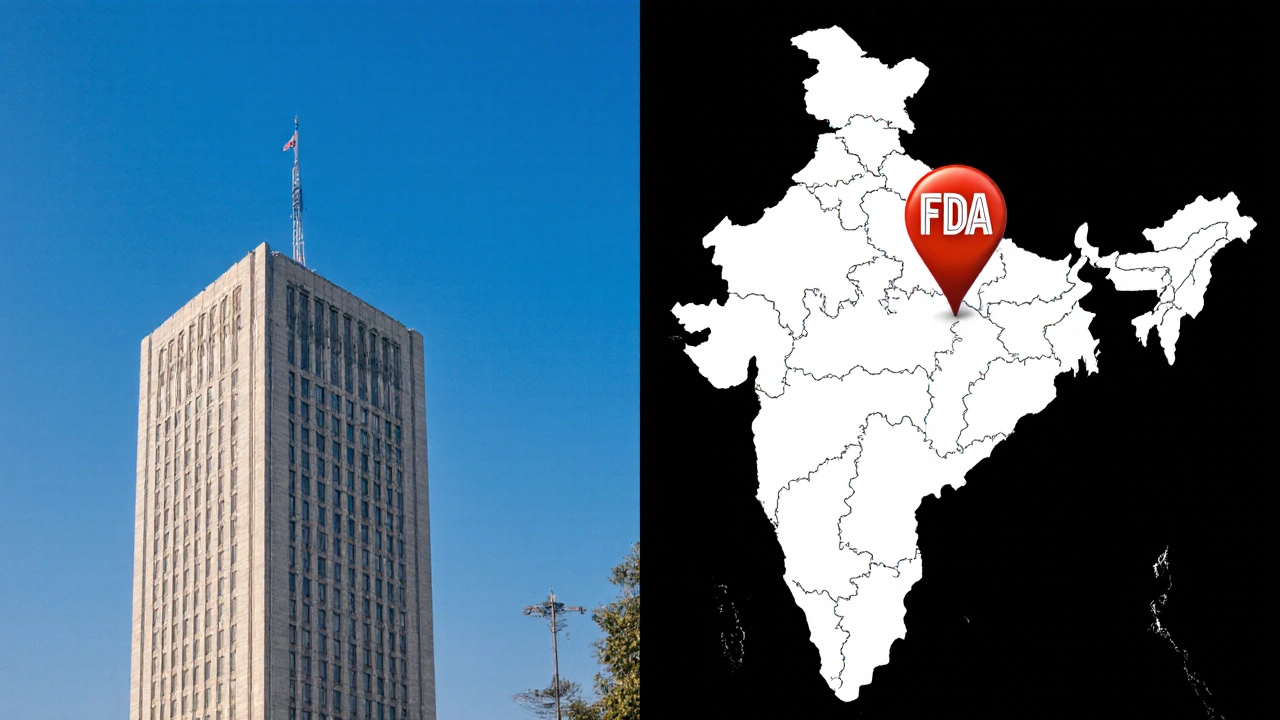
Explore why there's no FDA in India, learn about FSSAI and CDSCO, and discover how Indian manufacturers can achieve U.S. FDA approval for exports.