China Manufacturing: What It Means for Global Supply Chains and India's Industry
When we talk about China manufacturing, the world’s largest and most complex manufacturing ecosystem, responsible for over 30% of global industrial output. Also known as Made in China, it’s not just about low-cost goods—it’s about scale, speed, and control over raw materials, logistics, and supply chains that few countries can match. From the plastics used in your phone case to the steel in your car, China doesn’t just make products—it owns the pipelines that deliver them.
China’s dominance isn’t accidental. It’s built on decades of state-backed investment in industrial zones, port infrastructure, and chemical production hubs like Guangdong and Zhejiang. These regions don’t just assemble parts—they produce the polymers, resins, and synthetic fibers that feed factories worldwide. In fact, over 60% of global plastic pellets and 70% of textile yarns trace back to Chinese plants. This isn’t competition—it’s control. And when China adjusts export rules, tariffs, or environmental standards, it sends ripples through every country that relies on its output, including India.
That’s why India’s push for self-reliance in manufacturing—through schemes like PLI and PMEGP—isn’t just patriotic rhetoric. It’s survival. Tirupati Polymers, like hundreds of other Indian manufacturers, can’t afford to wait for China to decide when to cut supply or raise prices. That’s why local polymer production, chemical hubs in Gujarat, and small-scale manufacturing startups are stepping up. The question isn’t whether India can replace China—it’s how fast it can build alternatives that are just as reliable, just as scalable, and just as cost-effective.
What you’ll find in these posts isn’t a list of complaints about China. It’s a map of what’s actually happening on the ground: who’s winning in Indian chemical production, how U.S. manufacturing is repositioning itself, and what products are truly profitable when you’re not dependent on imported raw materials. You’ll see how plastic pollution ties back to corporate decisions made in Shanghai, how steel giants like ArcelorMittal compete with Chinese state-owned firms, and why the fastest-growing manufacturing states in the U.S. are copying China’s playbook—just with better labor laws.
This isn’t about blaming China. It’s about understanding it—so you can build something better.
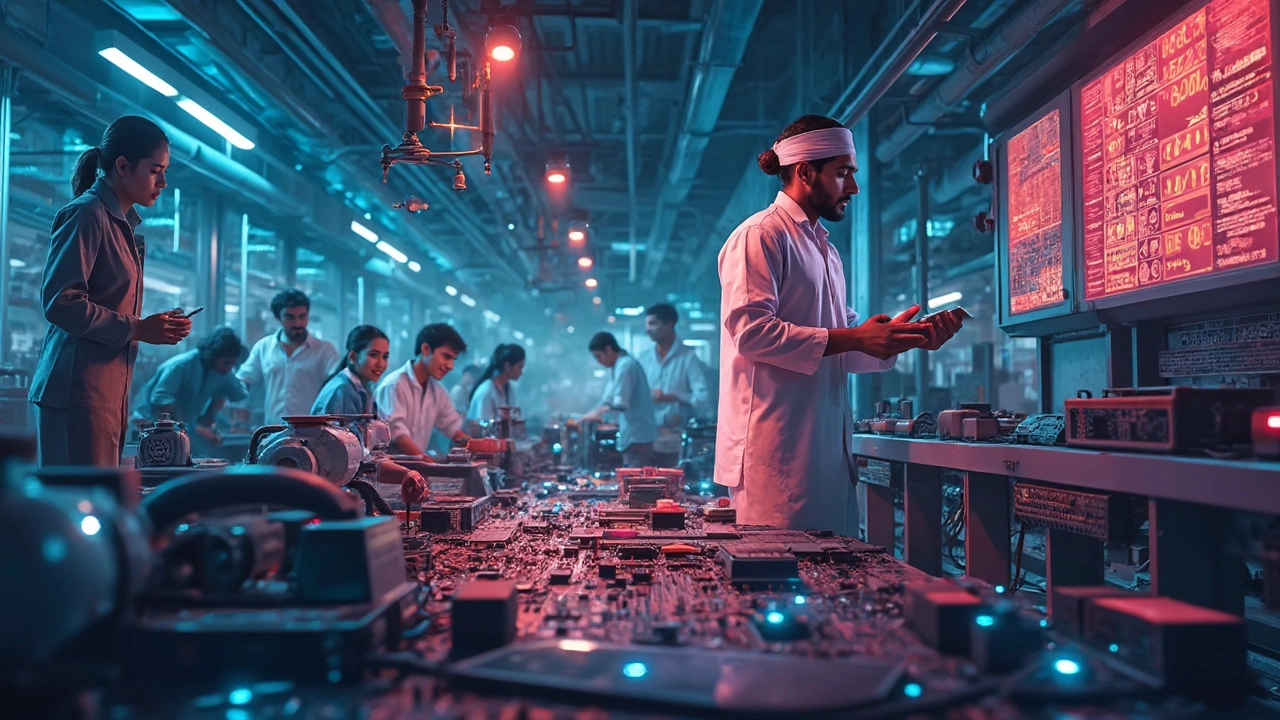
Get a clear look at which country ranks first in electronics manufacturing and why. This article breaks down the major players, their strengths, and where India fits in the global lineup. You'll learn how the electronics supply chain works, who's dominating what market, and how the scene is shifting. There are some eye-opening facts about what goes into your gadgets. Check out tips for those interested in the industry to spot trends or opportunities.