Bombay Spinning and Weaving Company: India's Historic Textile Legacy and Its Modern Impact
When you think of India’s industrial roots, few names carry as much weight as the Bombay Spinning and Weaving Company, India’s first successful modern textile mill, founded in 1854 by Cowasji Nanabhai Davar in Mumbai. Also known as Bombay Spinning and Weaving Co. Ltd., it didn’t just make cloth—it sparked a revolution in how India thought about manufacturing, labor, and self-reliance.
This mill was the first to prove that Indians could run large-scale textile production without British control. Before it, most cotton was exported raw to Manchester. The Bombay Spinning and Weaving Company changed that. It turned local cotton into finished fabric, created thousands of jobs, and set the blueprint for future mills across Maharashtra and Gujarat. Its success showed that India didn’t need to wait for foreign companies to build its industry—it could build it itself. That mindset still echoes in today’s small manufacturers who start with a single machine and grow from there.
The company’s legacy isn’t just in old factory buildings. It’s in the supply chains, worker training systems, and even the way India approaches export markets today. Modern textile hubs like Surat and Tirupur still rely on the same principles: vertical integration, cost efficiency, and scaling production without losing quality. Even government schemes like the PLI for textiles trace their logic back to the early days of mills like this one. You can’t talk about India’s $150 billion textile industry without mentioning the Bombay Spinning and Weaving Company as the spark.
And while the original mill may be gone, its influence lives on in every small factory that uses a second-hand loom, every entrepreneur who learned from the old mill workers’ stories, and every exporter who ships Indian fabric to Europe or the US. The posts below dig into the real connections between that 19th-century pioneer and today’s manufacturing realities—from how textile jobs pay now, to which states lead production, to why some industries still thrive while others fade. You’ll see how history isn’t just something in books—it’s the foundation of what’s being made right now.
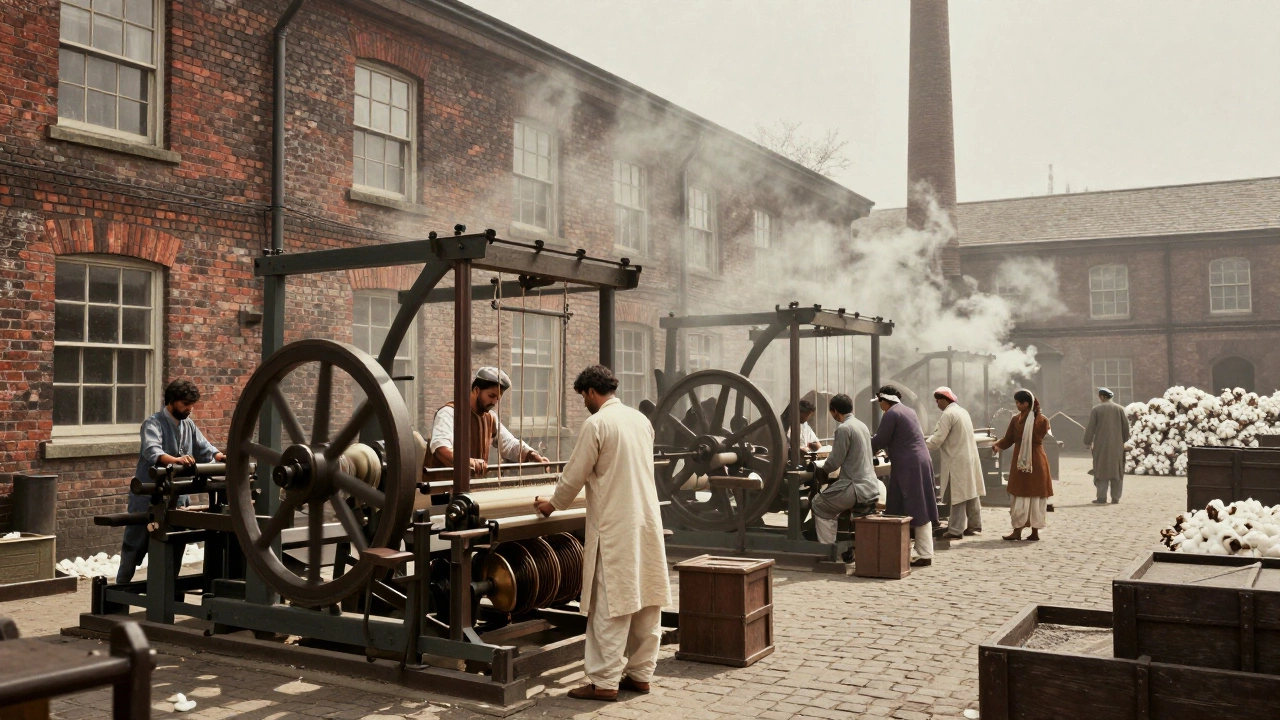
The oldest textile company in India is the Bombay Spinning and Weaving Company, founded in 1854 in Mumbai. It was the first successful modern textile mill and sparked India's industrial textile revolution.