Automation in Manufacturing: How It’s Changing Factories in India
When you think of automation, the use of technology to perform tasks with minimal human input in industrial settings. Also known as industrial automation, it’s no longer a luxury—it’s the baseline for staying competitive in today’s manufacturing world. In India, factories that still rely on manual labor are falling behind. Those that’ve adopted automation are producing more, wasting less, and attracting bigger clients. It’s not about replacing workers—it’s about making them more valuable by removing the repetitive, dangerous, or boring jobs.
Automation isn’t just robots on assembly lines. It includes machine vision systems, cameras and software that inspect products for defects faster than the human eye, programmable logic controllers (PLCs), the brains behind automated machinery that run everything from extruders to packaging lines, and data-driven production planning, using real-time output stats to adjust schedules and reduce downtime. These aren’t sci-fi tools—they’re being used right now in Gujarat’s chemical plants, Tamil Nadu’s textile mills, and Maharashtra’s small-scale polymer shops. One manufacturer we talked to cut scrap rates by 40% just by adding automated quality checks. Another cut labor costs by 30% after automating material handling.
What’s driving this shift? Three things: rising wages, stricter quality demands from global buyers, and government schemes like PLI that reward efficiency. You don’t need a billion-dollar factory to start. Even small polymer producers are using low-cost sensors and basic robotics to automate labeling, sorting, or batch tracking. The biggest mistake? Waiting for perfection. The winners are those who start small—automate one step, measure the gain, then move to the next.
What you’ll find in the posts below isn’t theory. It’s real examples: how automation helped India’s textile industry boost exports, how Gujarat’s chemical hubs use it to stay ahead, and why the most profitable small manufacturers today aren’t the ones with the biggest teams—but the ones with the smartest systems. You’ll see which steps pay off fastest, what tools actually work for Indian factories, and how to avoid the traps that sink half the automation projects.
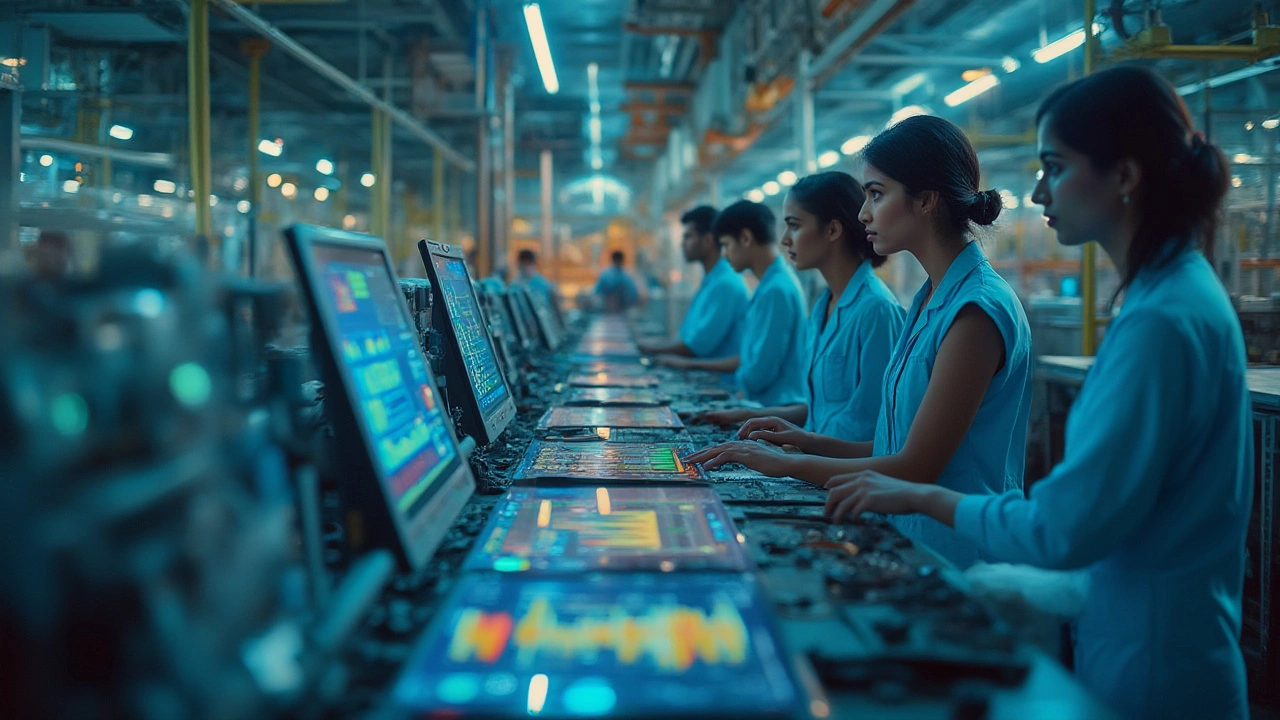
Find out what sets MES (Manufacturing Execution Systems) apart from MOM (Manufacturing Operations Management), with real-world insights and tips for your factory.