5 Ps of Manufacturing: What They Are and How They Drive Industrial Success
When we talk about the 5 Ps of manufacturing, a foundational framework used to evaluate and improve production systems. Also known as the five pillars of production, it’s not just theory—it’s what keeps factories running, orders on time, and costs under control. This isn’t some academic model stuck in a textbook. It’s the real checklist top manufacturers use every day to spot waste, boost output, and keep teams aligned.
The first P is Planning, the backbone of any manufacturing operation that maps out what to make, when, and with what resources. Without it, you’re flying blind—running machines, ordering materials, and hiring labor without knowing if it adds up. The second P is People, the human element that actually runs the machines, solves problems, and drives continuous improvement. No matter how advanced your tech is, if your team isn’t trained, motivated, and empowered, you’re leaving money on the table. Then comes Process, the repeatable steps that turn raw inputs into finished goods. This is where lean methods, standard operating procedures, and automation come into play. You can’t optimize what you can’t measure—and that’s where the fourth P, Productivity, the ratio of output to input, steps in. It’s not about working harder; it’s about working smarter. And finally, Profit, the ultimate goal that ties everything together. Every decision—from the type of polymer you produce to the state you build your plant in—must pass the profit test.
These five elements aren’t separate boxes. They’re connected. Poor planning leads to wasted labor. A broken process drags down productivity. Low productivity kills profit. And without profit, you can’t invest in better people or smarter systems. That’s why the best manufacturers don’t treat them as tasks to check off—they treat them as a living system that needs constant tuning. Look at the posts below. You’ll see how Gujarat’s chemical hubs nail the 5 Ps by combining skilled labor with government incentives. You’ll see how small manufacturers in India are using PLI schemes to boost profit without massive capital. You’ll even see how plastic pollution ties back to poor process design and profit-driven shortcuts. This isn’t about buzzwords. It’s about building something that lasts—and the 5 Ps are the only framework that actually shows you how.
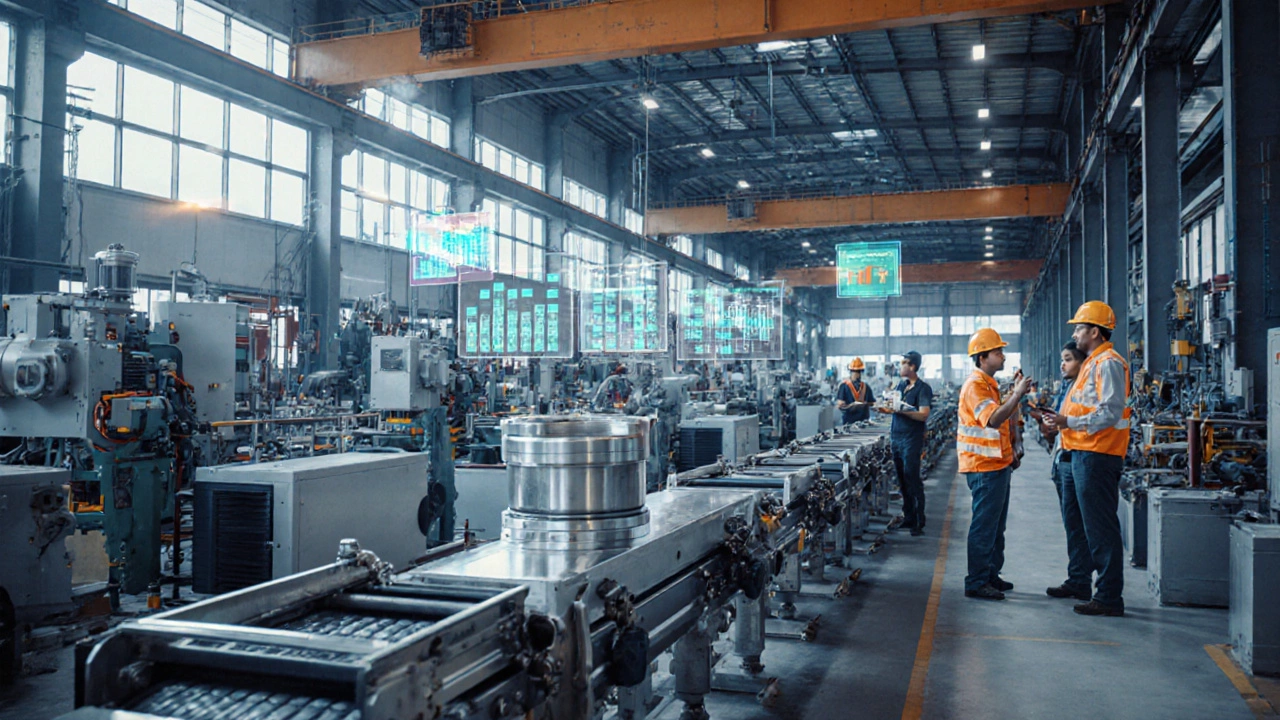
Learn the 5 Ps of manufacturing-Product, Process, Plant, People, Planning-and how to apply each pillar to boost quality, efficiency, and on‑time delivery.